KONTES 09-1855 Kimble Dounce Tissue Grinder Glass Pestle 40ML Tube
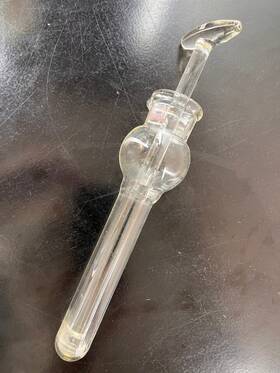
( Brand: Kontes ), ( Manufacturer Part Number: 09-1855 ), ( Model: DOUNCE ), ( Part Type: Grinder Tube ), ( Country Of Origin: United States ), ( Intended Use/discipline: Biological Laboratory, Medical Laboratory )
Review KONTES Kimble 40ml Dounce Tissue Grinder Glass Pestle And Tube
The **Kontes 09-1855 Kimble 40 mL Dounce Tissue Grinder with Glass Pestle and Tube** is a precision-engineered laboratory tool designed for efficient and gentle homogenization of delicate biological tissues, cells, and other soft samples. Crafted from high-quality borosilicate glass, this grinder features a smooth, conical pestle that fits snugly into the matching glass tube, ensuring minimal shear stress on fragile materials while maximizing mechanical disruption. The 40 mL capacity provides ample volume for processing moderate-sized samples, making it ideal for applications in molecular biology, cell culture, and biochemical research where tissue integrity must be preserved. The tight-fitting, ground-glass seal between the pestle and tube prevents leaks and contamination, while the ergonomic design allows for controlled, repetitive motion with a hand or mechanical homogenizer. This grinder is particularly well-suited for lysing cells, grinding plant or animal tissues, or preparing samples for downstream analyses like PCR, Western blotting, or RNA/DNA extraction. Its durability and chemical resistance make it a reliable choice for routine and high-throughput laboratory workflows, where consistency and reproducibility are paramount. Whether used in academic research, clinical diagnostics, or industrial bioprocessing, the Kontes 09-1855 delivers the precision and efficiency required for optimal sample preparation.
The Kontes 09-1855 Kimble 40 mL Dounce Tissue Grinder with a glass pestle tube is a widely used laboratory tool for homogenizing tissues and cells. Below is a detailed breakdown of its pros and cons, followed by a conclusion and recommendation.
---
### **Pros:**1. **Durability and Material Quality**
The Dounce grinder is constructed from borosilicate glass, which is highly resistant to chemical corrosion and thermal shock. This makes it suitable for a wide range of applications, including the processing of tough tissues or samples containing abrasive materials. The glass components are also less likely to leach contaminants into the sample compared to plastic alternatives.
2. **Precision and Efficiency**
The ground-glass pestle fits tightly within the tube, allowing for effective homogenization with minimal dead space. The design ensures thorough disruption of cells or tissues, which is critical for applications like nucleic acid extraction, protein isolation, or cell lysis. The manual operation provides consistent control over the grinding force, which is useful for delicate samples that require gentle processing.
3. **Compatibility with Common Laboratory Practices**
The 40 mL capacity is standard for many laboratory protocols, making it versatile for small-scale experiments, pilot studies, or teaching labs. It is often used in conjunction with other glassware (e.g., centrifuge tubes) that fit standard laboratory equipment. The design is also compatible with common homogenization techniques, such as those involving buffers or lysis solutions.
4. **Easy to Clean and Sterilize**
Glass is inert and can be thoroughly cleaned with detergents, solvents, or even harsh chemicals like bleach. It can also be sterilized by autoclaving or baking, which is essential for maintaining sterile conditions in microbiological or cell culture work. The lack of plastic components reduces the risk of microbial contamination or leaching of plasticizers.
5. **Cost-Effective for Long-Term Use**
While the initial cost may be higher than some plastic alternatives, the longevity of borosilicate glass makes it a cost-effective choice over time. Glass grinders are reusable for thousands of homogenizations without significant wear, unlike disposable plastic pestles that degrade with use.
6. **Versatility in Applications**
The Dounce grinder is suitable for a variety of biological samples, including tissues, cells, bacteria, and even some plant materials. It is commonly used in molecular biology, cell biology, and biochemistry for tasks such as:
- Cell lysis for DNA/RNA extraction.
- Preparation of subcellular fractions (e.g., nuclei, mitochondria).
- Homogenization of small tissue samples for protein analysis.
- Disruption of microbial cells for genetic or metabolic studies.
7. **Minimal Sample Contamination**
Unlike plastic pestles, which may absorb or leach compounds from the sample, glass does not interact chemically with most biological materials. This is particularly important for applications requiring high purity, such as PCR or protein crystallization.
---
### **Cons:**1. **Manual Labor and Time-Consuming**
The Dounce grinder requires manual operation, which can be physically demanding, especially when processing multiple samples or tough tissues. This is less efficient compared to motorized homogenizers, which can process larger volumes or multiple samples simultaneously. The manual process also introduces variability if the user s technique is inconsistent.
2. **Risk of Breakage**
While borosilicate glass is durable, it is not unbreakable. Dropping the grinder or mishandling it can result in shattered glass, which poses a safety hazard in the laboratory. This risk is higher in environments with frequent handling or where the grinder is exposed to rough treatment. Additionally, sharp glass fragments can contaminate samples if breakage occurs during use.
3. **Limited Throughput**
The 40 mL capacity restricts its use to small-scale applications. For larger samples or high-throughput workflows, motorized homogenizers (e.g., bead beaters, rotor-stator homogenizers) are more practical. The manual nature also limits the ability to process multiple samples quickly, which can be a bottleneck in busy laboratories.
4. **Potential for Sample Shearing**
While the Dounce grinder is gentle compared to some other homogenization methods (e.g., high-speed blenders), it can still cause shearing of DNA or other large biomolecules if overused or mishandled. This may require additional steps (e.g., low-speed centrifugation) to separate intact cells from fragmented debris.
5. **Maintenance and Storage Requirements**
Glass components must be cleaned thoroughly after each use to prevent cross-contamination between samples. Residual buffers or biological material can degrade over time if not properly rinsed. Additionally, the grinder must be stored carefully to avoid damage, such as nesting it in a protective case or keeping it in a dedicated storage area.
6. **Incompatibility with Some Samples**
For very viscous or fibrous samples (e.g., certain plant tissues or large animal tissues), the Dounce grinder may not be efficient enough, and alternative tools like a mortar and pestle or a motorized homogenizer may be needed. Similarly, samples containing abrasive particles (e.g., sand or silica) can wear down the glass over time.
7. **Learning Curve for Optimal Use**
Achieving consistent results with a Dounce grinder requires practice. Users must learn the appropriate pressure and number of strokes to avoid over- or under-homogenization. Improper use can lead to inefficient cell lysis or damage to sensitive biomolecules.
---
### **Conclusion:**The Kontes 09-1855 Kimble 40 mL Dounce Tissue Grinder is a robust, versatile, and reliable tool for small-scale homogenization in laboratory settings. Its advantages such as durability, minimal contamination, ease of cleaning, and compatibility with a wide range of biological samples make it an excellent choice for applications where precision and purity are critical. However, its manual operation, risk of breakage, and limited throughput may pose challenges in high-demand or large-scale workflows. The decision to use this grinder ultimately depends on the specific needs of the laboratory, including sample type, scale of work, and budget constraints.
---
### **Recommendation:** **Buy the Kontes 09-1855 Dounce Grinder if:**- You are working with small-scale biological samples (e.g., cell cultures, small tissue biopsies).
- Your workflow requires high-purity homogenization with minimal contamination risk.
- You prioritize durability and the ability to reuse the grinder for thousands of homogenizations.
- Your budget allows for a manual tool that does not require electricity or motorized components.
- You are in a teaching or research environment where gentle, controlled homogenization is essential (e.g., for nucleic acid extraction or subcellular fractionation).
**Consider an alternative if:**- You need to process large volumes or multiple samples quickly (in which case a motorized homogenizer like a bead beater or rotor-stator device may be better).
- Your samples are highly viscous, fibrous, or abrasive, which could damage the glass over time.
- You frequently handle the grinder roughly and are concerned about the risk of breakage (in which case a plastic pestle or disposable alternative might be safer).
- Your laboratory lacks the time or resources for thorough cleaning and maintenance of glassware.
For most academic or small-scale research laboratories, the Kontes Dounce Grinder remains a **highly recommended purchase** due to its reliability and performance. However, pairing it with a motorized homogenizer for larger or more demanding samples can optimize workflow efficiency. Always ensure proper training for users to maximize safety and consistency.
Details:
KIMBLE KONTES 40mL Dounce Tissue Grinder w/ Glass Pestle Tube Cat# 09-1855, Comes from a Midwest research university.
part #: 091855 price
- $97.50
specifications plasticwarelabsuppy:
- brand: Kontes
- mpn: 09-1855
- model: Dounce
- part type: Grinder Tube
- country of origin: United States
- intended use/discipline: Biological Laboratory, Medical Laboratory
returns plasticwarelabsuppy:
- method: Money back
- paid by: Buyer
- policy: Returns Accepted
- time: 30 Days
shipping plasticwarelabsuppy:
- carrier: USPS
- type: Calculated
- service: USPS Ground Advantage
- transit: 4-11 Days
- class: Standard
- cost: $14.10
offer plasticwarelabsuppy:
- sold: 0
- options: Ship-to-home
- quantity: 1
- started: June 9, 2026
- availability: In Stock
payments plasticwarelabsuppy:
- credit card: Mastercard
- wallet: Paypal
- other
general plasticwarelabsuppy:
- Medical, Lab Dental Supplies > Glassware Plasticware > Other Medical Lab Glassware
- condition: Used
seller plasticwarelabsuppy:
- # reviews: 1397
- city: Indianapolis, Indiana
- rating: 100.0%
Kontes 09-1855 Is Similar To:
- 216050 Kontes Chemglass Kimble Chase Place Airless Double (33.3% similar) For sale is a kimble chase airless 3-PLACE glass manifold. Item is brand new in box. The actual manifold is labeled as Kontes. Part no listed on box is includes: 3 place double row glass manifold. K 3 glass stopcocks as pictured. Stop plus retainer a packages X3...(November 4th, 2018)
- 420400-1020 Kimble Chase Llc Kontes Qty New (30.5% similar) Box was opened to picture the inside. Comes from reliable source. Comes as shown...(November 6th, 2018)
- 420400-1030 Kimble Kontes Cm Pack Chromatography (29.3% similar) 30 cm long with an inner diameter of these chromatography columns appear to be unused. Open box of Kontes flex-columns...(December 24th, 2018)
- 422542 422540 Kontes Filtration Tlc Spray Tube 422540 422542 (29.6% similar) Out of box for pic...(February 1st, 2016)
- 479155-0050 Kontes New Kimble Glass Tube Purge Lab Glassware (37% similar) Any questions just ask. Shipping and handling is to USA address only. You are buying on a new in box kimble Kontes glass tube purge 50ML...(September 29th, 2018)
- 479161-0000 Kontes New Kimble Glass Distillation Head Lab Glassware (40.8% similar) You are buying on a new in box kimble Kontes glass distillation head. Any questions just ask. Shipping and handling is to USA address only...(October 28th, 2018)
- 479162-0023 Kontes New Kimble Glass Dispersion Tube Coarse Lab Glassware (39.5% similar) You are buying on a new in box kimble Kontes dispersion glass tube coarse. Any questions just ask...(September 29th, 2018)
- 479459-0000 Kontes Kimble Ammonia And Phenol Glassware Set New (46.7% similar) Kimble chase manufacturer part no. Includes a receiver tube GL25 thread with cap, high temperature open top, red, GL14 2 supplied and sealing ring PDF silicone, for septa PDF-faced, solid sold individually manufacturer: wk life sciences inc. Midi-vape 4000 ammonia and phenol glassware set one set ...(February 9th, 2019)
- 509250-0006 Kontes Pack Helices Id Glass Circles Lab Glassware Lb (38.6% similar) Kontes pack helices 6MM id lab glassware item. Condition: as shown. Container has been opened and may not be full...(December 15th, 2018)
- 570037-0500 Kimble Kontes Evaporation Flask Ml (31.4% similar) 500MLEACH for kimble Kontes Deena-danish evaporate concentrate with slow-dry tube and hooks springs evap flask 500 ml list price...(September 22nd, 2018)
- 885300-0040 Kontes Tissue Grinder Pestle Tube Deounce (51.6% similar) Kontes tissue grinder, pestle tube, 40ML all-glass denounce, new without original packaging...(November 6th, 2018)