PERKIN-ELMER 127-2567 Laboratory Glassware Internal
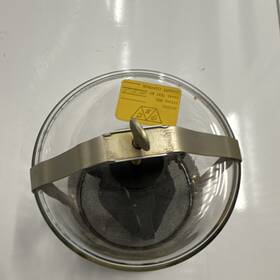
( Brand: Perkin-elmer ), ( Manufacturer Part Number: 127-2567 ), ( Intended Use/discipline: Physical Laboratory, Biological Laboratory, Medical Laboratory )
Review PERKIN ELMER Laboratory Glassware Internal Assembly
The **PerkinElmer 127-2567 Laboratory Glassware Internal Standard** is a high-precision, borosilicate glass vial designed specifically for use in analytical chemistry, mass spectrometry, and other advanced laboratory techniques requiring exceptional stability, clarity, and chemical resistance. Crafted from **Type I borosilicate glass** (meeting or exceeding the stringent standards of **DIN 12111, ASTM E438, and ISO 3585**), this internal standard vial ensures minimal interference with sensitive measurements while maintaining structural integrity under repeated thermal cycling, solvent exposure, and high-pressure conditions. The glass composition typically containing **72% silica (SiO ), 13% boron trioxide (B O ), and trace metals** provides an optimal balance of thermal shock resistance (withstanding temperature fluctuations from **-120 C to 250 C**) and chemical inertness, making it ideal for applications in **GC-MS, LC-MS, NMR spectroscopy, and trace element analysis**.
Each vial is meticulously manufactured to **tight tolerances**, featuring a **standard 2 mL capacity** with a **conical shape** that minimizes dead volume and maximizes sample recovery, while the **PTFE-lined screw cap** (included as part of the 127-2567 kit) ensures an airtight seal to prevent contamination or evaporation during long-term storage or analysis. The **internal surface is polished to a mirror finish**, reducing adsorption of volatile or polar compounds and enhancing reproducibility across experiments. Additionally, the vial s **threaded neck** is designed for compatibility with **automated liquid handlers, autosamplers, and robotic systems**, streamlining workflows in high-throughput laboratories. For added convenience, the **clear, colorless glass** allows visual inspection of samples without the need for additional lighting, while the **consistent batch-to-batch quality** ensures reliable performance in critical applications such as **drug discovery, environmental monitoring, and forensic analysis**.
Beyond its technical specifications, the PerkinElmer 127-2567 internal standard vial is engineered with **user safety in mind**, featuring a **non-sharp, rounded design** to prevent accidental cuts or punctures during handling. The **durable, screw-threaded cap** is designed to resist stripping under pressure, while the **PTFE lining** provides an inert barrier against organic solvents, acids, and bases eliminating the risk of glass corrosion or leaching of contaminants. Whether used as a **reference standard for calibration, a solvent blank for background correction, or a matrix spike for method validation**, this vial delivers the **consistency and precision** demanded by modern analytical laboratories. Backed by PerkinElmer s reputation for **innovation and reliability**, the 127-2567 internal standard vial is a cornerstone of laboratories seeking **high-fidelity results** in demanding scientific research.
### Pros and Cons of Buying PerkinElmer 127-2567 Laboratory Glassware (Internal)
#### **Pros:**1. **High Quality and Durability** PerkinElmer is a reputable manufacturer known for producing precision laboratory glassware designed to withstand rigorous use in analytical and scientific applications. The internal glassware is likely made from borosilicate glass, which is chemically resistant, thermally stable, and less prone to cracking or breaking compared to standard soda-lime glass.
2. **Compatibility with PerkinElmer Instruments** This glassware is specifically designed to be used with PerkinElmer analytical instruments, such as atomic absorption spectrometers (AAS), inductively coupled plasma (ICP) systems, or other related equipment. This ensures proper fit, functionality, and optimal performance without compatibility issues.
3. **Precision and Calibration** Laboratory glassware, especially that intended for internal use in analytical instruments, is manufactured to tight tolerances. This ensures accurate measurements, consistent results, and reliable calibration, which is critical in fields like environmental testing, pharmaceutical analysis, or metallurgy.
4. **Long-Term Reliability** High-quality glassware reduces the risk of contamination or degradation over time, which can compromise experimental data. PerkinElmer s reputation suggests that their products are built to last, minimizing the need for frequent replacements.
5. **Support and Warranty** As a branded product, PerkinElmer glassware may come with manufacturer support, including warranties or replacement options if defects are encountered. This can be valuable for research labs or industrial settings where downtime is costly.
6. **Consistency in Performance** Since the glassware is designed for specific applications (e.g., atomization in AAS or nebulization in ICP), it is optimized for performance metrics like signal stability, sensitivity, and reproducibility. This consistency is essential for high-stakes analyses.
---
#### **Cons:**1. **Higher Cost** PerkinElmer products are generally more expensive than generic or off-brand laboratory glassware. For labs with tight budgets or those performing routine analyses where high-end specifications are unnecessary, this can be a significant drawback.
2. **Limited Versatility** This glassware is tailored for use with PerkinElmer instruments. If a lab uses equipment from other manufacturers (e.g., Agilent, Thermo Fisher), this specific glassware may not be compatible, requiring additional purchases or adaptations.
3. **Potential for Overkill** For basic or low-volume applications where less expensive glassware would suffice, investing in PerkinElmer s internal glassware may not provide a meaningful return on investment. The added precision might not be necessary for simpler tasks.
4. **Maintenance and Cleaning Requirements** High-quality glassware often requires meticulous cleaning to avoid contamination or damage. Borosilicate glass, while durable, can be more challenging to clean thoroughly compared to simpler glass types, adding time and effort to lab procedures.
5. **Dependency on Brand-Specific Parts** If a lab relies solely on PerkinElmer glassware, switching to a different instrument manufacturer later may require purchasing entirely new parts, increasing long-term costs and logistical complexity.
6. **Potential for Obsolescence** As instrumentation technology evolves, newer models may require updated or different glassware designs. Older PerkinElmer glassware might become incompatible with newer instruments, necessitating upgrades.
---
### **Conclusion:**The PerkinElmer 127-2567 laboratory glassware is a high-quality, specialized product ideal for labs that rely on PerkinElmer instruments and require precision, durability, and consistency in analytical performance. Its advantages in terms of reliability, compatibility, and support make it a strong choice for research, industrial, or clinical settings where accuracy is paramount. However, the higher cost, limited versatility, and potential overkill for simpler applications must be weighed against the benefits.
For labs with strict quality requirements, long-term instrument compatibility, or high-stakes analyses (e.g., environmental monitoring, pharmaceutical testing, or metallurgy), the investment in PerkinElmer glassware is justified. Conversely, labs with budget constraints, diverse instrument brands, or low-volume needs may find that more affordable alternatives meet their needs without sacrificing performance.
---
### **Recommendation:** - **Buy if:**- You use PerkinElmer instruments and need glassware optimized for their performance.
- Your work demands high precision, reproducibility, and long-term reliability (e.g., regulatory-compliant testing).
- You prioritize manufacturer support and warranties to minimize downtime.
- Your budget allows for the higher upfront cost, as the long-term benefits outweigh the expense.
- **Avoid or Consider Alternatives if:**- Your lab operates on a tight budget and can achieve similar results with lower-cost, compatible glassware.
- You use instruments from other manufacturers and cannot justify the brand-specific investment.
- Your applications do not require the highest precision (e.g., general-purpose lab work).
- You anticipate frequent upgrades or changes in instrumentation, making long-term compatibility uncertain.
For labs in between these extremes, it may be prudent to consult with colleagues or technical support to assess whether the specific glassware is essential or if generic alternatives (e.g., from Corning, Kimble-Kontes, or other reputable brands) would suffice. Always evaluate the trade-offs between cost, performance, and long-term usability.
Details:
Perkin-Elmer Laboratory Glassware with Internal Assembly, MPN 127-2567.
part #: 1272567 price
- $299.00
specifications plasticwarelabsuppy:
- brand: Perkin-elmer
- mpn: 127-2567
- intended use/discipline: Physical Laboratory, Biological Laboratory, Medical Laboratory
seller plasticwarelabsuppy:
- rating: 0.0%
- # reviews: 0
- city: Burbank, California
returns plasticwarelabsuppy:
- policy: No Returns
payments plasticwarelabsuppy:
- other
- wallet: Google-pay
- credit card: Discover
general plasticwarelabsuppy:
- Medical, Lab Dental Supplies > Glassware Plasticware > Other Medical Lab Glassware
- condition: New Open box
offer plasticwarelabsuppy:
- best offers: True
- sold: 0
- availability: In Stock
- quantity: 1
- options: Ship-to-home
- started: March 13, 2026
shipping plasticwarelabsuppy:
- service: USPS Ground Advantage
- carrier: USPS
- transit: 5-11 Days
- type: Calculated
- class: Standard
- cost: $12.78
Perkin-elmer 127-2567 Is Similar To:
- 1450-130 Perkin Elmer 384 Well (33.9% similar) Cat 130WHITE inf perkin elmer 384 well plate cassette...(September 25th, 2017)
- 1450-402 Perkin Elmer 25 24-well (33.3% similar) Brand: perkin elmer part: material: pet well volume: 1000 l - this is a 24-WELL flexible sample plate for use with micro beta. Thorough cleaning and sterilization are recommended before use. It is made of clear PET plastic, printed with grid lines between wells...(January 19th, 2018)
- 180752 Perkin Elmer 200 Untreated Viewplate (35.2% similar) Untreated view plate 384F black, clear bottom, 384-WELL material: polystyrene sterile: nonissue-culture treated: solids: no filter type: NBA code: nonwhite writing area: no 200 micro plates foil wrapped in 8 sleeves of 25 plate each. Those are 300 new perkin elmer micro plates...(February 26th, 2017)
- 401840 Perkin Elmer New Modified Glass Plate Slots Per Sketch For (35.4% similar) 2 x 36CM modified glass plate for AB prism 377 DNA sequencer 26 slots per sketch size: 16. 5 X10 plate thickness: 5MM in 2 boxes each box contains 1 glass all new...(September 18th, 2018)
- 6000477 Perkin Elmer Low Diffusion (36.2% similar) Perkin elmer low diffusion pe vial 20 ml anti-static 100 case new this is brand. Only pictured items are included - cables and other accessories not unless explicitly stated shown in pictures...(October 3rd, 2017)
- 6001253 Perkin Elmer New 11 Trays (33% similar) ...(December 21st, 2016)
- 6005060 Perkin Elmer 50 B (26.2% similar) Tissue culture treated. Black frame and white well. Comes with 50 individually wrapped micro plates lids on...(September 2nd, 2017)
- 6005181 Perkin Elmer Box Of 50 (28.6% similar) ...(March 10th, 2017)
- 6005225 Perkin Elmer Case 50 (34.5% similar) Review the pictures for included elements and condition of item...(November 18th, 2017)
- 6005279 Perkin Elmer Pack Of (29.1% similar) Specifications assay technology steady lite,brutality,zeolite,atilt automation compatible yes color black detection method time-resolved fluorescence turf, luminescence, material polystyrene product brand name interpolate shipping condition ambient unit size pack of 25 wells number 96 well plate. ...(September 26th, 2017)
- 6007279 Perkin Elmer 25 Perkinelmer (34.2% similar) Review the pictures for included elements and condition of item...(December 2nd, 2017)