DWK KIMBLE 14396-500 Media Bottles Cap GL45
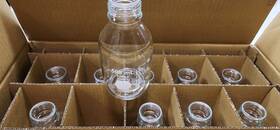
( Brand: Dwk Kimble ), ( Manufacturer Part Number: 14396-500 ), ( Part Type: Cap Case ), ( Country Of Origin: United States ), ( Unit Type: Unit ), ( Volume: 500 Ml ), ( Unit Quantity: 10 ), ( Intended Use/discipline: Biological Laboratory, Dental Laboratory, Microbiological Laboratory, Medical Laboratory, Physical Laboratory )
Review DWK KIMBLE Media Bottles 500 Ml Without Cap Case Of
The **DWK Kimble 14396-500 Media Bottles** represent a premium, laboratory-grade solution for culturing and storing microbial samples, cell lines, or biological media with unmatched precision and reliability. Engineered with a **500 mL capacity**, these high-quality glass bottles are crafted from **borosilicate glass (Type I)**, ensuring exceptional chemical resistance, durability, and thermal stability critical for maintaining sterility and integrity in demanding laboratory environments. The **45 angled cap** (standard screw-thread design) provides a secure, leak-proof seal while facilitating easy access for media preparation, inoculation, or sample retrieval, reducing contamination risks during routine handling. Each bottle is meticulously manufactured to meet **USP/NF Class A standards**, guaranteeing consistent clarity, minimal extractables, and compatibility with a wide range of sterile filtration and autoclaving processes. The **polypropylene screw cap** is designed for repeat use, offering a tight, tamper-evident closure that protects against microbial ingress while allowing for convenient resealing after use. Ideal for applications in microbiology, cell culture, fermentation, and biopharmaceutical research, these bottles excel in both short-term and long-term storage scenarios, whether refrigerated, frozen, or maintained at room temperature. Their **smooth, non-porous surface** further minimizes adsorption of media components, ensuring accurate experimental results and reproducible outcomes. Whether used in academic research, industrial bioprocessing, or clinical diagnostics, the DWK Kimble 14396-500 bottles deliver the robustness and performance expected from a trusted name in laboratory glassware, combining functionality with the reliability of a globally recognized brand.
### Pros and Cons of Buying DWK Kimble 14396-500 Media Bottles (500 mL, 45 Cap, 10-Pack)
#### **Pros:**1. **High Quality and Durability** DWK Kimble is a well-known brand in laboratory and medical-grade glassware, known for its robustness, chemical resistance, and ability to withstand autoclaving and other sterilization processes. The bottles are designed to maintain integrity over repeated use.
2. **Sterilization Compatibility** The bottles are likely designed to be autoclavable, making them suitable for sterile media preparation, cell culture, and microbiological applications. This reduces contamination risks and ensures consistency in experiments.
3. **Standardized Sizing** The 500 mL capacity is a common volume in laboratory settings, making it versatile for various applications, including media preparation, sample storage, and small-scale experiments. The 45 cap (likely a screw cap) ensures a secure seal.
4. **Cost-Effective for Bulk Purchase** Buying in a 10-pack offers better value than purchasing individual bottles, reducing per-unit costs while providing redundancy for experiments.
5. **Compatibility with Laboratory Equipment** The design is likely compatible with standard laboratory apparatus, such as shakers, incubators, and pipetting systems, without requiring modifications.
6. **Chemical Resistance** Glass is inert and resistant to most chemicals, making these bottles ideal for storing acids, bases, organic solvents, and biological samples without leaching or contamination.
7. **Reusability** Unlike disposable plastic containers, these glass bottles can be reused multiple times after proper cleaning and sterilization, reducing waste and long-term expenses.
8. **Transparency for Visual Inspection** Glass allows for easy visual assessment of contents, which is useful for monitoring color changes, turbidity, or precipitation in experiments.
---
#### **Cons:**1. **Fragility Compared to Plastic** Glass is more prone to breakage than plastic, especially during handling, shipping, or accidental drops. This increases the risk of injury and contamination if the bottles shatter.
2. **Weight and Bulk** Glass bottles are heavier than plastic alternatives, which can be cumbersome for large-scale or frequent use. Shipping costs may also be higher due to weight and fragility.
3. **Higher Upfront Cost** While the bulk purchase helps, glass bottles are generally more expensive than disposable plastic containers upfront. However, their long-term reusability may offset this over time.
4. **Maintenance Requirements** Glassware requires thorough cleaning (often with detergents or sonication) and drying to prevent residue buildup, which can introduce errors in experiments. Improper cleaning may also lead to contamination.
5. **Limited Temperature Resistance (Compared to Borosilicate)** Standard soda-lime glass (unless specified as borosilicate) may not handle extreme temperatures or thermal shock as well as high-quality borosilicate glass. If the bottles are not borosilicate, they could crack if exposed to rapid temperature changes (e.g., autoclaving followed by freezing).
6. **Sealing Challenges** While the 45 cap is standard, ensuring a proper seal can be tricky, especially if the rubber gaskets degrade over time. Leaks or improper sealing can compromise sterility or sample integrity.
7. **Space Requirements** Glass bottles take up more storage space than plastic alternatives, which may be a consideration in labs with limited bench or cabinet space.
8. **Environmental Concerns (If Disposed Improperly)** Despite being reusable, improper disposal of broken glass can pose environmental and safety hazards. However, this is mitigated by their durability and reusability.
---
### **Conclusion:**The DWK Kimble 14396-500 media bottles are an excellent choice for laboratories or applications requiring **sterility, chemical resistance, and durability**. They are ideal for long-term use in microbiology, cell culture, or any setting where glassware s inert properties are advantageous. However, their **fragility, weight, and maintenance needs** make them less suitable for high-throughput or low-budget settings where disposable plastic might be more practical.
If your workflow involves **sterile conditions, repeated autoclaving, or handling aggressive chemicals**, these bottles are a strong investment. If you prioritize **convenience, cost savings on single-use, or minimal maintenance**, plastic alternatives may be preferable.
---
### **Recommendation:** **Buy these bottles if:**- You need **high-quality, reusable glassware** for sterile media preparation, cell culture, or long-term sample storage.
- Your lab frequently uses **autoclaving or requires chemical resistance**.
- You are willing to **invest in durability** despite the higher upfront cost and maintenance effort.
**Consider alternatives (e.g., plastic disposable bottles) if:**- You work in a **high-throughput or disposable-focused** environment (e.g., clinical diagnostics, rapid testing).
- **Budget constraints** or **space limitations** make glass impractical.
- Your experiments involve **extreme temperature fluctuations** (ensure they are borosilicate glass if needed).
For most **academic, research, or clinical labs** that prioritize sterility and reusability, these DWK Kimble bottles are a **highly recommended purchase**. However, always verify the specific glass type (e.g., borosilicate vs. soda-lime) to match your application s temperature and chemical requirements.
Details:
BOTTLES ONLY WITH RING Qty10 NO CAP. Graduation Range mL 100-400. . 30mm ID opening.
part #: 14396500 prices
- $144.99-$436.50
specifications plasticwarelabsuppy:
- brand: Dwk Kimble
- mpn: 14396-500
- part type: Cap Case
- country of origin: United States
- unit type: Unit
- volume: 500 Ml
- unit quantity: 10
- intended use/discipline: Biological Laboratory, Dental Laboratory, Microbiological Laboratory, Medical Laboratory, Physical Laboratory
payments plasticwarelabsuppy:
- other
- credit card: Mastercard
- wallet: Google-pay
offer plasticwarelabsuppy:
- started: February 10, 2026
- availability: In Stock
- quantity: 2
- options: Ship-to-home
- sold: 0
seller plasticwarelabsuppy:
- rating: 100.0%
- # reviews: 712
- city: San Diego, California
returns plasticwarelabsuppy:
- policy: No Returns
shipping plasticwarelabsuppy:
- transit: 3-9 Days
- class: Standard, Expedited, Economy
- type: Calculated
- service: FedEx Ground / FedEx Home Delivery, USPS Priority Mail, FedEx Ground Economy, FedEx 2Day
- carrier: FedEx, USPS
- cost: $0.00
general plasticwarelabsuppy:
- Medical, Lab Dental Supplies > Glassware Plasticware > Other Medical Lab Glassware
- condition: New
Dwk Kimble 14396-500 Is Similar To:
- 220738 Wheaton Dwk Oz Bottles Case Of Clear Safety Glass New (32.1% similar) Each order comes in one case that has 6 bottles. Case of Dwk life sciences wheaten 80 oz bottle, clear, safety coated, aluminum foil lined black phenol cap. These are new in the box. One box was opened just to take photos...(October 3rd, 2018)
- Kimble 357841 2 case Dwk Part 357841 Pestle For 357844 Disposable Micro-tissue Grinder (21.5% similar) Fully for sterile homogenization's. Manufacturer part # 357841. Replacement pestle for wheaten 357844 micro tissue grinder. 2/CASE Duran wheaten Kimble part #357841 pestle for 357844 disposable micro-tissue grinder: grinder. Ground glass pestle head. Brisket glass construction...(December 23rd, 2023)
- Kimax Kimble Dwk 23000-9050 Glass 270ml 90 X 50mm Crystallizing Storage Dish (27.2% similar) Good used condition. No chips or cracks...(April 23rd, 2024)
- Kontes Kimble Dwk 781001-2942 Glass 29 42 Stirrer Bearing With Lubricant Cup For 10mm Shaft (35.8% similar) Thorough cleaning and sterilization are recommended before use. No chips or cracks. Lab bench supplies. Used items will show signs of wear sometimes including light scratches, discoloration, stickers/tape, or exterior markings. Good used condition...(August 26th, 2024)
- Kontes Kimble Dwk 926300-0024 Glass 45 50 Vacuum Trap Body Only 300mm Oah 245mm Below Joint 926300 (34.3% similar) No chips or cracks. Used items will show signs of wear sometimes including light scratches, discoloration, stickers/tape, or exterior markings. 300MM overall height . Lab bench supplies. Thorough cleaning and sterilization are recommended before use. GSR veers 1677 gs 9.8.1 1677 245MM below joint. ...(August 30th, 2024)
- Kontes Kimble Dwk 420540-0224 Glass Chromatography Column 3 4 Inch Id X 15-3 4 El 2mm Ptfe C Frit 420540 B (22.6% similar) Size: 22 1/8 562MM overall height x 25MM OD body. Good used condition. Lab bench supplies. GSR veers 1677 gs 9.8.1 1677 15 3/4 400MM effective length x 19MM id. Small chip on the drip tip. Thorough cleaning and sterilization are recommended before use. Used items will show signs of wear ...(August 30th, 2024)
- Kimble Kimax Dwk-17132f-10 Micro Buret With Side Reservoir 10ml Borosilicate Glass (33.8% similar) Excellent condition Bret. Includes two stop cocks, but does not include glass stopper. Accepts 14/20 stopper...(September 4th, 2024)
- Dwk Life Sciences W082149a Duran 500ml Bottle Narrow Mouth With Cap Hdpe Leak Proof Case Of 120 (53% similar) Part #: Dwk life sciences W082149A for sale...(October 16th, 2024)
- Kimax Kimble Dwk 15107-4 2 4oz Glass Specimen And Museum Display Bottle Jar 117mm H X 50mm Od 15107 (36.5% similar) One of the cork stopper has chips missing. Good used condition. Biotech bargains item for sale. No chips or cracks in the glass. Lab bench supplies. GSR veers 1680 gs 9.8.3 1680 size: 117MMX 50MM OD, 22MM id neck opening. Used items will show signs of wear sometimes including light scratches, ...(October 22nd, 2024)
- Kontes Kimble Dwk 612000-1500 Glass 1500ml Cylindrical Reaction Vessel Flask With Conical Flange 612000 (42.5% similar) Used items will show signs of wear sometimes including light scratches, discoloration, stickers/tape, or exterior markings. Very good used condition. 8x 5/1 /4 OD. No chips or cracks. Lab bench supplies. Thorough cleaning and sterilization are recommended before use. GSR veers 1680 gs 9.8.3 1680 ...(October 23rd, 2024)
- Kimble 52140-0100 Salt And Brine Hydrometer Dwk Life Sciences 0 100 Calibrated (37.6% similar) Condition is new. Kimble 52140-0100 salt and brine hydrometer Dwk life sciences 0/100 calibrated. Shipped with USPS ground advantage...(January 22nd, 2025)