HAYWHNKN 220636A Lab Glass Reactor Double Jacketed Vacuum 198462369824 High Torque 110V 5L Stirring Ptfe Valve
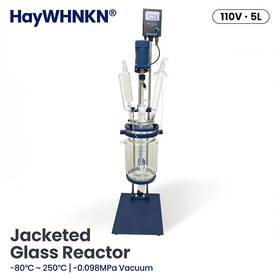
( Brand: Haywhnkn ), ( Manufacturer Part Number: 220636A ), ( Part Type: Vacuum Valve Torque Reactor ), ( UPC: 198462369824 )
Review HAYWHNKN 110v 5l Lab Glass Reactor Double Jacketed Vacuum Stirring Ptfe Valve High Torque
The **Haywhnkn 220636A 110V 5L Double-Jacketed Vacuum Stirring Glass Reactor with PTFE Valve and High-Torque Stirring Mechanism** is a sophisticated and versatile laboratory instrument meticulously engineered for precise chemical synthesis, pharmaceutical development, and advanced materials research. This high-performance reactor combines cutting-edge design with robust functionality, making it an indispensable asset for laboratories requiring controlled reaction environments. Constructed from high-quality borosilicate glass (typically Type 3.3 or equivalent), the reactor s 5-liter capacity provides ample space for scaling experiments while maintaining optical clarity, allowing real-time monitoring of reactions through the transparent walls. The **double-jacketed** design ensures superior thermal regulation, enabling precise temperature control via circulating fluids whether heated or cooled through the inner and outer glass layers, which eliminates hotspots and promotes uniform heating or cooling throughout the reaction mixture.
At the heart of this reactor is a **high-torque stirring mechanism**, which delivers powerful and consistent agitation, even with highly viscous or shear-sensitive materials. The motorized stirrer is engineered to handle demanding applications, ensuring efficient mixing without compromising the integrity of delicate substances. Complementing this is the **vacuum capability**, which allows for precise pressure control, enabling processes such as distillation, crystallization, or solvent removal under reduced atmospheric pressure. The reactor is equipped with a **PTFE (polytetrafluoroethylene) valve**, a material renowned for its chemical resistance and low reactivity, ensuring compatibility with a wide range of aggressive solvents, acids, and bases without risking contamination or degradation. This valve system also facilitates easy sample introduction, removal, or pressure adjustments while maintaining a secure, leak-proof seal.
Safety and usability are prioritized in the reactor s design, featuring a **110V electrical interface** for reliable power supply and integration with standard laboratory setups. The reactor is equipped with a **temperature controller port**, allowing for seamless connection to external systems for automated temperature regulation, further enhancing reproducibility and precision. Additionally, the **stainless steel support frame** provides stability and durability, while the modular construction allows for easy disassembly and cleaning, adhering to stringent hygiene standards. Whether conducting batch synthesis, polymerization, or sensitive biochemical reactions, this reactor delivers unmatched performance, flexibility, and reliability, making it a cornerstone for laboratories demanding excellence in experimental outcomes.
### **Pros and Cons of buying a Haywhnkn 220636A 110V 5L Lab Glass Reactor (Double Jacketed, Vacuum Stirring, PTFE Valve, High Torque)**
#### **Pros:**1. **Material and Durability** The reactor is made of borosilicate glass (likely Type 3.3), which is chemically resistant, thermally stable, and suitable for high-temperature and corrosive applications. The PTFE (polytetrafluoroethylene) valve ensures compatibility with aggressive chemicals.
2. **Double Jacketed Design** The double-jacketed system allows for precise temperature control via heating or cooling (e.g., with a thermostatic bath or oil bath). This is ideal for exothermic or endothermic reactions where temperature regulation is critical.
3. **Vacuum Capability** The reactor supports vacuum operation, enabling processes like distillation under reduced pressure, solvent removal, or reactions requiring low-pressure conditions. This is useful in organic synthesis, pharmaceutical development, and material science.
4. **High-Torque Stirring** The high-torque motor ensures efficient mixing of viscous or heterogeneous mixtures, preventing dead zones and improving reaction uniformity. This is particularly valuable for suspensions, emulsions, or reactions involving high-viscosity solvents.
5. **PTFE Valve and Fittings** PTFE is chemically inert and resistant to most acids, bases, and organic solvents, reducing contamination risks and extending the reactor s lifespan. The valve design likely allows for easy sample collection or gas introduction without leaks.
6. **Scalability** A 5L capacity provides a balance between lab-scale experimentation and small-scale production, making it suitable for research, pilot testing, or small-batch manufacturing.
7. **Compatibility with Accessories** The reactor can be paired with additional equipment such as condensers, reflux setups, or pressure gauges, expanding its functionality for various chemical processes.
8. **Safety Features** The borosilicate glass and PTFE components are generally safe for high-pressure applications (if rated for it), and the vacuum capability can be paired with safety systems like rupture discs or pressure relief valves (if configured properly).
9. **Versatility** Suitable for a wide range of applications, including:- Organic synthesis (e.g., Grignard reactions, polymerizations)
- Pharmaceutical synthesis (e.g., drug compounding)
- Material science (e.g., nanoparticle synthesis)
- Biochemical reactions (if compatible with the reagents used)
- Distillation and solvent recovery
10. **Brand Reputation (Assuming Haywhnkn is Reliable)** If the manufacturer (Haywhnkn) is known for quality lab equipment, this reactor may offer good long-term reliability. However, always verify reviews or certifications before purchasing.
---
#### **Cons:**1. **Potential Quality Variations** Some generic or lesser-known brands may have inconsistencies in glass thickness, joint seals, or valve tightness. Borosilicate glass can also be prone to thermal shock if heated/cooled too rapidly, though this reactor s double jacket should mitigate some risks.
- *Mitigation:* Purchase from a reputable supplier with warranties or return policies.
2. **Limited Pressure Rating (If Not Specified)** The listing does not explicitly state the maximum pressure rating. If high-pressure reactions are planned, ensure the reactor is rated for the required pressure (e.g., 1 2 bar). Overpressurization can lead to catastrophic failure.
- *Mitigation:* Confirm pressure rating with the seller or manufacturer.
3. **Stirring Mechanism Reliability** High-torque motors can wear out over time, especially with abrasive or fibrous materials. The PTFE valve may also degrade with prolonged use or exposure to certain solvents.
- *Mitigation:* Regular maintenance and inspection are recommended.
4. **Setup Complexity** Double-jacketed reactors require additional infrastructure (e.g., heating/cooling circulators, vacuum pumps, and seals). Installation and calibration may require technical expertise.
- *Mitigation:* Ensure your lab has the necessary supporting equipment and personnel.
5. **Cost vs. Alternatives** For a 5L reactor, prices can vary widely. If budget is a concern, smaller reactors (e.g., 1 2L) or simpler single-jacketed models may suffice for less demanding applications.
- *Mitigation:* Compare prices and features with other brands (e.g., Labglass, Corning, or glassware from established suppliers).
6. **Maintenance Requirements** Glass reactors require periodic cleaning to remove residues, especially with sticky or corrosive materials. PTFE and glass can degrade over time with harsh chemicals.
- *Mitigation:* Follow manufacturer cleaning guidelines and avoid aggressive scrubbing.
7. **Safety Risks** Improper use (e.g., overfilling, incorrect pressure/vacuum settings) can lead to leaks, explosions, or glass breakage. Always use safety shields and follow SOPs.
- *Mitigation:* Train personnel and use protective gear.
8. **Compatibility with Certain Reagents** While PTFE and borosilicate glass are highly resistant, some highly reactive or fluorinated compounds may still pose risks (e.g., HF or strong oxidizers like potassium permanganate).
- *Mitigation:* Test with small volumes first or use compatible alternatives.
9. **Shipping and Handling Risks** Glass reactors are fragile and may crack during transit. Ensure proper packaging and handling.
- *Mitigation:* Purchase from sellers with good return policies or buy locally if possible.
10. **Limited Customization** Off-the-shelf reactors may not include all desired features (e.g., specific port sizes, automated controls). Customization can add significant cost.
- *Mitigation:* Clarify specifications with the seller before purchase.
---
### **Conclusion**
The **Haywhnkn 220636A 5L double-jacketed glass reactor** is a versatile and robust piece of equipment ideal for labs requiring precise temperature control, vacuum operation, and high-efficiency stirring. Its borosilicate glass and PTFE components make it suitable for a wide range of chemical processes, from organic synthesis to pharmaceutical development. The high-torque stirring ensures thorough mixing, while the double jacket enhances thermal regulation.
However, potential drawbacks include **quality variability (if the brand is unknown), pressure limitations (if not specified), setup complexity, and maintenance needs**. These risks can be mitigated by verifying specifications, ensuring proper installation, and following safety protocols.
For **research labs, small-scale production, or applications demanding temperature control and vacuum**, this reactor is a strong choice. If budget or simplicity is a priority, smaller or single-jacketed reactors may be more appropriate. Always **prioritize safety, compatibility with reagents, and supplier reputation** when making the purchase.
---
### **Recommendation:** - **Buy if:**- You need a **5L reactor for vacuum, heating/cooling, and high-torque stirring**.
- Your lab requires **precise temperature control** (e.g., for exothermic reactions).
- You work with **corrosive or high-viscosity materials** where PTFE and borosilicate glass are suitable.
- You have access to **supporting equipment** (vacuum pump, circulator, safety shields).
- The **manufacturer is reputable** (check reviews, certifications, or ask for references).
- **Avoid if:**- You need **high-pressure applications** (confirm pressure rating first).
- Your budget is tight, and a smaller reactor (e.g., 1 2L) would suffice.
- Your lab lacks **expertise in glassware handling or safety protocols**.
- You re unsure about the **seller s reliability** (risk of counterfeit or low-quality products).
- **Alternatives to Consider:**- **Labglass or Corning reactors** (if higher brand reliability is preferred).
- **Single-jacketed reactors** (if double jacketing isn t necessary).
- **Smaller volumes (1 2L)** for pilot testing before scaling up.
- **Automated reactors** (if you need digital control and data logging).
**Final Verdict:** This reactor is a **solid investment for labs needing a durable, versatile glass reactor** with vacuum and temperature control capabilities, provided you address potential risks (pressure, quality, setup) upfront. Always **test with small volumes** and follow safety guidelines.
Details:
Clean sealing ring weekly; reapply vacuum grease to maintain integrity. After each batch, clean surfaces with soft cloth and suitable solvent. This equipment contains fragile glass components always handle with care. 0-600 rpm -0.098 Map vacuum 80 250 C Product Overview: The inner vessel holds reaction media while supporting and variable-speed stirring.
Apply high-vacuum grease lightly to all ground joints ensures optimal seal. Technical Specifications: Capacity 5 L Power 90 W Stirring Speed 0-600 rpm Temp. Designed for innovation. Orders processed Mon-Fri.
Full vacuum, wide temperature range 80 C to 250 C, and seamless scalability from Pilot production. Operation Maintenance Protocol: Inspect glass components before use; check for cracks or defects. Compliant with camp guidelines. Start stirring at lowest speed, increase gradually; stop stirrer before power off.
Fully compatible with circulates, vacuum pumps, chillers, and closed-loop temperature control systems high-low circulates. PTFE No-Liquid-Accumulation Valve Zero dead volume, complete drainage, no cross-contamination between batches. Use only high-quality vacuum grease on stopcocks and rotating parts. Materials Research Nano particle synthesis, sol-gel processes, and advanced polymer development benefit from wide temperature range chemical inertness.
Over time grease may harden: disassemble, clean with toluene/xylene, then reapply fresh. If ground joints become stuck, apply gentle heat hot water/heat gun before disassembly. Deceleration Stirrer System Spark-free brush less motor, high torque, whisper-quiet operation. Full transparency for real-time reaction monitoring.
Do not over tighten clamps or PTFE valves; loosen regularly to avoid seizure. Electrical components must never be exposed to moisture or direct rinsing. HayWHNKN Precision Laboratory Equipment. HayWHNKN 110V 5L Double-Layer Glass Reactor Advanced Process / 60Hz UL Compatible Next-Gen Lab Series Double Layer Jacketed Reactor: High-performance glass reactor for fine chemicals, Bahama, and advanced material synthesis.
Fine Chemicals Catalysis High vacuum and precise stirring enable catalytic hydrogenation, polymerization, solvent recovery with reproducible results. Integrated Jacketed Flask Uniform heat distribution, easy cleaning, enhanced safety with reinforced glass connections. Heat transfer fluid circulates through the outer jacket for precise temperature control. Extended support always available at low cost.
Loosen PTFE valves after shutdown to prevent permanent deformation. Ideal for chemical synthesis, distillation, extraction, and crystallization.
part #: 220636a price
- $1196.10
specifications plasticwarelabsuppy:
- brand: Haywhnkn
- mpn: 220636a
- part type: Vacuum Valve Torque Reactor
- upc: 198462369824
returns plasticwarelabsuppy:
- method: Money back
- paid by: Buyer
- time: 30 Days
- policy: Returns Accepted
general plasticwarelabsuppy:
- condition: New
- Medical, Lab Dental Supplies > Glassware Plasticware > Other Medical Lab Glassware
offer plasticwarelabsuppy:
- quantity: 1
- sold: 0
- options: Ship-to-home
- started: April 7, 2026
- best offers: True
- availability: In Stock
shipping plasticwarelabsuppy:
- type: Fixed
- service: Standard
- cost: $99.00
- transit: 3-8 Days
- class: Standard
seller plasticwarelabsuppy:
- city: Norcross, Georgia
- rating: 98.8%
- # reviews: 17339
payments plasticwarelabsuppy:
- other
- credit card: Discover
- wallet: Apple-pay
Haywhnkn 220636A Is Similar To:
- Haywhnkn 220500 220v 5l Double Glass Reactor Chemical Lab Jacketed Vessel (57.6% similar) Parameter, material capacity l 5, power w, 90, speed rpm 0-6 maximum torque n.cm 200. The product can be combined with, circulating water multi-purpose vacuum pump, cooler, constant, temperature circulatory, low coolant circulation closed, refrigeration heating cycle device also known as high and ...(September 21st, 2024)
- Haywhnkn W220l636 110v 5l Digital Lab Jacketed Reactor Double Layer Glass Vessel (57.6% similar) Hope for your understanding. When using vacuum grease on rota table parts such as glass cock or feeding tube, please choose a smooth and viscous brand. After long-term use, the grounded parts where vacuum grease has been applied will oxidize or harden grease, which may cause difficulty in rotation ...(December 30th, 2024)
- Haywhnkn 220500a 5l Jacketed Glass Reactor Digital Speed Control Ptfe Stirrer 120 C To 300 (52.1% similar) The inter layer can be introduced into the chilled liquid, water and high temperature liquid to heat cool material, it is used in experiments, pilot tests production of chemical, fine bio pharmaceutical new material synthesis. Overload protection, silent operation. Ready to elevate your lab ...(April 10th, 2026)