KIMAX KIMBLE KONTES 25323 Glass Port Round Bottom Flask 250ML 19/22 2-NECK 10MM
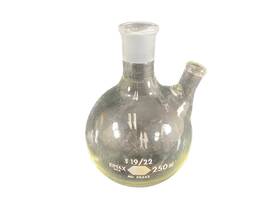
( Brand: Kimax Kimble Kontes ), ( Manufacturer Part Number: 25323 ), ( Intended Use/discipline: Biological Laboratory, Dental Laboratory, Medical Laboratory, Microbiological Laboratory, Physical Laboratory ), ( Country Of Origin: United States ), ( Unit Type: Unit ), ( Additional Information: Surplus Laboratory Consumable Supplies )
Review KIMAX KIMBLE KONTES Glass 250ml 19/22 10mm Id Side Port Round Bottom Flask
The **Kimble-Kontes 25323 Glass Round Bottom Flask** is a precision-engineered laboratory vessel designed for demanding applications in chemical synthesis, distillation, and reaction work. Crafted from borosilicate glass (Type 1, Kimax brand), this flask delivers exceptional thermal and chemical resistance, ensuring stability across a broad temperature range from cryogenic conditions to high-heat processes, typically up to 500 C. Its **250 mL capacity** strikes a balance between versatility and efficiency, making it ideal for small-scale experiments, pilot studies, or routine procedures where space and reagent volumes are carefully managed. The **19/22 standard taper joint** facilitates seamless compatibility with a wide array of glassware accessories, including condensers, adapters, and ground-glass joints, while the **10 mm side port** provides a convenient entry point for thermometers, stirrers, or additional reaction components without compromising the flask s structural integrity. The **dual-neck design** enhances functionality by allowing simultaneous attachment of multiple apparatuses such as a reflux condenser and a gas inlet thereby optimizing reaction control and efficiency. Constructed with meticulous attention to optical clarity, the flask s smooth, polished surface minimizes dead zones and ensures even heating, reducing the risk of localized hotspots or thermal stress. Its durable, scratch-resistant finish also simplifies cleaning and maintenance, a critical consideration in high-throughput or sterile environments. Whether used in academic research, pharmaceutical development, or industrial synthesis, this flask exemplifies reliability and precision, embodying the rigorous standards demanded by modern laboratory workflows.
**Pros and Cons of buying a Kimble-Kontes 25323 Round Bottom Flask (250 mL, 19/22 Joint, 2-Neck, 10 mm Port)**
### **Pros**
1. **High-Quality Construction** The flask is made by Kimble-Kontes, a reputable brand known for durable, borosilicate glass laboratory glassware. Borosilicate glass (typically Type I or II) resists thermal shock, chemical corrosion, and mechanical stress, making it ideal for laboratory applications.
2. **Standardized Joint Compatibility** The 19/22 joint is a widely accepted standard in laboratory glassware, ensuring compatibility with most adapters, condensers, and other glassware components. This reduces the need for custom fittings and simplifies setup.
3. **Versatile Design** The dual-neck (2-neck) configuration with a 10 mm port allows for flexible connections, such as adding a thermometer, reflux condenser, or additional inlet/outlet ports. This makes it suitable for reactions requiring precise temperature control or multiple inputs/outputs.
4. **Precision Engineering** The round bottom shape ensures even heating and efficient mixing, which is critical for distillation, reflux, and other reactions where uniformity is essential. The smooth, polished surface minimizes dead spaces where residues could accumulate.
5. **Chemical Resistance** Borosilicate glass is resistant to most acids, bases, and organic solvents, making this flask suitable for a wide range of chemical processes, including synthesis, extraction, and chromatography.
6. **Durability and Longevity** Properly maintained, this flask can last for years, even with frequent use. Its robust construction reduces the risk of breakage during routine laboratory operations.
7. **Compatibility with Standard Lab Equipment** The flask is designed to work seamlessly with common laboratory apparatus, such as heating mantles, condensers, and vacuum systems, without requiring modifications.
8. **Easy to Clean** The smooth interior and lack of sharp edges make it straightforward to clean with solvents, detergents, or ultrasonic baths. This is particularly useful in research settings where sterility and purity are paramount.
9. **Cost-Effective for Long-Term Use** While the upfront cost may be higher than some disposable alternatives, the durability and reusability make it a cost-effective investment over time, especially in academic or industrial labs with high usage.
10. **Safety** Unlike plastic or lower-quality glassware, borosilicate glass does not leach contaminants or degrade under high temperatures or aggressive chemicals, reducing safety hazards in the lab.
---
### **Cons**
1. **Higher Initial Cost** Compared to disposable or lower-grade glassware, this flask is more expensive upfront. For one-time or low-frequency use, the cost may not justify the investment.
2. **Fragility Despite Durability** While borosilicate glass is more resistant to thermal shock than soda-lime glass, it is still brittle. Dropping or mishandling can cause breakage, potentially leading to injuries or equipment damage.
3. **Maintenance Requirements** Regular cleaning and inspection are necessary to prevent contamination or damage. Scratches, cracks, or residue buildup can compromise performance and safety.
4. **Limited Flexibility for Non-Standard Setups** If your lab requires non-standard joint sizes or configurations, this flask may not be compatible without additional adapters, which can add complexity and cost.
5. **Weight and Bulk** The glass flask is heavier than plastic alternatives, which can be cumbersome for frequent transfers or when working with large volumes. Storage may also require more space.
6. **Potential for Contamination** Over time, even with proper cleaning, glassware can harbor residues or microbial growth, especially if not sterilized adequately. This is less of an issue with new flasks but becomes more relevant with prolonged use.
7. **Not Ideal for High-Pressure Applications** While suitable for most standard laboratory processes, this flask is not designed for high-pressure reactions. For such applications, specialized glassware or metal reactors may be required.
8. **Potential for Joint Leaks** If the 19/22 joint is not properly lubricated or seated, it can lead to leaks during reactions, especially under vacuum or pressure. This requires careful assembly and occasional re-greasing.
9. **Environmental Considerations** While borosilicate glass is recyclable, improper disposal can pose environmental risks if not handled correctly. However, this is more of a general concern with glassware disposal rather than a flaw specific to this flask.
10. **Learning Curve for New Users** Those unfamiliar with glassware assembly may find setting up the dual-neck flask more challenging than simpler, single-neck alternatives. Proper training or troubleshooting may be required.
---
### **Conclusion**
The Kimble-Kontes 25323 round bottom flask is an excellent investment for laboratories requiring reliable, high-performance glassware. Its borosilicate construction, standardized joint compatibility, and versatile design make it ideal for a wide range of chemical processes, including synthesis, distillation, and reflux reactions. The durability and chemical resistance ensure long-term usability, while the compatibility with standard lab equipment simplifies workflows.
However, the higher cost, potential fragility, and maintenance requirements may not make it suitable for every application. For one-time or low-budget uses, disposable alternatives or lower-cost glassware might be more practical. Additionally, users must be mindful of proper handling, cleaning, and assembly to maximize the flask s lifespan and safety.
### **Recommendation**
**Buy this flask if:**- You are working in a laboratory setting where durability, chemical resistance, and precision are critical (e.g., academic research, pharmaceutical development, or industrial chemistry).
- You require a versatile, dual-neck setup for reactions needing multiple inputs or temperature control.
- You prioritize long-term cost savings and reusability over disposable alternatives.
- Your lab frequently uses standard 19/22 joint glassware, ensuring compatibility with existing equipment.
**Avoid or consider alternatives if:**- Your budget is limited, and you anticipate infrequent or one-time use.
- You are working with high-pressure or extreme conditions that require specialized glassware.
- You lack experience with glassware assembly and maintenance, as improper use could lead to leaks or breakage.
- You are primarily conducting low-risk or non-chemical procedures where lower-cost options would suffice.
For most professional laboratories, the Kimble-Kontes 25323 flask is a highly recommended choice due to its balance of quality, versatility, and reliability. However, always assess your specific needs and budget before making a purchase.
Details:
See pictures for details. May show signs of use with minor residue. No chips or cracks throughout. GSR veers 1730 GS 9.9.4 1730 Used item in good condition.
part #: 25323 prices
- $24.00-$44.99
specifications plasticwarelabsuppy:
- brand: Kimax Kimble Kontes
- mpn: 25323
- intended use/discipline: Biological Laboratory, Dental Laboratory, Medical Laboratory, Microbiological Laboratory, Physical Laboratory
- country of origin: United States
- unit type: Unit
- additional information: Surplus Laboratory Consumable Supplies
seller plasticwarelabsuppy:
- city: Cotati, California
- rating: 99.8%
- # reviews: 7388
general plasticwarelabsuppy:
- condition: Used
- Medical, Lab Dental Supplies > Glassware Plasticware > Other Medical Lab Glassware
returns plasticwarelabsuppy:
- policy: Returns Accepted
- time: 30 Days
- method: Money back
- paid by: Seller
offer plasticwarelabsuppy:
- sold: 0
- options: Ship-to-home
- availability: In Stock
- quantity: 2
- started: February 7, 2026
shipping plasticwarelabsuppy:
- carrier: FedEx
- service: Standard, FedEx 2Day, FedEx Standard Overnight
- transit: 4-11 Days
- cost: $0.00
- type: Fixed
- class: Standard, Expedited, One-day
payments plasticwarelabsuppy:
- other
- credit card: Discover
- wallet: Paypal
Kimax Kimble Kontes 25323 Is Similar To:
- 13 605l Kimax Warehouse Clean Up Kimble Six Pipettes (22.9% similar) Examine photos. Six 6 Kimble Kimax 10 ml 13 605L pipettes are new...(November 25th, 2018)
- 14000 Kimble Kimax Low Form Griffin Beakers With Spout Lot Of (20.3% similar) See pictures for more detail. Manufacturer: Kimble Kimax model: 14000 model: low form griffin beakers with spout 2000 ml 1 lot of 2000 ML r in good cosmetic condition. See pictures for more details. Kimble Kimax 2000 ML low form griffin beakers with spout lot of r in good cosmetic condition. ...(September 17th, 2018)
- 14000-250 Kimax Kimble Ml Beakers Box Of No New Old Stock (34.7% similar) They are unused, but dusty from storage and the box is falling apart. No: new old stock. Please see pictures and I will try to answer any questions. Kimax Kimble 250 ml beakers box of thanks...(January 3rd, 2019)
- 14000-4000 Kimble Kimax New Beakers Glass Model (29.9% similar) Happy buying. If you win, will get two new Kimax 4000ML beakers as shown above. If you don't win my offer, I noticed can order 4 of these on for including free shipping...(January 9th, 2019)
- 14395-1000 Kimble Kimax Round Glass Media Bottle With Cap Set Of (30.5% similar) ...(October 25th, 2018)
- 14605 Kimble Kimax Aspirator Bottle Used (31.5% similar) O box address this is the best deal out there. Take a good look be the bidder-be fetter don't miss this one need more pictures just ask. Will have to be signed for unless arrangements been made before shipping. O box address sales over will have to be signed for unless arrangements been made before ...(November 3rd, 2018)
- 14607-1000 Kimble New In Box Aspirator Bottle Ml Kimax (31.2% similar) New in box aspirator bottle, 1000 ml, Kimax this item is but it old stock, the manufacturing date unknown - see photo of label for get on and money back guarantee free. A half height refrigerator would be good example, I recommend crating it, they do ship strapped to pallet but crate it and the ...(November 5th, 2018)
- 14607-500 Kimax Reservoir With Bottom Hose Outlet Litre (28.2% similar) Spigot accepts 5/1 6 inch. Bottles have permanent white enamel marking spot. Q: what is the shipping cost. Grab the best deal. Conforms to ATM E438, type i, class. Please for details. Q: is local pick-up available. The offered shipping cost in listing applies only to 48 states. Features brand: Kimax...(October 11th, 2018)
- 14950-500 Kimax Gallon Carboy Flask Solution Bottle Laboratory Lab Glass (23.9% similar) No chips or flaws in glass. Bottle is in excellent condition. Kimax 5 gallon carboy flask solution bottle laboratory lab glass...(December 4th, 2018)
- 15146-3060 Kimble Each Kimax Cylindrical Weighing Bottle Ground Glass Cap (21.3% similar) Box of 2 bottles Kimble Kimax 30ML tall-form cylindrical weighing bottle with outside st ground glass cap cap-style closures that fit over externally body caps protect in case tipping, prevent material from touching edges, and provide increased headroom designed federal specification NNN-B-1493, ...(November 15th, 2018)
- 15146-4080 Kimble Chase Kimax Cylindrical Weighing Bottle Lot Of (27.8% similar) Kimble Kimax cylindrical weighing bottle 15X50MM - lot of 6 new brand in opened package for display only. Dimensions: 4 w x selling as is...(November 7th, 2018)