DESCHEM Glass Liebig Condenser Lab Disllation West 331124993171 200MM 24/40
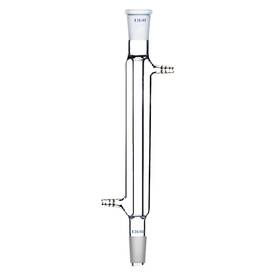
( Brand: Deschem ), ( Part Type: Condenser ), ( Color: Clear ), ( Packageheight: 60 ), ( Packagelength: 373 ), ( Packageweight: 295 ), ( Size: 200 Mm ), ( UPC: 331124993171 )
Review DESCHEM 200mm 24/40 Glass Liebig Condenser Lab Disllation West Clear
The **Deschem 331124993171 200mm 24/40 Standard Liebig Condenser** is a high-quality, precision-engineered glassware essential for efficient and reliable laboratory distillation processes. Designed with meticulous attention to detail, this condenser features a robust **200mm (8-inch) length**, providing optimal cooling surface area to maximize condensation efficiency while minimizing heat loss during distillation. Constructed from **borosilicate glass (Type 3.3)**, it offers exceptional thermal and chemical resistance, ensuring durability even under prolonged exposure to high temperatures, corrosive solvents, or repeated autoclaving cycles. The **24/40 standard taper joint** ensures a secure, leak-proof connection to compatible glassware, such as distillation flasks, reflux setups, or other laboratory apparatus, while maintaining ease of assembly and disassembly.
Ideal for both academic and industrial applications, this Liebig condenser excels in a wide range of distillation techniques, including simple and fractional distillation, solvent recovery, and synthesis procedures. Its **straight design** allows for straightforward integration into standard distillation setups, while its **thick-walled construction** prevents deformation under pressure, making it suitable for use with vacuum or low-pressure systems when paired with appropriate adapters. The condenser s **smooth, polished interior surface** minimizes residue buildup and facilitates easy cleaning, reducing downtime and maintaining consistent performance over extended use.
Engineered for versatility, this condenser is compatible with standard laboratory cooling systems, including water-cooled condensers or refrigerated circulators, depending on the specific requirements of the distillation process. Its **durable ground glass joint** ensures a tight seal, preventing leaks that could compromise the integrity of the experiment, while the **reinforced base** provides stability during operation. Whether used in educational laboratories for teaching fundamental distillation techniques or in research settings for large-scale separations, this condenser delivers reliable performance with minimal maintenance, making it a cornerstone of any well-equipped chemistry lab. Its combination of precision engineering, chemical inertness, and robust construction ensures it remains a dependable tool for chemists, students, and researchers alike.
**Pros and Cons of buying a Deschem 331124993171 200mm 24/40 Glass Liebig Condenser for Lab Distillation**
### **Pros**
1. **High-Quality Construction** The condenser is made from borosilicate glass (likely Type 3.3 or similar), which is durable, resistant to thermal shock, and chemically inert. This ensures longevity and reliability in laboratory settings where repeated heating and cooling cycles occur.
2. **Standardized Joint Compatibility** The 24/40 ground glass joint is a widely accepted standard in laboratory glassware. This means it will fit seamlessly with most other lab equipment, such as distillation flasks, adapters, and other condensers, reducing the need for additional connectors or adapters.
3. **Efficient Cooling Performance** A Liebig condenser is designed for efficient condensation of vapors during distillation. The long, straight design maximizes surface area for heat exchange, improving cooling efficiency and reducing energy consumption compared to shorter condensers.
4. **Versatility** This condenser can be used in various distillation applications, including simple distillation, fractional distillation, and even some reflux setups. Its length (200mm) provides adequate cooling for many common laboratory procedures.
5. **Compatibility with Cooling Systems** The condenser is designed to work with standard water-cooling systems (e.g., tap water or cooling baths). The inlet and outlet ports are typically positioned for easy connection to a water supply, though the exact configuration should be verified upon receipt.
6. **Cost-Effective for Basic Needs** Compared to more advanced or specialized condensers (e.g., Allihn or Graham condensers), the Liebig condenser offers a balance of performance and affordability for basic to intermediate laboratory work.
7. **Easy to Clean and Maintain** Borosilicate glass is non-porous and resistant to staining or corrosion. The smooth surface allows for easy cleaning with laboratory detergents, brushes, or ultrasonic cleaners, reducing downtime between experiments.
8. **Safety** Glass condensers are generally safer than metal alternatives in terms of chemical compatibility and resistance to corrosion. They also do not introduce metallic contaminants into the distillate, which is critical for purity-sensitive applications.
---
### **Cons**
1. **Limited Cooling Efficiency for High-Boiling or High-Volume Distillations** While effective for many organic solvents and low-to-medium boiling point compounds, the Liebig condenser may struggle with highly viscous or high-boiling liquids (e.g., some polymers or high-molecular-weight compounds). In such cases, a more efficient condenser (e.g., a double-surface or spiral condenser) might be necessary.
2. **Water Flow Dependency** The condenser s performance is directly tied to adequate water flow. Insufficient water pressure or temperature can lead to inefficient cooling, resulting in lower yields or incomplete condensation. This may require additional equipment (e.g., a cooling bath or recirculating chiller) in some settings.
3. **Potential for Leaks** Ground glass joints can develop leaks over time due to wear, improper assembly, or contamination (e.g., from solvents or dust). Regular maintenance and the use of joint grease (if compatible with the application) can mitigate this, but it remains a potential issue.
4. **Fragility** Despite borosilicate glass being durable, glassware is inherently fragile. Dropping or mishandling can lead to cracks or breakage, which may be costly to replace, especially in high-volume laboratories.
5. **Limited Customization** The fixed length (200mm) and design may not suit all setups. For example, taller condensers might be needed for very high-boiling compounds, while shorter ones could suffice for smaller-scale work. The Liebig condenser is a one-size-fits-most solution but may not be optimal for specialized applications.
6. **Maintenance of Joints** Over time, ground glass joints can become worn or contaminated, requiring periodic cleaning or replacement of the joint itself. This adds to the long-term maintenance burden compared to sealed or welded systems.
7. **Potential for Condensate Drip Issues** If the condenser is not properly aligned or if the cooling is insufficient, condensate may not drain efficiently, leading to backflow or dripping into the distillation flask. This can affect the purity of the distillate or require additional setup (e.g., a trap or drain).
8. **Not Ideal for Vacuum Distillation** While some Liebig condensers can be used in vacuum distillation, they are not specifically designed for it. For high-vacuum applications, a condenser with a more robust design (e.g., a vacuum jacketed condenser) may be necessary to prevent collapse or inefficient cooling.
---
### **Conclusion**
The Deschem 331124993171 200mm 24/40 glass Liebig condenser is a reliable and versatile tool for basic to intermediate laboratory distillation tasks. Its borosilicate glass construction, standard joint compatibility, and efficient cooling make it a practical choice for many applications, particularly in educational or research settings where cost-effectiveness and ease of use are priorities. However, its limitations in handling high-boiling or high-volume distillations, dependency on water flow, and potential for leaks or maintenance issues should be considered. For most standard organic synthesis, solvent purification, or teaching laboratory work, this condenser will perform adequately and represent a sound investment.
### **Recommendation**
**Buy this condenser if:**- You require a durable, standard-sized condenser for routine distillation tasks (e.g., solvent recovery, simple distillation of low-to-medium boiling liquids).
- Your laboratory already uses 24/40 glassware, ensuring compatibility with existing equipment.
- You are working with relatively low-boiling compounds (e.g., alcohols, ethers, or low-molecular-weight hydrocarbons).
- Budget constraints make this a cost-effective option compared to more specialized condensers.
**Consider alternatives if:**- You frequently work with high-boiling or viscous liquids, in which case a **double-surface or spiral condenser** may offer better efficiency.
- Your setup requires vacuum distillation, necessitating a **vacuum-jacketed condenser**.
- You need a condenser for very large-scale operations, where a **larger-diameter or taller condenser** might be more appropriate.
- Your laboratory lacks reliable water cooling, and you would need to invest in additional cooling equipment (e.g., a recirculating chiller).
For most general laboratory use, this condenser is a **strong, practical choice** that balances performance, durability, and cost. Always verify the condenser s specifications (e.g., glass type, joint quality, and cooling requirements) upon delivery to ensure it meets your specific needs.
Details:
Delivery: Shipping is available only within the Continental USA. Deschem 200mm 24/40 Glass Liebig Condenser Lab Disllation West 200mm, Clear:: Made From G3.3 Brisket. Softening Point 820. Annealing Point 560.
Linear Coefficient of Expansion 32 10-7/.
part #: 331124993171 prices
- $31.69-$58.95
specifications plasticwarelabsuppy:
- brand: Deschem
- part type: Condenser
- color: Clear
- packageheight: 60
- packagelength: 373
- packageweight: 295
- size: 200 Mm
- upc: 331124993171
returns plasticwarelabsuppy:
- method: Money back
- time: 30 Days
- paid by: Seller
- policy: Returns Accepted
shipping plasticwarelabsuppy:
- service: Expedited
- transit: 4-7 Days
- class: Expedited
- cost: $0.00
- type: Fixed
seller plasticwarelabsuppy:
- city: Los Angeles, California
- # reviews: 570
- rating: 99.6%
offer plasticwarelabsuppy:
- options: Ship-to-home
- started: March 20, 2026
- availability: In Stock
- quantity: 1
- sold: 0
payments plasticwarelabsuppy:
- other
- wallet: Apple-pay
- credit card: Visa
general plasticwarelabsuppy:
- Medical, Lab Dental Supplies > Glassware Plasticware > Other Medical Lab Glassware
- condition: New
Deschem 331124993171 Is Similar To:
- Cxzlz3002440 Deschem Glass Vigreux Distilling Column With Side Arm Lab Chemical (41.3% similar) Moving and my lab equipment needs to go. Used, vigorous distilling column with side arm used only twice thoroughly cleaned...(November 10th, 2018)
- N-a Deschem Distillation Head Short Path Condenser Premium 6971311072854 (31.4% similar) USPS first class package parcel select ground 3JOINTS are all 24 40EAN: 854 Deschem 40,DISTILLATION head short path condenser,distillation premium brand: color: clear features: be made from G3. 3 brisket glass annealing point linear coefficient of expansion softening publisher: Deschem details: 24 ...(September 27th, 2018)
- Deschem Kkfyqgz24404 24 40 150mm Glass Reactor Kettle Lid Dn100 Four Necks 4-neck Reaction (43.3% similar) Part #: Deschem KKFYQGZ24404 for sale...(November 5th, 2024)
- Deschem Sfhsw24402 24 40 Glass Adapter With Ground Cone And Scock Ptfe Stopcock Lab Chemistry Valve (46.7% similar) Made in china, this unit includes a PDF stopcock for easy control of fluid flow. Condition new the 24/40 glass adapter with ground cone and PDF stopcock by Deschem is a versatile lab chemistry valve designed for various disciplines such as physical, dental, medical, microbiological laboratories. ...(July 16th, 2025)
- Deschem Des2440ljkxs 5pcs 24 40 Glass Stopper Lab Bottle Hexagonal Hollow Plug Laboratory Glassware (42.2% similar) Annealing point 560. Be made from G3.3 brisket glass. Linear coefficient of expansion 32 10-7/. 5PCS 24/40 glass stopper lab bottle hexagonal hollow plug laboratory glassware:: item model number DES2440LJKXS, number of items 5, country origin china, is discontinued by manufacturer no, package ...(July 18th, 2025)
- Deschem 231069025544 24 40 200mm Glass Allihn Condenser Lab Ball Shapem Heat Exchanger (58.7% similar) Made from G3.3 brisket glass, annealing point 560, linear coefficient of expansion 32 10-7/, softening point 820, science supply 24/40,200MM,ALLIHN condenser,ball shape,chemical glass lab ware. 24/40,200MM,ALLIHN condenser,ball shape,chemical glass from brisket glass 3.3ALLIHN condenser,the jacket...(September 18th, 2025)
- Deschem Des2440sxlng 300mm 24 40 Glass Graham Condenser Coil Heat Exchanger Laboratory Glassware (55.4% similar) 24/40 glass graham condenser coil heat exchange with 10MM hose connection lab chemistry glassware, made from brisket 3.3, effective length : 300MM, JOINT:24/40, be G3.3 glass, annealing point 560, linear coefficient of expansion 32 10-7/, softening point 820, joint 24/40, jacket length 300MM...(February 3rd, 2026)
- Deschem Des400mm2440cxzlz 400mm 24 40 Vigreux Distilling Column Boro Glass Ground Joint Distillation Tube (48.4% similar) Annealing point 560. Deschem science supply. Made from G3.3 brisket glass. Made by brisket glass. 400MM,24/40,VIGREUX distilling column,Biro glass ground joint distillation tube:: item weight 9.6 ounces, model number DES400MM2440CXZLZ, product dimensions 15.75 x inches, manufacturer Deschem, size ...(February 5th, 2026)
- Deschem Des2440adp10575 24 40 Glass Distillation Adapter Lab 105 Degree And 75-degree Connecting Tube (44% similar) The 24/40 glass distillation adapter by Deschem is a high-quality laboratory adapter designed for variety of applications in physical, dental, medical, microbiological, and biological laboratories. With its reliable brand reputation and precise model number, it ensures a efficient component in ...(March 3rd, 2026)
- Deschem Des200mm2440zxlngly 200mm 24 40 Glass Liebig Condenser Jacket 20cm West Column With (65.1% similar) Deschem 200MM 24/40 glass liebig condenser jacket 20CM west column with removable hose connections total length 345MM 345MM:: be made from G3.3 brisket. Softening point 820. Delivery: shipping is available only within the continental USA. Annealing point 560. Linear coefficient of expansion 32 10-...(March 20th, 2026)
- Deschem 332031354970 200mm 24 40 Lab Glass Highly Efficient Reflux Condenser Clear (62.6% similar) Linear coefficient of expansion 32 10-7/. Annealing point 560. Deschem 200MM,24/40,LAB glass highly efficient reflex condenser lab clear clear:: made from G3.3 brisket. Delivery: shipping is available only within the continental USA. Softening point 820. Deschem science supply...(March 20th, 2026)