PDR-SEPARATIONS 35900E Chiral Solvent Mixing Module Pitch Noise
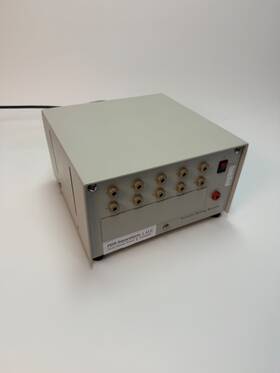
( Brand: Pdr-separations ), ( Manufacturer Part Number: 35900E ), ( Part Type: Module ), ( Country Of Origin: United States )
Review PDR SEPARATIONS chiral Solvent Mixing Module See Pitch Noise
The **PDR-Separations 35900E PDR-Chiral Solvent Mixing Module** is a high-performance, precision-engineered accessory designed to enhance the efficiency and selectivity of chiral separations in advanced analytical and preparative chromatography systems. Engineered for use with cutting-edge chiral stationary phases, this module integrates seamlessly into existing liquid chromatography setups, particularly those employing supercritical fluid chromatography (SFC) or high-performance liquid chromatography (HPLC), to deliver superior resolution and reproducibility in the separation of enantiomers. Its core innovation lies in the **pitch noise reduction technology**, a proprietary feature that minimizes unwanted vibrational artifacts during solvent mixing, thereby ensuring consistent flow dynamics and peak symmetry. This is critical for applications in pharmaceutical development, where the precise separation of chiral compounds is essential for ensuring drug efficacy, safety, and compliance with regulatory standards such as ICH guidelines.
The module employs a **closed-loop solvent mixing system** with independently controlled channels for the primary and secondary solvents, allowing for precise gradient elution profiles tailored to specific chiral analytes. The design incorporates a **low-dispersion mixing chamber** with optimized turbulence promoters, which facilitates rapid and homogeneous blending of chiral modifiers such as alcohols, amines, or ionic liquids without introducing dead volume or pressure spikes. This is particularly advantageous when working with high-viscosity or volatile chiral solvents, where traditional mixing methods may lead to band broadening or baseline drift. The **pitch noise suppression mechanism** operates through active feedback control, dynamically adjusting the mixing dynamics to counteract subtle fluctuations in solvent delivery, thereby reducing tailing and improving peak sharpness. This is achieved without compromising flow rates, making it suitable for both analytical-scale separations (e.g., 1 5 mL/min) and semi-preparative applications (up to 20 mL/min).
Constructed from **corrosion-resistant materials**, including PEEK, stainless steel, and specialized elastomers, the module is compatible with a wide range of chiral solvents, including supercritical CO , organic modifiers, and aqueous buffers, while maintaining chemical inertness and long-term stability. The modular design allows for easy integration into existing PDR-Separations or third-party chromatography systems, with standard interfaces for solvent pumps, detectors, and column ovens. Additionally, the system is equipped with **real-time monitoring capabilities**, enabling users to track solvent composition, pressure, and mixing efficiency via integrated software, which can be synchronized with chromatography data systems (CDS) for comprehensive process optimization. Whether applied to the separation of chiral drugs, agrochemicals, or natural products, the **35900E PDR-Chiral Solvent Mixing Module** represents a leap forward in chiral chromatography, offering unparalleled precision, reliability, and scalability for researchers and industrial laboratories demanding the highest standards of enantiomeric purity.
### **Pros and Cons of the PDR-Separations 35900E (PDR-Chiral Solvent Mixing Module with Pitch Noise Reduction)**
#### **Pros**
1. **Enhanced Chiral Separation Efficiency**
The module is designed specifically for chiral separations, which are critical in pharmaceuticals, agrochemicals, and fine chemicals. Its optimized mixing and separation technology can improve resolution and yield for enantiomers, reducing the need for additional purification steps.
2. **Precision Mixing Capabilities**
The PDR-Chiral module integrates advanced solvent mixing, ensuring consistent and homogeneous mixing of chiral solvents. This is particularly useful in high-throughput screening and preparative-scale separations where uniformity is essential.
3. **Pitch Noise Reduction**
The inclusion of pitch noise reduction technology suggests that the system is engineered to minimize mechanical vibrations and acoustic noise, which can be beneficial in sensitive analytical environments. This may also contribute to longer equipment lifespan by reducing wear from excessive vibrations.
4. **Compatibility with Existing PDR Systems**
As part of the PDR-Separations line, this module is likely designed to integrate seamlessly with other PDR equipment, such as pumps, detectors, and fraction collectors. This modularity can simplify system upgrades and maintenance.
5. **Potential for High-Throughput Applications**
The 35900E model may be suitable for automated or semi-automated chiral separations, reducing manual intervention and improving reproducibility. This is advantageous in industries where large-scale or continuous production is required.
6. **Durability and Reliability**
PDR-Separations is known for robust instrumentation, and this module likely incorporates high-quality materials and engineering to ensure long-term reliability, especially in demanding laboratory or production settings.
---
#### **Cons**
1. **High Initial Cost**
Specialized chiral separation modules, particularly those with advanced features like pitch noise reduction, are likely to be expensive. The upfront investment may be prohibitive for smaller laboratories or startups with limited budgets.
2. **Complexity in Operation and Maintenance**
Advanced modules often require trained personnel to operate and maintain effectively. Users may need additional training, which could add to operational costs. The pitch noise reduction system, while beneficial, might introduce additional components that complicate troubleshooting.
3. **Limited Versatility**
This module is tailored for chiral separations, which means it may not be suitable for other types of separations (e.g., general liquid chromatography, size-exclusion chromatography). Laboratories with diverse needs might need to invest in additional equipment.
4. **Potential for Higher Consumables Costs**
Chiral separations often require specialized solvents, columns, or stationary phases, which can be costly. The PDR-Chiral module may further increase consumable expenses compared to standard separation systems.
5. **Dependence on Supplier Support**
As a specialized piece of equipment, users may become reliant on PDR-Separations or authorized dealers for parts, repairs, and software updates. This could lead to higher long-term costs if support is required frequently.
6. **Learning Curve for New Users**
The integration of pitch noise reduction and chiral-specific features might require time for operators to fully understand and optimize the system s performance, potentially leading to initial inefficiencies.
---
### **Conclusion**
The **PDR-Separations 35900E (PDR-Chiral Solvent Mixing Module with Pitch Noise Reduction)** is a highly specialized tool tailored for laboratories or industries requiring precise chiral separations. Its strengths lie in its efficiency, precision mixing, noise reduction, and compatibility with existing PDR systems, making it ideal for pharmaceutical, agrochemical, or fine chemical applications where enantiomeric purity is critical.
However, the **high cost, complexity, and potential for increased consumable expenses** may outweigh the benefits for smaller labs or those with less specialized needs. Additionally, the learning curve and reliance on supplier support could pose challenges for users without prior experience with advanced separation systems.
### **Recommendation**
This module is **highly recommended** for:- **Pharmaceutical and biotech companies** conducting chiral drug development or quality control.
- **Research laboratories** focused on enantiomeric separations, such as those in medicinal chemistry or chiral catalysis.
- **Industrial settings** where high-throughput, automated chiral separations are essential for production efficiency.
For **smaller labs, academic institutions with limited budgets, or facilities requiring general separations**, the investment may not be justified. In such cases, alternative solutions such as standard chiral HPLC systems or lower-cost modular setups might be more practical.
Ultimately, the decision should be based on **budget, specific application needs, and long-term operational requirements**. A thorough cost-benefit analysis, including consumable costs and expected throughput, is advisable before purchasing.
Details:
I am not sure whether this is normal when nothing connected to the unit, or if it indicates a fault. Rear panel includes:AC power input. Condition Notes Unit powers on, but when turned on it produces a high-pitched noise. Feel free to message with any questions.
Serial: 11429. Only what is shown in the photos included. Please review all photos carefully for exact condition and configuration. Please review all photos carefully and message with any questions prior to purchase.
PDR-Chiral solvent mixing module shown in photos. I am uploading / including a video demonstration showing the unit powered on and sound it makes so buyers can evaluate for themselves. RS232-1 port. Ribbon cable 26-pin connection.
Front panel includes multiple numbered ports and one output connection. Front panel labeled:Solvent Mixing Module. Because of this, the unit is being sold with that behavior fully disclosed. PDR-Chiral / PDR-Separations Solvent Mixing Module.
Please review all photos and the video carefully for exact condition. WARRANTY: Backed by a 90-Day Functional Warranty. Cosmetically, the unit is in good overall condition with normal signs of prior use. Because the unit powers on but emits a high-pitched sound with no accessories or system connected, buyers should review video demonstration and purchase accordingly.
Unit includes the attached power cord and is labeled as a Solvent Mixing Module. In good overall cosmetic condition. Important This is specialized laboratory equipment.
part #: 35900e prices
- $200.00-$499.99
specifications plasticwarelabsuppy:
- brand: Pdr-separations
- mpn: 35900e
- part type: Module
- country of origin: United States
shipping plasticwarelabsuppy:
- carrier: USPS
- class: Expedited
- service: USPS Priority Mail
- cost: $0.00
- transit: 5-11 Days
- type: Fixed
payments plasticwarelabsuppy:
- other
- wallet: Apple-pay
- credit card: Discover
seller plasticwarelabsuppy:
- rating: 99.5%
- # reviews: 2923
- city: West Newbury, Massachusetts
general plasticwarelabsuppy:
- condition: For parts or not working
- Medical, Lab Dental Supplies > Glassware Plasticware > Other Medical Lab Glassware
returns plasticwarelabsuppy:
- policy: No Returns
offer plasticwarelabsuppy:
- best offers: True
- availability: In Stock
- quantity: 1
- sold: 0
- started: April 4, 2026
- options: Ship-to-home