OWN 41104922 Syringe Filters Um Pore Sterile 0.22
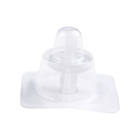
( Brand: Own ), ( Manufacturer Part Number: 41104922 ), ( Part Type: Filter )
Review OWN Nylon Syringe Filters 0.22 Um Pore Size Sterile 100 Pcs pk
Introducing our 13-piece set of 0.22 m Pore Size Sterile Syringe Filters (Item No: 41104922). These filters are designed to provide superior filtration efficiency and reliability, making them an essential tool in various laboratory, research, and industrial applications.
Each filter in this set is made from high-quality, hydrophilic polyethersulfone (PES) material, ensuring excellent chemical resistance and robustness. The 0.22 m pore size allows for the retention of particles larger than this size, while allowing smaller particles and solvents to pass through, ensuring the purity and integrity of your samples.
The filters are sterile, ensuring that they are free from bacteria, fungi, and other microorganisms, providing an added layer of safety in your experiments. They are also disposable, reducing the risk of cross-contamination between samples.
The filters are designed to fit standard 13mm syringes, making them compatible with a wide range of equipment. They are easy to use, simply attach the filter to the syringe, fill the syringe with your sample, and push the sample through the filter. The filters are also self-venting, which helps to reduce pressure build-up and makes filtration more efficient.
This set of 13 filters is packaged in a sterile, moisture-resistant pouch, ensuring that they remain sterile until use. The pouch also provides protection during storage and transport, ensuring that the filters remain in good condition.
In summary, this set of 13 0.22 m Pore Size Sterile Syringe Filters is a high-quality, reliable, and essential tool for any laboratory or researcher. Their high filtration efficiency, chemical resistance, and ease of use make them an indispensable tool for purifying samples and ensuring the integrity of your experiments.
Pros of buying 13 syringe filters (41104922) with 0.22 m pore size and sterile:1. High-quality filtration: The 0.22 m pore size ensures effective filtration of particles and contaminants, ensuring the purity of your samples.
2. Sterile: The filters are sterile, reducing the risk of contamination during use, which is crucial in many laboratory applications.
3. Convenience: These filters are disposable, making the cleaning process easy and reducing the risk of cross-contamination.
4. Cost-effective: Buying in bulk can be more cost-effective than purchasing individual filters.
Cons of buying 13 syringe filters (41104922) with 0.22 m pore size and sterile:1. Limited versatility: These filters may only be suitable for samples with particle sizes larger than 0.22 m.
2. Limited shelf life: Syringe filters may not have an extended shelf life, especially if not stored properly, which could lead to wastage.
3. Disposal concerns: Disposing of a large quantity of used filters can be a challenge and may have environmental implications.
Conclusion: Buying 13 syringe filters (41104922) with 0.22 m pore size and sterile can be a cost-effective solution for laboratories that require efficient filtration and sterility. However, it is essential to consider the potential limitations, such as the limited versatility and disposal concerns, and to ensure proper storage and disposal methods are in place.
Recommendation: If you are in the market for syringe filters, it is recommended to purchase in bulk to save on costs. Also, consider purchasing from a reliable supplier with a reputation for providing high-quality and reliable products. Additionally, ensure that proper disposal methods are in place to minimize environmental impact.
Details:
Specifications membrane: nylon, sterile housing material: polypropylene connectors: inlet: female lure outlet: male slip dimension: 13mm pore size. Nylon syringe filters has universal application for analytical procedures and are commonly used in chemical beverage filtration m filter area: 13 cm2 capacity. 100 pieces pk.
Crees sterile nylon membrane syringe filters are multi-layer design, low ex tractable, and with polypropylene for pre-filter. Each syringe filter is hermetically seal to ensure quality. Common uses removal of fine particulates prior to cg, plc, AFC, Ce, and GP sample analysis.
specifications plasticwarelabsuppy:
- brand: Own
- mpn: 41104922
- part type: Filter
Shipping plasticwarelabsuppy:
- type: Flat
- cost: $0.0
- handling: 1 days
Ratings:
- Shipping is fast 05-03-18
- Very Fast Shipping! Great Seller!! 05-21-18
- A seller 05-24-18
- Awesome product! 05-07-18
- Nice ty 03-28-18
Returns plasticwarelabsuppy:
- time: 30 Days
- paid by: Buyer
- policy: returns accepted
- type: Money Back
Payments plasticwarelabsuppy:
- PayPal
Offer plasticwarelabsuppy:
- best offer: false
- bids: 0
- Sold: 0
- Started: June 5, 2018, 11:03 pm
- quantity: 5
General plasticwarelabsuppy:
- business industrial > healthcare lab life science lab supplies business industrial > plasticware lab supplies
- in stock: Yes
- condition: New
Seller plasticwarelabsuppy:
- zipcode: 91017
- city: Monrovia, California