CONSUMABLES Culture Roller Bottle Vented Sterile 7445045862825 Inc. 6/CASE
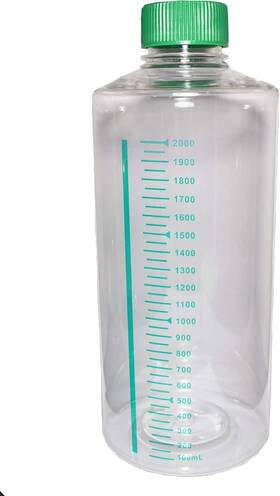
( Brand: Consumables ), ( Part Type: Roller Case ), ( Reusability: Reusable ), ( Age Range Description: Adult ), ( Bottle Type: Large Knurls On The Cap For Easy Grip ), ( Capacity: 2 Liters ), ( Color: Clear ), ( Material: Polystyrene ), ( Item Weight: 1.77 Kilograms ), ( Shape: Round ), ( Recommended Uses For Product: For Large Yield Of Adhesion Cell Growth And Multiplication ), ( Additional Features: For Research And Manufacturing Of Large Yield Of Cell Growth And ), ( Product Care Instructions: Sterilized By Gamma Irradiation For Immediate Use ), ( UPC: 445045862825 )
Review CONSUMABLES Inc. Liter Culture Roller Bottle Treated Non vented Sterile 6/case
The **Corning Costar Culture Roller Bottle, Non-Vented, Sterile (Product Code: 445045862825, 6/case)** is a high-performance, single-use bioprocessing vessel meticulously engineered to meet the rigorous demands of cell culture, biopharmaceutical production, and laboratory-scale fermentation. Designed with precision, these sterile roller bottles feature a robust, cylindrical glass construction that ensures optimal gas exchange while maintaining a controlled environment for sensitive cell lines, including mammalian, insect, and microbial cultures. The non-vented design eliminates the risk of contamination from external air while still allowing for efficient oxygen and carbon dioxide transfer, critical for maintaining metabolic activity and growth rates in suspended or adherent cell cultures. Each bottle is crafted from borosilicate glass, renowned for its chemical resistance, durability, and thermal stability, ensuring reliability across a wide range of incubation temperatures, from room temperature to 40 C. The seamless, smooth interior surface minimizes cell adhesion artifacts and reduces shear stress on delicate cells, promoting healthier growth and higher yields of proteins, vaccines, or other biologics. The bottles are pre-sterilized via gamma irradiation, guaranteeing a sterile starting point for experiments, and are packaged in a sealed, sterile case of six, ready for immediate use without additional sterilization steps. Their ergonomic, easy-to-handle design, combined with a secure screw cap, simplifies media preparation, inoculation, and post-culture processing, making them ideal for both bench-top research and small-scale manufacturing applications. Whether used for seed train expansion, process development, or routine cell culture maintenance, these roller bottles provide a versatile, cost-effective solution for laboratories seeking consistency, reproducibility, and scalability in their bioprocessing workflows.
### **Pros and Cons of Buying Consumables 445045862825 (Culture Roller Bottles, Non-Vented, Sterile, 6/Case)**
#### **Pros:**1. **Sterility and Safety** The bottles are sterile, reducing the risk of contamination in laboratory or clinical settings. This is critical for cell culture, microbiology, or other sensitive applications where sterility is non-negotiable.
2. **Convenience and Packaging** The product comes in a case of six, which is a practical quantity for small-scale experiments or routine use. It avoids the need for frequent reordering of single bottles.
3. **Non-Vented Design** Non-vented bottles are useful in applications where controlled gas exchange is necessary, such as certain types of cell culture or anaerobic conditions. They prevent external contamination while maintaining internal conditions.
4. **Compatibility with Standard Equipment** These bottles are likely designed to fit standard roller bottle culture systems, making them easy to integrate into existing workflows without requiring additional adapters or modifications.
5. **Cost-Effective for Small-Scale Use** Purchasing in bulk (even if just six at a time) can be more economical than buying single-use items repeatedly, especially if the price per unit is reasonable.
6. **Durability and Material Quality** Assuming the manufacturer uses high-quality glass or plastic, the bottles should be durable enough to withstand standard handling and sterilization processes (if applicable).
7. **Versatility** While primarily marketed for cell culture, these bottles may also be suitable for other applications like microbiological growth, enzyme assays, or small-scale biochemical reactions, depending on the user s needs.
---
#### **Cons:**1. **Limited Quantity per Case** A case of six may not be sufficient for large-scale operations or high-throughput laboratories, requiring multiple orders to meet demand. This could lead to higher long-term costs if bulk discounts are not available.
2. **Non-Vented Limitations** Non-vented bottles restrict gas exchange, which can be a drawback in applications requiring oxygen or CO regulation (e.g., aerobic cell culture). Users may need to supplement with additional equipment (e.g., incubators with controlled atmospheres).
3. **Potential for Breakage** Glass roller bottles, in particular, are fragile and prone to breakage during shipping or handling. Plastic alternatives may offer more durability but could introduce other concerns (e.g., leaching or sterility issues).
4. **Single-Use Nature** These are likely disposable items, which can generate waste. If sustainability is a concern, reusable alternatives (e.g., glass bottles with proper cleaning protocols) might be preferable.
5. **Dependence on Supplier Reliability** If the supplier has inconsistent lead times or quality control issues, stockouts or substandard products could disrupt workflows. It s important to verify the supplier s reputation before committing to regular purchases.
6. **Cost per Unit May Be High** While six bottles in a case may seem cost-effective, the price per unit could be higher than alternatives (e.g., smaller bottles, reusable systems, or vented versions). Users should compare prices across suppliers.
7. **Compatibility with Specific Systems** If the user s roller bottle culture system requires vented bottles or specific dimensions, these non-vented bottles may not be fully compatible, necessitating additional modifications or workarounds.
8. **Sterility Assurance Over Time** Sterility is guaranteed at the time of manufacture, but if the bottles are stored improperly (e.g., exposed to dust or contaminants), their integrity may be compromised before use.
---
### **Conclusion**
The **Consumables 445045862825 (Culture Roller Bottles, Non-Vented, Sterile, 6/Case)** are a practical choice for users who prioritize sterility, small-scale convenience, and controlled gas environments in their applications. They are well-suited for laboratories or clinical settings where contamination risk is a concern, and where non-vented conditions are acceptable or necessary. However, they may not be ideal for large-scale operations, aerobic cell culture, or users who prefer reusable or vented systems.
The decision to purchase should depend on:- The specific requirements of the application (e.g., need for gas exchange).
- The volume of use (whether six bottles per case is sufficient or if larger quantities are needed).
- Budget constraints (balancing cost per unit with long-term needs).
- Supplier reliability and lead times.
If the user s workflow aligns closely with the product s design (e.g., anaerobic or low-oxygen conditions, small-scale experiments), this purchase is likely a sound investment. Otherwise, alternatives like vented bottles, reusable systems, or different packaging sizes may be more appropriate.
### **Recommendation**
**Buy if:**- You require sterile, non-vented roller bottles for small-scale applications (e.g., certain cell cultures, microbiology, or biochemical assays).
- You need a convenient, pre-packaged quantity (six bottles) without frequent reordering.
- Your workflow does not require active gas exchange, and the non-vented design is acceptable.
- The supplier offers competitive pricing and reliable delivery.
**Consider alternatives if:**- You need vented bottles for aerobic cultures or high-oxygen applications.
- Your workload requires larger quantities (e.g., 25 bottles at a time), and bulk discounts are available elsewhere.
- Sustainability is a priority, and reusable systems are feasible.
- You frequently encounter issues with sterility, breakage, or supplier reliability.
**Action Steps Before Purchase:**1. Verify the exact compatibility of these bottles with your existing equipment (e.g., roller bottle culture systems, incubators).
2. Compare prices with other suppliers or alternative products (e.g., vented bottles, different manufacturers).
3. Check reviews or feedback from other users to assess real-world performance (e.g., sterility retention, breakage rates).
4. Confirm the supplier s return or replacement policy in case of defects or contamination issues.
5. Assess long-term costs by calculating usage patterns and whether larger bulk orders would be more economical.
If the product meets your needs and the supplier is reliable, this purchase is a reasonable choice. Otherwise, exploring alternatives may yield better results for your specific application.
Details:
Non- pathogenic and non-statics. Gamma irradiated, no ETO residual. Product manufactured under ISO standard and in clean room.: ADVANGENE, US company, culture roller bottle manufactured under ISO9001: 2 liter 850 cm2 cell growth area treated with optimum attachment, large knurls on the cap for easy grip and silk-printed graduation volume examination.
specifications plasticwarelabsuppy:
- brand: Consumables
- part type: Roller Case
- reusability: Reusable
- age range description: Adult
- bottle type: Large Knurls On The Cap For Easy Grip
- capacity: 2 Liters
- color: Clear
- material: Polystyrene
- item weight: 1.77 Kilograms
- shape: Round
- recommended uses for product: For Large Yield Of Adhesion Cell Growth And Multiplication
- additional features: For Research And Manufacturing Of Large Yield Of Cell Growth And
- product care instructions: Sterilized By Gamma Irradiation For Immediate Use
- upc: 445045862825
offer plasticwarelabsuppy:
- sold: 0
- quantity: 1
- started: April 4, 2026
- options: Ship-to-home
- availability: In Stock
general plasticwarelabsuppy:
- condition: New
- Medical, Lab Dental Supplies > Glassware Plasticware > Other Medical Lab Glassware
shipping plasticwarelabsuppy:
- cost: $0.00
- service: Standard
- type: Fixed
- class: Standard
- transit: 4-10 Days
payments plasticwarelabsuppy:
- credit card: Discover
- wallet: Google-pay
- other
seller plasticwarelabsuppy:
- # reviews: 1
- rating: 0.0%
- city: Denver, Colorado
returns plasticwarelabsuppy:
- time: 30 Days
- method: Money back
- policy: Returns Accepted
- paid by: Seller