VWR 47729-568 Glass Culture Tubes Box 10X75MM 3ML 250
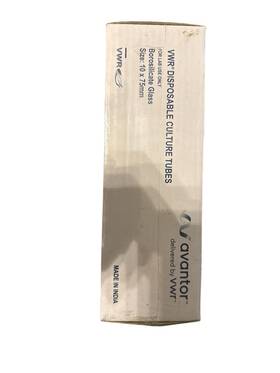
( Brand: Vwr ), ( Manufacturer Part Number: 47729-568 ), ( Part Type: Tube Box ), ( Unit Type: Unit ), ( Unit Quantity: Box Of 250 ), ( Country Of Origin: United States ), ( Intended Use/discipline: Biological Laboratory, Medical Laboratory, Microbiological Laboratory )
Review VWR Glass Culture Tubes 10x75mm 3ml Box Of 250
The **VWR 47729-568 Glass Culture Tubes (10 75mm, 3mL capacity, Box of 250)** represent a high-quality, versatile laboratory essential designed for precision and reliability in a wide range of microbiological, biochemical, and analytical applications. Crafted from borosilicate glass (Type 1, conforming to ASTM E438 standards), these tubes offer exceptional chemical resistance, thermal stability, and durability, ensuring they can withstand repeated autoclaving, sterilization, and exposure to harsh reagents without compromising structural integrity. Their standard dimensions of **10mm in diameter and 75mm in length** provide an optimal balance between sample volume and ease of handling, accommodating up to **3mL of liquid or semi-solid media** while minimizing evaporation and contamination risks. The smooth, polished glass surface facilitates easy cleaning and prevents microbial adhesion, making them ideal for culturing bacteria, fungi, or other microorganisms, as well as for biochemical assays, enzyme reactions, or small-scale liquid handling tasks. Each tube is meticulously manufactured to meet stringent quality control measures, ensuring uniformity in size, wall thickness, and clarity, which is critical for consistent experimental results. The **box of 250 tubes** offers cost-effective bulk purchasing without sacrificing performance, and the packaging is designed for secure storage and easy access, reducing the risk of breakage during transit or handling. Whether used in educational settings, clinical diagnostics, or industrial research, these culture tubes exemplify reliability and precision, making them a cornerstone of any well-equipped laboratory.
**Pros and Cons of Buying VWR 47729-568 Glass Culture Tubes (10x75mm, 3mL, Box of 250)**
### **Pros:**1. **High Quality and Durability** VWR is a reputable supplier known for producing reliable laboratory glassware. These tubes are likely made from borosilicate glass, which is chemically resistant, heat-resistant, and durable, making them suitable for long-term use in microbiology, cell culture, or biochemical assays.
2. **Standardized Dimensions** The 10x75mm size is a common format in laboratories, ensuring compatibility with most standard racks, incubators, and automated systems. The 3mL capacity is practical for many routine procedures, such as bacterial cultures, enzyme assays, or small-scale reactions.
3. **Sterile Packaging** VWR products are typically sold in sterile packaging, reducing the risk of contamination when first opened. This is critical in microbiology and sterile tissue culture work.
4. **Cost-Effective for Bulk Orders** Buying in a box of 250 provides a good quantity for routine lab use, potentially lowering the per-unit cost compared to smaller, single-tube purchases. This is ideal for labs that frequently perform similar experiments.
5. **Compatibility with Common Lab Equipment** These tubes are likely designed to fit standard laboratory racks, centrifuges, and incubators, minimizing the need for additional adapters or modifications.
6. **Chemical Resistance** Borosilicate glass resists most acids, bases, and organic solvents, making these tubes versatile for a wide range of applications, including DNA/RNA extraction, protein purification, and chemical synthesis.
7. **Easy to Clean and Reuse** Glass is easier to clean and sterilize than plastic, extending the lifespan of the tubes if properly maintained. They can be autoclaved, baked, or cleaned with harsh detergents without degradation.
8. **Transparency for Visual Inspection** The clarity of glass allows for easy monitoring of reactions, cell growth, or precipitation without the risk of light interference (unlike some plastics).
9. **Compliance with Laboratory Standards** VWR adheres to industry standards for laboratory glassware, ensuring that the tubes meet regulatory requirements for use in research, clinical, or industrial settings.
10. **Widely Available Accessories** Since these are standard tubes, caps, stoppers, or sealing films (e.g., parafilm) are readily available if needed for specific applications.
---
### **Cons:**1. **Fragility Compared to Plastic** Glass is more prone to breaking or chipping than plastic alternatives, especially if dropped or mishandled. This increases the risk of injury to lab personnel and potential contamination if glass shards enter samples.
2. **Higher Cost Than Plastic Tubes** While borosilicate glass is durable, it is generally more expensive than disposable plastic tubes. For high-throughput or single-use applications, plastic may be more economical.
3. **Weight and Bulk** Glass tubes are heavier than plastic, which can make handling large quantities more cumbersome, especially when filling or transferring liquids.
4. **Limited Flexibility for Specialized Uses** Some applications (e.g., fluorescence-based assays or certain biochemical reactions) may require tubes with specific optical properties or coatings that glass does not provide. Plastic tubes with UV-transparent or treated surfaces may be necessary in such cases.
5. **Potential for Contamination from Glass Particles** If tubes are not cleaned thoroughly, microscopic glass particles can flake off and contaminate samples, particularly in sensitive assays like PCR or protein crystallization.
6. **Not Ideal for Low-Temperature Applications** While borosilicate glass is heat-resistant, it may not perform as well as certain plastics (e.g., polypropylene) in very low-temperature applications (e.g., long-term storage at -80 C), where plastic may be more flexible and less prone to cracking.
7. **Single-Use Considerations** If the tubes are intended for single-use (e.g., in some clinical or high-contamination-risk settings), the cost and effort of sterilizing and reusing them may outweigh the benefits.
8. **Compatibility with Some Automated Systems** While standard-sized, some high-speed or automated liquid handlers may require specific tube dimensions or materials. Always verify compatibility before purchasing.
9. **Environmental Impact** Glass is not biodegradable, and disposing of broken glass requires careful handling. Labs with strict sustainability policies may prefer plastic alternatives, though recycling options for glass are more common.
10. **Potential for Static Charge** Unlike some plastics, glass does not inherently have anti-static properties, which could be a minor issue in applications sensitive to electrostatic interference.
---
### **Conclusion:**The **VWR 47729-568 glass culture tubes** are an excellent choice for laboratories requiring **durability, chemical resistance, and compatibility with standard procedures**. They are ideal for **microbiology, cell culture, biochemical assays, and routine experiments** where reusability and transparency are valued. However, they may not be the best option for **high-throughput, single-use, or low-temperature applications**, or where **fragility or cost** is a significant concern.
If your lab prioritizes **sterility, longevity, and versatility**, these tubes are a strong investment. If **cost, weight, or ease of handling** are critical factors, plastic alternatives (e.g., polypropylene tubes) might be more suitable. Always consider your specific workflow, budget, and safety protocols before deciding.
---
### **Recommendation:** **Buy these VWR glass tubes if:**- You need **reusable, chemically resistant, and high-quality** tubes for **microbiology, cell culture, or general lab use**.
- Your lab frequently performs **sterile techniques** and requires **durable glassware**.
- You are working with **standard-sized equipment** and do not need specialized tube properties.
- The **bulk quantity (250 tubes)** aligns with your lab s routine needs, offering a good balance of cost and usability.
**Consider alternatives (e.g., plastic tubes) if:**- You require **single-use or disposable** tubes for cost or contamination control.
- Your applications involve **low temperatures, high-speed centrifugation, or automated liquid handling** where plastic may be more compatible.
- **Budget constraints** make plastic a more economical choice, even if it means less reusability.
- Your lab has **strict safety protocols** that prioritize minimizing glass-related hazards (e.g., in teaching labs with students).
For most **general laboratory use**, these VWR glass tubes are a **reliable and practical purchase**. Always verify compatibility with your specific equipment and procedures before ordering.
Details:
The VWR 47729-568 Glass Culture Tubes are high-quality laboratory glassware perfect for use in medical, microbiological, and biological laboratories. Made in the USA by trusted brand VWR, these 10x75mm tubes have a volume of 3mL and come convenient box 250 units.
part #: 47729568 prices
- $18.00-$35.00
specifications plasticwarelabsuppy:
- brand: Vwr
- mpn: 47729-568
- part type: Tube Box
- unit type: Unit
- unit quantity: Box Of 250
- country of origin: United States
- intended use/discipline: Biological Laboratory, Medical Laboratory, Microbiological Laboratory
payments plasticwarelabsuppy:
- wallet: Google-pay
- credit card: Discover
- other
shipping plasticwarelabsuppy:
- transit: 5-10 Days
- cost: $0.00
- carrier: USPS
- class: Standard
- type: Calculated
- service: USPS Ground Advantage
returns plasticwarelabsuppy:
- policy: No Returns
offer plasticwarelabsuppy:
- best offers: True
- quantity: 10
- started: February 4, 2026
- options: Ship-to-home
- availability: In Stock
- sold: 0
general plasticwarelabsuppy:
- condition: New
- Medical, Lab Dental Supplies > Glassware Plasticware > Other Medical Lab Glassware
seller plasticwarelabsuppy:
- rating: 97.8%
- city: Dallas, Texas
- # reviews: 1584
Vwr 47729-568 Is Similar To:
- 12000-814 Vwr Inoculating Needles Box Of Total Per Pack (32.4% similar) Vwr inoculating needles exp...(March 5th, 2019)
- 1395-500 Pyrex Fisherbrand Vwr Glass Round Media Graduated Bottle Lot (28.8% similar) No chips or cracks see pictures...(October 19th, 2018)
- 14672-380 Vwr Disposable Pasteur Pipets Lime Glass Length Inch Box Of (32% similar) Shipping quotes are for the USA lower 48 states only. Please for shipping quote. Vwr disposable Pasteur pipers, lime glass length 9 inch, box of 200 this offer is for a lot length : that are new in...(August 6th, 2018)
- 14673-043 Vwr Disposable Borosilicate Glass Pasteur Pipets Appx (31.9% similar) 112 count of Vwr Pasteur pipers made with brisket glass in 9 length...(December 7th, 2018)
- 16466-064 Vwr New Micro Tubes With Cap And Graduations Ml Qty (25.6% similar) ...(March 1st, 2019)
- 20170-170 Vwr Tubes Graduated (23.5% similar) 0ML 500 bag from Vwr is per bag'us...(August 9th, 2018)
- 20170-650 Vwr Disposable Micro-centrifuge Tubes (29.1% similar) To make sure you are getting an accurate quote via the shipping calculator, your zip code is default when calculating cost for this item. Review the pictures for included elements and condition of item...(March 27th, 2017)
- 211-0015 Vwr Micro Centrifuge Tubes (33% similar) 5 ml - color: natural per bag please with any questions...(June 12th, 2017)
- 25384-146 Vwr Specimen Container Cap Oz Sterile New Box Of (31.6% similar) Part: 25384-146 prices...(July 12th, 2018)
- 28310-106 Vwr Scientific Filter Paper Round Grade Partial Box (25.6% similar) Offer is for 60 papers. I am happy to resolve any issues you might have before that becomes necessary. FedEx smart post, USPS priority, home delivery, first class are typical methods used. For sale: 60 Vwr scientific filter paper 12...(May 12th, 2018)
- 28333-127 Vwr Glass Fiber Filters (31.5% similar) Glass fiber filters filter pack unused older stock fast shipping...(March 26th, 2017)