ACE GLASS 50-972-944 Jacketed Pressure Vessel Reactor 6438-29 45 5L
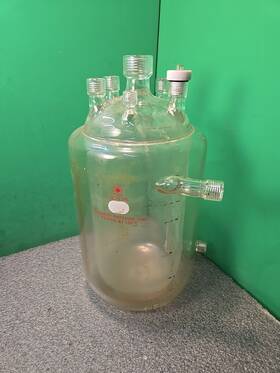
( Brand: Ace Glass ), ( Manufacturer Part Number: 50-972-944 ), ( Part Type: Pressure Reactor ), ( Country Of Origin: United States ), ( Intended Use/discipline: Biological Laboratory, Dental Laboratory, Medical Laboratory, Microbiological Laboratory, Physical Laboratory )
Review ACE GLASS Jacketed Pressure Vessel 45 Psi Reactor 5l
The **Ace Glass 50-972-944 6438-29 Jacketed Pressure Vessel (45 Reactor, 5L)** is a high-performance, laboratory-grade reactor designed for precision chemical synthesis, pharmaceutical development, and materials science applications where controlled temperature and pressure are critical. Constructed from **Type 316L stainless steel**, this vessel combines durability with corrosion resistance, ensuring long-term reliability even under demanding conditions. The **5-liter working capacity** provides ample volume for medium-scale reactions, making it ideal for research labs, academic institutions, and small-scale industrial processes where scalability and efficiency are essential. The **jacketed design** enhances thermal regulation by allowing precise temperature control through the circulation of heating or cooling fluids, eliminating the need for external baths and reducing energy consumption. This feature is particularly advantageous for exothermic or endothermic reactions, where maintaining a stable reaction environment is paramount to product consistency and safety.
The reactor s **pressure rating of 45 psi (3 bar)** accommodates a wide range of reaction conditions, from atmospheric to moderate pressure applications, while its **double-walled construction** minimizes heat loss and ensures uniform temperature distribution throughout the vessel. The **standard PTFE (polytetrafluoroethylene) lined interior** offers exceptional chemical compatibility, resisting degradation from aggressive solvents, acids, and bases, which extends the vessel s lifespan and reduces maintenance requirements. The **quick-connect fittings and ports** facilitate easy attachment of agitators, condensers, and other auxiliary equipment, streamlining setup and operation for complex reaction setups. Additionally, the vessel is equipped with a **safety relief valve** and a **burst disk assembly**, providing critical overpressure protection to prevent catastrophic failures and ensure compliance with laboratory safety standards.
For enhanced functionality, the **Ace Glass 50-972-944 6438-29** is compatible with a variety of optional accessories, including **magnetic drive agitators, temperature controllers, and vacuum systems**, allowing researchers to tailor the reactor to specific experimental needs. The vessel s **transparent borosilicate glass window** enables real-time visual monitoring of reactions, while the **sealed lid with multiple ports** supports the integration of sensors, gas inlets, and sampling devices. Built to meet **ASTM, ANSI, and FDA standards**, this reactor is not only suitable for routine laboratory use but also for applications requiring compliance with stringent regulatory requirements, such as pharmaceutical manufacturing or bioprocessing. Whether used for polymerization, crystallization, or high-temperature reactions, the **Ace Glass 50-972-944 6438-29** delivers a robust, versatile, and reliable solution for demanding chemical processes.
**Pros and Cons of buying a Ace Glass 50-972-944 6438-29 Jacketed Pressure Vessel (45 Reactor, 5L)**
### **Pros**
1. **Durability and Safety** The vessel is made of borosilicate glass (likely Type 3.3 or similar), which is highly resistant to thermal shock, chemical corrosion, and pressure fluctuations. The jacketed design ensures even heating or cooling, reducing the risk of hot spots or uneven reactions.
2. **Versatility** The 5L capacity is suitable for small-scale laboratory, pilot, or industrial applications, including synthesis, distillation, extraction, and batch processing. The jacketed design allows for temperature control via circulating fluids (e.g., water, oil, or coolant), making it adaptable to various reaction conditions.
3. **Compatibility with Agitation** The vessel is designed to accommodate stirring mechanisms (e.g., overhead stirrers with magnetic or mechanical drives), enabling efficient mixing of reactants, which is critical for homogeneous reactions and preventing sedimentation.
4. **Pressure Resistance** The "pressure vessel" designation indicates it can handle elevated pressures (typically up to 15 30 psi, depending on the exact model and configuration), expanding its utility beyond atmospheric reactions. This is useful for high-pressure synthesis, hydrogenation, or supercritical fluid processes.
5. **Chemical Resistance** Borosilicate glass resists most acids, bases, and organic solvents, making it ideal for corrosive or aggressive reaction environments. The jacketed design also prevents contamination from external heating/cooling media.
6. **Transparency and Monitoring** The glass construction allows real-time visual monitoring of reactions, which is invaluable for observing color changes, phase separation, or side reactions. This reduces reliance on external sensors for basic observations.
7. **Modularity and Accessories** Ace Glass products often come with compatible fittings for adding ports, condensers, thermometers, or pressure gauges. The 45 angle design may also facilitate easier sampling or addition of reagents without disrupting the reaction.
8. **Cleanability and Sterilization** Glass surfaces are easy to clean and can be sterilized (e.g., via autoclaving or chemical cleaning), making it suitable for pharmaceutical, biotech, or food-grade applications where contamination control is critical.
9. **Energy Efficiency** The jacketed design promotes efficient heat transfer, reducing energy consumption compared to external heating methods like oil baths or sand baths.
10. **Long Lifespan** With proper care, borosilicate glass vessels can last decades, offering a cost-effective investment for laboratories or production facilities.
---
### **Cons**
1. **Fragility** Despite its durability, glass is brittle and susceptible to sudden impacts, thermal shock (e.g., rapid temperature changes), or mechanical stress. Improper handling or mishandling of the vessel or its contents (e.g., dropping a metal stirrer) can cause catastrophic failure.
2. **Limited Pressure and Temperature Range** While the vessel is designed for pressure applications, its maximum pressure and temperature limits are typically lower than those of metal or high-performance polymer vessels. Exceeding these limits (e.g., using it for high-temperature supercritical reactions) risks failure. Always verify the vessel s specifications with the manufacturer.
3. **Weight and Portability** A 5L glass vessel with a jacket can be heavy (often 10 20 kg or more), making it less portable than plastic or metal alternatives. Moving or transporting it requires care to avoid damage.
4. **Cost** High-quality borosilicate glass vessels are more expensive upfront than plastic or stainless steel alternatives, especially when factoring in the jacketed design and pressure-rated components. Long-term costs may be justified by durability, but initial investment is higher.
5. **Maintenance and Repair** Cracked or damaged glass vessels are typically not repairable and must be replaced. Scratches or etching from abrasive cleaning can weaken the glass over time. Repairing or replacing a vessel after failure can be costly.
6. **Compatibility with Certain Reagents** While borosilicate glass resists most chemicals, some highly aggressive or abrasive substances (e.g., hydrofluoric acid, strong alkalis at high temperatures) may eventually degrade the glass or its seals over prolonged use.
7. **Sealing Challenges** The jacketed design requires reliable seals (e.g., gaskets or O-rings) to prevent leaks. Over time, these seals may degrade, necessitating replacement and potential downtime for maintenance.
8. **Limited to Low-Volume Applications** The 5L capacity is ideal for small-scale work but may be insufficient for large-scale production. Scaling up would require multiple vessels or a larger system, increasing complexity and cost.
9. **Installation Complexity** Setting up a jacketed vessel with heating/cooling circuits, agitation, and instrumentation requires careful planning and expertise. Improper installation (e.g., air pockets in the jacket, incorrect fluid flow) can lead to inefficient heating/cooling or equipment failure.
10. **Space Requirements** The vessel and its associated equipment (e.g., stirrer, heating mantle, condensers) occupy significant bench or floor space, which may be a constraint in small laboratories or tight workspaces.
---
### **Conclusion**
The **Ace Glass 50-972-944 6438-29 jacketed pressure vessel (45 reactor, 5L)** is a robust, versatile tool for small-scale to pilot-scale reactions requiring precise temperature control, pressure resistance, and chemical compatibility. Its borosilicate glass construction ensures safety and durability for a wide range of applications, from organic synthesis to bioprocessing. The jacketed design enhances efficiency and flexibility, while transparency allows for real-time monitoring.
However, its fragility, higher cost, and maintenance requirements necessitate careful handling and proper operational protocols. It is best suited for environments where chemical resistance, cleanability, and visual monitoring are prioritized over portability or extreme pressure/temperature conditions. For applications requiring higher pressures, temperatures, or volumes, alternative materials (e.g., stainless steel or high-performance polymers) may be more appropriate.
---
### **Recommendation**
**Buy this vessel if:**- You need a **reliable, chemically resistant reactor** for small-scale to pilot-scale applications (e.g., lab research, pharmaceutical synthesis, or food processing).
- Your work involves **temperature-controlled reactions** (heating or cooling) and requires **visual monitoring** of the process.
- You operate in an environment where **safety and cleanliness** are critical (e.g., pharmaceuticals, biotech, or regulated industries).
- You are willing to invest in **proper installation, maintenance, and handling** to maximize its lifespan and performance.
**Avoid or consider alternatives if:**- Your application requires **extreme pressures or temperatures** beyond the vessel s rated limits (verify specifications with Ace Glass).
- You frequently handle **highly abrasive or aggressive reagents** that may degrade the glass over time.
- **Portability or ease of use** is a priority, and the weight or setup complexity is a concern.
- Your budget is constrained, and you can opt for a **plastic or metal vessel** that meets your basic requirements at a lower cost.
**Additional Tips:**- Purchase from a **reputable supplier** (e.g., Ace Glass authorized dealers) to ensure authenticity and proper documentation.
- Include **compatible accessories** (e.g., stirrer, heating mantle, condensers) to fully utilize the vessel s capabilities.
- Follow **manufacturer guidelines** for installation, pressure testing, and maintenance to prevent accidents.
- Consider **insurance or backup systems** in case of vessel failure, especially for high-value or critical applications.
For most **laboratory or pilot-scale applications** where chemical compatibility and temperature control are key, this vessel is an excellent choice. However, always cross-reference its specifications with your exact process requirements to ensure it meets your needs.
Details:
5000mL one-piece jacketed round bottom pressure vessel with a #25 neck, 4 #15 and 1 #7 side necks, 28/15 o-ring ball joint on the inlet/outlet. Used but in working order and condition with no chips or cracks. Vessel is part of pressure reactor system designed to perform low moderate positive reactions, synthesis and catalysis.
part #: 50972944 price
- $1175.00
specifications plasticwarelabsuppy:
- brand: Ace Glass
- mpn: 50-972-944
- part type: Pressure Reactor
- country of origin: United States
- intended use/discipline: Biological Laboratory, Dental Laboratory, Medical Laboratory, Microbiological Laboratory, Physical Laboratory
general plasticwarelabsuppy:
- condition: Used
- Medical, Lab Dental Supplies > Glassware Plasticware > Other Medical Lab Glassware
returns plasticwarelabsuppy:
- paid by: Buyer
- method: Money back
- policy: Returns Accepted
- time: 30 Days
shipping plasticwarelabsuppy:
- type: Calculated
- service: UPS Ground Saver, USPS Ground Advantage, USPS Priority Mail
- transit: 9-13 Days
- carrier: UPS, USPS
- cost: $58.47
- class: Economy, Standard, Expedited
payments plasticwarelabsuppy:
- wallet: Google-pay
- other
- credit card: Discover
seller plasticwarelabsuppy:
- city: Westminster, Massachusetts
- # reviews: 2084
- rating: 100.0%
offer plasticwarelabsuppy:
- sold: 0
- quantity: 1
- options: Ship-to-home
- started: January 31, 2026
- availability: In Stock
Ace Glass 50-972-944 Is Similar To:
- 1200ml Ace Glass Instatherm Low Form Oil Bath With Cord (25.4% similar) Review the pictures for included elements and condition of item. See pictures for more details. Max volts :120. This is for one used 1200ML Ace Glass einsteinium oil bath. To make sure you are getting an accurate quote via the shipping calculator, your zip code is default when calculating cost for ...(October 25th, 2018)
- 19-38 Ace Glass Incorporated Lab (31.1% similar) Please see pictures and I will try to answer any questions. It is used and needs to be cleaned up. I honestly don't know exactly what it is so how to better describe. Ace Glass I got it from a university offer with bunch of other stuff...(March 30th, 2019)
- 3840-lco Pyrex Bulb Ace Glass Laboratory Chemistry Glassware (27.5% similar) I don't know what they are used for, but assume have been used, because were with a group of these items, some which clearly. The pictures you see are of actual item. You are buying on a pair of items. The Ace Glass item has a chip on very bottom. So, I assume they may need to be cleaned for your ...(June 30th, 2019)
- 40-35 Ace Glass Laboratory Total Length Approx Not Sure Porosity Read (34.3% similar) Not sure what its proper name is. Ace Glass laboratory total length approx 15 not sure: porosity maybe - read I picked this up from a local colleges liquidation sale over 10 years ago. It does not come with its original box but is new old stock. I saw some that looked similar called porosity. ...(February 4th, 2019)
- 513654 Ace Glass Claisen Distilling Adapter Thread St (29% similar) ...(January 14th, 2019)
- 5295-16 Ace Glass Outlet Stopcock Flask Adapter With Straight Tip Size (24.1% similar) Warranty this item is guaranteed to be as described. Power cords and adapters are never included unless specifically mentioned. Good luck buying. It comes with a 14 day guarantee against being DOA from receipt. Always here to help this unit will arrive in the condition shown. On the ask a question ...(March 29th, 2019)
- 5837-53 Ace Glass Ptfe Thread Tip Adapter (28.6% similar) Ace Glass PDF lure-Loki 50 thread tip adapter with o-ring used lightly. Selling as is...(January 23rd, 2019)
- 5846-47 Pyrex Ace Glass Teflon Ptfe Back Seal Plug For Pressure (37.3% similar) Used in excellent condition...(March 3rd, 2019)
- 5848-58 Ace Glass 6 Polyethylene (29.1% similar) 6 per package. Selling as is. 6 Ace Glass polyethylene filter discs unknown porosity new qty...(January 21st, 2018)
- 5964-12 Ace Glass Dewar Type Condenser Id Jacket Joint Od Connect (33.8% similar) In great used condition. Very small chip on bottom joint. Used Glassware will show signs of wear sometimes including light scratches, discoloration, stickers tape, or exterior markings. Thorough cleaning and sterilization are recommended before use...(November 12th, 2018)
- 6563 Ace Glass Distillation High Boiling Still (22.2% similar) Note: if pot bleed is desired, a two neck flask can be used. Thermometer joint is for 9551, 25MM immersion. Useful for separating higher boiling liquids that require a short pot-to-column distance to prevent excessive condensation...(January 2nd, 2019)