KIMBLE KONTES 608700-0424 Glass Pear Boiling Flask 200ML 24/40 1-NECK
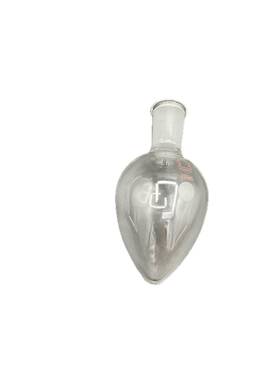
( Brand: Kimble Kontes ), ( Manufacturer Part Number: 608700-0424 ), ( Intended Use/discipline: Biological Laboratory, Dental Laboratory, Medical Laboratory, Microbiological Laboratory, Physical Laboratory ), ( Country Of Origin: United States ), ( Unit Type: Unit ), ( Additional Information: Surplus Laboratory Consumable Supplies )
Review KIMBLE KONTES Glass 200ml 24/40 Pear Shaped Boiling Flask
The **Kimble Kontes 608700-0424 Glass 200 mL 24/40 Single-Neck Pear-Shaped Boiling Flask** is a precision-engineered laboratory glassware essential for a wide range of chemical, biological, and pharmaceutical applications. Crafted from high-quality borosilicate glass (typically Type I or Type II, depending on the specific batch), this flask is designed to withstand extreme thermal and chemical stresses, making it ideal for high-temperature reactions, reflux setups, and distillation processes. Its distinctive pear shape wide at the base and narrowing toward a single 24/40 standard taper neck optimizes heat distribution and minimizes hot spots during boiling, reducing the risk of thermal shock and ensuring more efficient and controlled reactions. The 200 mL capacity strikes a balance between practicality and versatility, accommodating moderate-scale experiments while still allowing for sufficient headspace for vapor or reflux condensate. The 24/40 joint ensures compatibility with a vast array of laboratory glassware, including condensers, adapters, and other standardized glass components, facilitating seamless integration into complex experimental setups. Beyond its functional design, the flask s smooth, polished surface and durable construction minimize residue buildup and corrosion, promoting ease of cleaning and longevity. Whether used in synthesis, extraction, or analytical procedures, this flask exemplifies reliability and precision, making it a cornerstone of any well-equipped laboratory. Its robust construction and consistent performance ensure that researchers can focus on their experiments with confidence, knowing that their glassware will endure the demands of rigorous scientific work.
### **Pros and Cons of buying a Kimble Kontes 608700-0424 Glass 200 mL 24/40 1-Neck Pear Boiling Flask**
#### **Pros:**1. **Durability and Chemical Resistance** Made from borosilicate glass (likely Type I or II), this flask is highly resistant to thermal shock, corrosion, and most chemicals, making it suitable for laboratory use, distillation, and boiling applications.
2. **Precision Ground Joint (24/40 Standard)** The 24/40 joint ensures a tight, leak-proof seal when connected to compatible glassware (e.g., condensers, adapters, or other flasks). This standard is widely used in chemistry, ensuring compatibility with most lab equipment.
3. **Efficient Heating and Boiling** The pear-shaped design allows for even heat distribution, reducing hot spots and improving boiling efficiency. This is particularly useful in distillation, reflux, or solvent evaporation processes.
4. **Transparency for Visual Monitoring** The clear glass allows easy observation of reactions, color changes, or boiling progress without opening the flask, which minimizes contamination risks.
5. **Compatibility with Lab Equipment** Works seamlessly with standard lab setups, including heating mantles, hot plates, and condensers, making it versatile for various experiments.
6. **Long Lifespan** High-quality borosilicate glass is less prone to cracking or breaking compared to soda-lime glass, extending the flask s usable life.
7. **Easy to Clean** The smooth glass surface resists staining and can be cleaned with solvents, acids, or basic detergents without damage.
8. **Safety for High-Temperature Use** Suitable for applications involving boiling, refluxing, or heating to high temperatures (up to 500 C, depending on the borosilicate grade).
9. **Cost-Effective for Lab Use** While not the cheapest option, its durability and performance justify the investment for professional or frequent lab use.
10. **Brand Reputation** Kimble Kontes is a trusted manufacturer in the scientific community, known for producing reliable and high-quality glassware.
---
#### **Cons:**1. **Fragility Despite Durability** While borosilicate glass is more resistant than soda-lime glass, it can still shatter if subjected to sudden temperature changes (e.g., quenching a hot flask in cold water) or mechanical stress (e.g., dropping it).
2. **Limited Volume for Large-Scale Use** At only 200 mL, this flask is best suited for small-scale experiments. Larger volumes may be needed for industrial or bulk applications.
3. **Weight** Glass flasks are heavier than plastic alternatives, which can be cumbersome for frequent handling or fieldwork.
4. **Cost Compared to Plastic** If budget is a major concern, plastic or polycarbonate flasks may be cheaper, though they lack the thermal and chemical resistance of glass.
5. **Maintenance of Joints** The 24/40 joint requires careful handling to avoid scratches or misalignment, which could compromise seals over time. Regular cleaning of the joint is necessary to prevent residue buildup.
6. **Not Ideal for Vacuum Applications** While it can handle standard atmospheric pressure, it may not be suitable for high-vacuum systems without additional reinforcement.
7. **Breakage Risk in Rough Environments** In settings with high vibration, dust, or rough handling (e.g., field labs or mobile setups), the risk of accidental breakage increases.
8. **Limited Color Options** Most borosilicate flasks are clear; colored glass (e.g., amber for UV protection) would require a separate purchase and may not be necessary for all applications.
9. **Replacement Parts May Be Expensive** If the joint or flask body is damaged, replacement parts (e.g., new joints or flasks) can be costly compared to cheaper glassware brands.
10. **Not Autoclavable or Sterilizable in All Cases** While borosilicate glass can withstand autoclaving, prolonged exposure to high-pressure steam may weaken the glass over time, depending on the manufacturer s specifications.
---
### **Conclusion:**The **Kimble Kontes 608700-0424 200 mL 24/40 pear boiling flask** is an excellent choice for laboratory applications requiring durability, chemical resistance, and precision. Its borosilicate construction, standard joint compatibility, and transparency make it ideal for distillation, reflux, and boiling processes. However, its fragility, weight, and higher cost compared to plastic alternatives may be drawbacks depending on the user s needs.
For **professional labs, educational settings, or frequent use in chemistry experiments**, the pros outweigh the cons, making it a worthwhile investment. For **budget-conscious users, small-scale hobbyists, or applications where weight is a concern**, alternatives like plastic flasks or smaller volumes may be more practical.
---
### **Recommendation:** **Buy this flask if:**- You need a reliable, long-lasting glass flask for laboratory work.
- Compatibility with standard 24/40 glassware is essential for your setup.
- You require transparency, chemical resistance, and heat tolerance for boiling or distillation.
- You prioritize durability over cost and are willing to handle it carefully.
**Consider alternatives if:**- You work in a high-vibration or rough environment where breakage is a risk.
- Your budget is extremely limited, and plastic or lower-cost glassware suffices.
- You need larger volumes or specialized features (e.g., vacuum compatibility, colored glass).
- You require frequent autoclaving or sterilization in harsh conditions.
For most **serious laboratory users**, this flask is a **highly recommended purchase** due to its quality and versatility. For casual or non-lab use, weigh the pros and cons carefully against your specific needs.
Details:
Otherwise no chips / cracks throughout. GSR veers 1730 GS 9.9.4 1730 , GSR 1730 Used item in great condition. Small scrape / chip on side. See pictures for details.
part #: 6087000424 price
- $39.99
specifications plasticwarelabsuppy:
- brand: Kimble Kontes
- mpn: 608700-0424
- intended use/discipline: Biological Laboratory, Dental Laboratory, Medical Laboratory, Microbiological Laboratory, Physical Laboratory
- country of origin: United States
- unit type: Unit
- additional information: Surplus Laboratory Consumable Supplies
returns plasticwarelabsuppy:
- paid by: Seller
- policy: Returns Accepted
- time: 30 Days
- method: Money back
general plasticwarelabsuppy:
- condition: Used
- Medical, Lab Dental Supplies > Glassware Plasticware > Other Medical Lab Glassware
offer plasticwarelabsuppy:
- started: March 22, 2026
- quantity: 1
- availability: In Stock
- options: Ship-to-home
- sold: 0
shipping plasticwarelabsuppy:
- service: Standard, FedEx 2Day, FedEx Standard Overnight
- type: Fixed
- carrier: FedEx
- transit: 4-9 Days
- cost: $0.00
- class: Standard, Expedited, One-day
payments plasticwarelabsuppy:
- credit card: Mastercard
- wallet: Paypal
- other
seller plasticwarelabsuppy:
- city: Cotati, California
- # reviews: 7595
- rating: 99.9%
Kimble Kontes 608700-0424 Is Similar To:
- 13500-3 Kimble Glass Beads Od Borosilicate Labware Made In Germany (33.8% similar) Beads lb: inch: 550. Kim ax glass beads highly resistant to attack by most cold or hot liquids and vapors may be used as mixing beads, boiling stones, packing for distillation columns approx. Beads per lb: 12000 Max KG-33 glass are highly resistant to attack by most cold or hot liquids and vapors. ...(November 3rd, 2018)
- 14000-4000 Kimble Kimax New Beakers Glass Model (29.3% similar) Happy buying. If you win, will get two new Max 4000ML beakers as shown above. If you don't win my offer, I noticed can order 4 of these on for including free shipping...(January 9th, 2019)
- 14395-1000 Kimble Kimax Round Glass Media Bottle With Cap Set Of (34.3% similar) ...(October 25th, 2018)
- 14395-500 Kimble Media Bottles Borosilicate Glass (28.8% similar) ...(March 11th, 2017)
- 15146-3060 Kimble Each Kimax Cylindrical Weighing Bottle Ground Glass Cap (22.8% similar) Box of 2 bottles Kimble Max 30ML tall-form cylindrical weighing bottle with outside st ground glass cap cap-style closures that fit over externally body caps protect in case tipping, prevent material from touching edges, and provide increased headroom designed federal specification NNN-B-1493, type ...(November 15th, 2018)
- 17021h-50 Kimble Kimax Ml Borosilicate Glass Burette Buret In Sealed Box (36.5% similar) 10 graduated intervals PDF stopcock make offers. Brand new in sealed factory box Kimble Max brisket glass Brett catalog number 17021H ml...(February 5th, 2019)
- 17030 K Now 17021 H Kimax Lot Of Kimble Glass Td Graduated Buret Straight (29.5% similar) WC lot of 11 berets graduated, straight bore. Comparable ones on are 88 each, almost 90250BUY this wonderful lot of 280 Ibo. Box has been opened. New, 6 of these is, which more than for this lot 11 new berets...(March 6th, 2019)
- 17052f-25 Kimble Chase Kimax Class Way Graduated Dispensing Glass Burette Buret (27.1% similar) 10 graduated intervals 3 way PDF stopcock. Kimble chase Max class a brisket glass 3 way dispensing Brett catalog number 17025F ml...(February 24th, 2019)
- 17132f-5 Kimble Buret Glass Clear (34.9% similar) 01ML, tolerance class a, length 815MM, color clear, plug material PDF, special features straight, with reservoir used lightly see photos for exact. 01ML to 5ML, graduation subdivisions. Bret, material of construction glass, capacity 5ML, graduation range...(January 30th, 2019)
- 18003 Kimble New Kimax Glass Liebig Distillation Condenser Piece Lot (31.9% similar) Shipping and handling is 15. To USA address only any questions just ask. You get everything shown. You are buying on a new in open box Kimble Max lie big condenser 4 piece lot...(October 21st, 2018)
- 20024-01 Kimble Kimax Graduated Cylinders Set Lot Glass Clear (33.6% similar) Graduated CYLINDERS,GLASS,CLEAR,PK5 Kimble Max mpn: cylinders, lab ware basic material glass, body brisket graduation range various, subdivisions glassware class b, , ATM specification E438, USP type i, color clear, clarity transparent, series volumetric cylinder, special features assortment of ...(October 31st, 2018)