ZHANXUBIO ZX-BOX-VIAL-5ML-10M Sterile Glass Healing 768523309443 Vial Injection Port 10ML
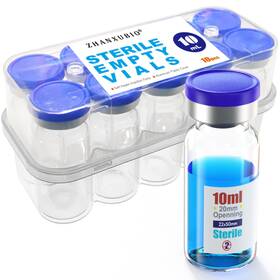
( Brand: Zhanxubio ), ( Manufacturer Part Number: ZX-BOX-VIAL-5ML-10M ), ( Part Type: Vial ), ( Packageheight: 56 ), ( Packagelength: 133 ), ( Packageweight: 150 ), ( Packagewidth: 57 ), ( Size: 10 Ml ), ( UPC: 768523309443 )
Review ZHANXUBIO Sterile Empty Vial Glass Vials Self healing Injection Port 10ml
The **Zhanxubio 768523309443 Sterile Glass Vials with Self-Healing Injection Ports (10ml)** represent a sophisticated and hygienic solution for pharmaceutical, biotechnological, and medical applications where precision, sterility, and ease of use are paramount. Engineered from high-quality **Type I borosilicate glass**, these vials are renowned for their exceptional chemical resistance, thermal stability, and transparency, ensuring optimal visibility of contents while maintaining the integrity of sensitive formulations. The **sterile manufacturing process** adheres to stringent pharmaceutical standards, including ISO 11607 and USP Class VI biocompatibility testing, guaranteeing a contamination-free environment for sensitive substances like vaccines, injectables, cell cultures, or sterile liquids. Each vial is meticulously sealed with a **self-healing silicone injection port**, a cutting-edge feature that eliminates the need for traditional rubber stoppers or septa, thereby reducing the risk of particulate contamination and needle stick injuries. The self-healing mechanism ensures a consistent, leak-proof seal after each puncture, maintaining sterility and preventing exposure to external contaminants. With a **10ml capacity**, these vials are ideal for medium-volume applications, offering ample space for formulations while minimizing waste. Their **smooth, rounded design** enhances usability, allowing for effortless handling and compatibility with automated filling and capping systems, making them a versatile choice for both manual and large-scale production environments. Whether used in clinical settings, research laboratories, or pharmaceutical manufacturing, these vials exemplify reliability, durability, and adherence to the highest industry standards, ensuring the safety and efficacy of their contents.
**Pros and Cons of Buying Zhanxubio 768523309443 Sterile Vial Glass Vials with Self-Healing Injection Port (10ml)**
### **Pros**
1. **Sterility and Safety** The vials are marketed as sterile, which is critical for pharmaceutical, medical, or laboratory applications where contamination could compromise results or patient safety. Sterile packaging reduces the risk of microbial or particulate contamination during use.
2. **Self-Healing Injection Port** This feature allows for repeated access without compromising the vial s integrity. Unlike traditional rubber stoppers, which can degrade or leak over time, a self-healing port maintains a secure seal after each puncture, reducing the risk of leaks or contamination between uses. This is particularly useful for:
- **Long-term storage of sensitive liquids** (e.g., biologics, vaccines, or hazardous chemicals).
- **Frequent sampling or dosing** in clinical or industrial settings.
- **Reduced waste**, as the vial can be reused multiple times without replacing the entire stopper.
3. **Material Quality** Glass vials are chemically inert, resistant to degradation from most substances, and do not absorb or leach contaminants (unlike some plastic alternatives). This is essential for preserving the purity of high-value or sensitive formulations.
4. **Compatibility with Autoclaving** Glass vials can typically withstand sterilization via autoclaving (steam sterilization), making them suitable for environments where repeated sterilization is required (e.g., hospitals, research labs).
5. **Precision Volume** The 10ml capacity is standard for many applications, offering a balance between usability and storage needs. The consistent sizing ensures accurate dosing and handling.
6. **Regulatory Compliance** If sourced from a reputable manufacturer (like Zhanxubio), these vials may meet or exceed industry standards for pharmaceutical packaging (e.g., USP Class VI, ISO 8537, or FDA-compliant materials). This is important for compliance with healthcare or biotech regulations.
7. **Durability** Glass is more durable than many plastics under extreme conditions (e.g., temperature fluctuations, exposure to solvents or acids), reducing the risk of failure during storage or transport.
8. **Ease of Use** The self-healing port simplifies handling, as users do not need to replace the stopper after each access. This can improve workflow efficiency in settings like compounding pharmacies or bioprocessing facilities.
---
### **Cons**
1. **Cost** Glass vials are generally more expensive than plastic alternatives, especially when sourced from specialized manufacturers. The self-healing port technology may further increase the price per unit, making bulk purchases costly for budget-sensitive applications.
2. **Fragility** While durable, glass is brittle and can shatter if dropped or mishandled. This poses a risk in environments where vials may be transported or handled roughly (e.g., fieldwork, emergency medical settings). Additional protective packaging (e.g., blister packs or foam inserts) may be required, adding to costs.
3. **Weight** Glass is heavier than plastic, which can impact shipping costs, logistics, and handling in large-scale operations. This may be a consideration for distributors or manufacturers moving large quantities.
4. **Limited Reusability** Although the self-healing port extends usability, glass vials are not designed for indefinite reuse. Over time, repeated punctures or exposure to harsh chemicals may weaken the glass or degrade the port s functionality, necessitating eventual replacement.
5. **Compatibility with Certain Substances** While glass is inert for most applications, some highly corrosive or abrasive substances (e.g., concentrated hydrofluoric acid, certain strong alkalis) may still interact with glass over time. Always verify compatibility with the vial manufacturer or material specifications.
6. **Recycling and Disposal Challenges** Glass is recyclable, but improper disposal (e.g., mixing with hazardous waste) can create complications. In some regions, disposing of glass vials containing residuals (e.g., pharmaceuticals or chemicals) may require special handling, increasing operational complexity.
7. **Potential for Microfractures** Even if not visibly broken, glass vials can develop microscopic cracks from stress or thermal shock. These can compromise sterility or integrity over time, especially if the vial is subjected to temperature changes (e.g., freezing and thawing cycles).
8. **Supplier Dependence** Purchasing from a specific manufacturer like Zhanxubio may limit flexibility if alternative suppliers offer better pricing or lead times. Ensuring a reliable supply chain is critical, particularly for long-term projects.
9. **Compatibility with Automation** Some automated filling or dispensing systems may require specific vial dimensions or stopper types. The self-healing port s design may need to be verified for compatibility with existing equipment to avoid operational disruptions.
10. **Storage Requirements** Glass vials should be stored in a dry, temperature-controlled environment to prevent condensation or thermal stress, which could affect the port s performance or the integrity of the contents. Improper storage may reduce shelf life.
---
### **Conclusion**
The **Zhanxubio 768523309443 sterile glass vials with self-healing injection ports (10ml)** are a high-quality choice for applications requiring **sterility, reusability, and chemical inertness**. Their self-healing port is a significant advantage for settings where frequent access is needed without compromising the vial s integrity. The vials are well-suited for **pharmaceutical compounding, biotech storage, clinical research, or industrial chemical handling**, where contamination risk and long-term stability are priorities.
However, the **higher cost, fragility, and weight** of glass may not justify their use in all scenarios. They are less ideal for **high-volume, low-cost applications** (e.g., disposable medical devices) or environments where **durability under rough handling** is critical. Additionally, the **need for careful storage and disposal** adds operational considerations.
For **short-term or single-use applications**, plastic vials with traditional stoppers may be more cost-effective. For **long-term, high-value, or reusable storage**, these glass vials offer superior performance but require a balanced assessment of cost, usability, and compatibility with your specific workflow.
---
### **Recommendation**
**Buy these vials if:**- You require **sterility, reusability, and chemical compatibility** for sensitive substances (e.g., biologics, vaccines, or hazardous chemicals).
- Your application involves **frequent access** (e.g., compounding pharmacies, bioprocessing, or clinical trials).
- You prioritize **long-term stability and reduced waste** from reusable vials.
- Your budget can accommodate the **higher upfront cost** relative to plastic alternatives.
**Avoid or consider alternatives if:**- You need **disposable, low-cost vials** for single-use applications (e.g., disposable syringes or medical devices).
- **Durability and weight** are critical concerns (e.g., fieldwork, emergency medical kits).
- Your workflow relies on **high-volume, automated systems** that may not be optimized for glass vials with self-healing ports.
- You are working with **extremely corrosive substances** that may degrade glass over time.
**Additional Tips:**- **Verify compliance** with relevant industry standards (e.g., USP, ISO, or FDA) to ensure the vials meet your regulatory requirements.
- **Request samples** to test compatibility with your specific substances and equipment before committing to bulk orders.
- **Assess total cost of ownership**, including storage, handling, and disposal, to ensure the vials align with your budget and operational needs.
- **Consult the manufacturer** for guidance on proper handling, sterilization, and maintenance of the self-healing ports to maximize their lifespan.
Details:
It can be widely used in the lab. Ten vials per box. It also can be used for students to practise. Sterile Empty Vial,Sterile Glass Vials, with Self-Healing Injection Port 10ml:.
QUALITY:The vials are made of brisket, which the feature is resistant to high temperatures and low. Features: PACKAGED:Vials are packed in sealed storage boxes, and each vial is placed its corresponding slot to prevent damage.
specifications plasticwarelabsuppy:
- brand: Zhanxubio
- mpn: Zx-box-vial-5ml-10m
- part type: Vial
- packageheight: 56
- packagelength: 133
- packageweight: 150
- packagewidth: 57
- size: 10 Ml
- upc: 768523309443
payments plasticwarelabsuppy:
- credit card: Discover
- other
- wallet: Google-pay
offer plasticwarelabsuppy:
- availability: In Stock
- options: Ship-to-home
- sold: 0
- started: April 17, 2026
- quantity: 2
general plasticwarelabsuppy:
- Medical, Lab Dental Supplies > Glassware Plasticware > Other Medical Lab Glassware
- condition: New
seller plasticwarelabsuppy:
- # reviews: 1902
- city: Chicago, Illinois
- rating: 99.0%
returns plasticwarelabsuppy:
- time: 30 Days
- method: Money back
- policy: Returns Accepted
- paid by: Seller
shipping plasticwarelabsuppy:
- transit: 3-5 Days
- class: Expedited
- type: Fixed
- cost: $0.00
- service: Expedited