KIMBLE 885301-0040 Tissue Grind Pstl Lc
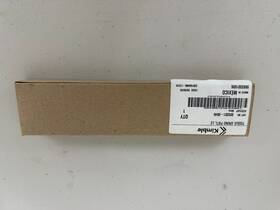
( Brand: Kimble ), ( Manufacturer Part Number: 885301-0040 )
Review KIMBLE Tissue Grind Pstl Lc
The **Kimble 885301-0040 Tissue Grind Polypropylene (PSTL) Low-Cross Contamination (LC) Pestle** is a precision-engineered laboratory tool designed for reliable and efficient sample homogenization in demanding analytical applications. Crafted from high-quality **polypropylene (PSTL)**, this pestle is engineered to minimize cross-contamination risks, making it an ideal choice for sensitive assays, DNA/RNA extraction, cell lysis, and other procedures where sample purity is critical. Its **low-cross contamination (LC) design** ensures that residual material from previous samples does not interfere with subsequent analyses, enhancing the accuracy and reproducibility of experimental results. The pestle features a **tissue grind texture**, providing optimal grinding efficiency for tough biological tissues, plant materials, or other solid samples that require thorough disruption without compromising sample integrity. Its **ergonomic, smooth finish** reduces friction during use, allowing for smoother operation and less wear on both the pestle and the corresponding mortar, thereby extending the tool s lifespan. The **Kimble brand s reputation for durability and chemical resistance** ensures that this pestle remains stable across a wide range of solvents, acids, and bases, making it suitable for both routine and high-throughput laboratory workflows. Whether used in molecular biology, microbiology, or analytical chemistry, this pestle delivers consistent performance while maintaining the highest standards of cleanliness and reliability.
### **Pros and Cons of buying a Kimble 885301-0040 Tissue Grind PSTL LC**
#### **Pros:**1. **High Durability and Quality** The Kimble brand is known for producing high-quality laboratory glassware designed for rigorous use. This tissue grind Pasteur pipette (PSTL) is likely made from borosilicate glass, which resists thermal shock and chemical corrosion, making it suitable for demanding laboratory applications.
2. **Precision and Consistency** Tissue grind pipettes are designed for accurate liquid transfer, reducing the risk of splashing or contamination. The PSTL (Pasteur-style tip) allows for controlled dispensing, which is useful in microbiology, cell culture, and other precision applications.
3. **Compatibility with Standard Laboratory Equipment** The design is compatible with common laboratory setups, including autoclaves (if properly handled) and standard pipette holders. The tissue grind tip also works well with rubber bulbs or mechanical pipetting aids.
4. **Cost-Effective for Bulk Use** While individual pipettes may seem expensive, they are often more economical in the long run for high-volume labs due to their durability and reduced need for frequent replacement.
5. **Sterilization-Friendly** Borosilicate glass can withstand autoclaving (if not already used) and other sterilization methods, making it reusable in many cases, which is beneficial for cost and hygiene.
6. **Wide Range of Applications** Suitable for tasks such as inoculating cultures, transferring small volumes of liquids, and dispensing reagents in biological, chemical, and medical research.
---
#### **Cons:**1. **Fragility Compared to Plastic** While borosilicate glass is durable, it is still more fragile than plastic alternatives (e.g., polypropylene pipettes). Dropping or mishandling can lead to breakage, which poses a safety hazard and additional cost.
2. **Limited Reusability** Even if autoclavable, repeated use can lead to wear on the tissue grind tip, reducing its effectiveness over time. Unlike plastic pipettes, glass cannot be easily repaired if damaged.
3. **Higher Initial Cost** Compared to disposable plastic pipettes, Kimble s glass pipettes are more expensive upfront. For labs with low-volume or one-time-use needs, this may not be cost-effective.
4. **Maintenance Requirements** Glass pipettes require careful cleaning to prevent residue buildup, which can affect accuracy. Improper cleaning (e.g., using abrasive materials) can damage the tissue grind or the glass itself.
5. **Safety Risks** Broken glass is a sharp hazard in the lab, requiring proper disposal and handling protocols. This adds an extra layer of safety training and equipment (e.g., puncture-resistant containers) for the lab.
6. **Incompatibility with Some Autoclaving Protocols** While borosilicate glass is autoclavable, some pipettes may have plastic components (e.g., rubber bulbs or seals) that degrade under high heat. Always check manufacturer guidelines.
7. **Limited Availability of Replacements** If the pipette breaks, finding an exact replacement (especially for older models) can be challenging, whereas plastic pipettes are widely stocked.
---
### **Conclusion:**The **Kimble 885301-0040 Tissue Grind PSTL LC** is a high-quality, durable pipette ideal for laboratories that prioritize precision, reusability, and compatibility with rigorous procedures. Its borosilicate construction ensures longevity and resistance to chemicals and heat, making it a reliable choice for microbiology, cell culture, and other demanding applications. However, its fragility, higher cost, and maintenance requirements may not justify its use in low-budget or low-volume settings where disposable plastic pipettes suffice.
### **Recommendation:** - **Buy if:**- You work in a high-volume lab where durability and reusability are critical.
- Your workflow requires precise liquid transfer with minimal contamination risk.
- You have proper storage and handling protocols to prevent breakage.
- You frequently autoclave equipment and need glassware that can withstand sterilization.
- **Avoid if:**- Your lab operates on a tight budget and uses pipettes infrequently.
- You prioritize disposability and ease of use over reusability.
- Your workflow involves frequent handling that could lead to accidental breakage.
- You lack proper safety measures for glassware disposal.
For most research labs balancing cost and performance, a **hybrid approach** using glass pipettes for critical tasks and plastic for routine work may be optimal. Always verify compatibility with your specific lab protocols before purchasing.
Details:
Kimble Tissue Grind PSTL LC ART NO.
part #: 8853010040 prices
- $57.89-$71.50
specifications plasticwarelabsuppy:
- brand: Kimble
- mpn: 885301-0040
seller plasticwarelabsuppy:
- city: Barceloneta, Puerto Rico
- # reviews: 0
- rating: 0.0%
general plasticwarelabsuppy:
- condition: New Open box
- Medical, Lab Dental Supplies > Glassware Plasticware > Other Medical Lab Glassware
payments plasticwarelabsuppy:
- wallet: Google-pay
- credit card: Diners-club
- other
offer plasticwarelabsuppy:
- started: March 9, 2026
- options: Ship-to-home
- availability: In Stock
- quantity: 1
- sold: 0
returns plasticwarelabsuppy:
- policy: No Returns
shipping plasticwarelabsuppy:
- service: USPS Ground Advantage
- carrier: USPS
- type: Calculated
- class: Standard
- transit: 16-35 Days
- cost: $9.88
Kimble 885301-0040 Is Similar To:
- 885450-0023 Lot Kimble Kontes Duall Tissue Grinder Pestle Tube Glass (48.6% similar) Per the web:Udall tissue grinder combines both conical and cylindrical surfaces to effectively reduce produce a uniform capacity: 15ML pestle length x shaft. 006-INCHGRINDING efficiency is greatly improved when this tube used ground glass model ideal for connective tissue such as muscle, heart ...(February 15th, 2019)
- 885470-0000 Kimble Chase Tissue Grind Micro Box Of New (47.3% similar) The original box has considerable storage and shelf wear, but six individual packs inside have not been opened. F F9-3IT only comes with what is shown in the pictures. Kimble chase tissue grind micro box of 6 new this is a item...(January 26th, 2019)
- Kimble 885302-0100 Chase Replacement Small Clearance Pestle For 100ml Dounce Tissue Grinder (44.6% similar) The pestle is designed to fit snugly and securely in your grinder, allowing for efficient effective grinding of tissue samples. Brand new sealed. Made by Kimble, a trusted brand in medical and lab supplies, you can be sure that this pestle will meet your expectations. This replacement small ...(October 30th, 2023)
- Kimble 357841 2 case Dwk Part 357841 Pestle For 357844 Disposable Micro-tissue Grinder (33.3% similar) Fully for sterile homogenization's. Manufacturer part # 357841. Replacement pestle for wheaten 357844 micro tissue grinder. 2/CASE Duran wheaten Kimble part #357841 pestle for 357844 disposable micro-tissue grinder: grinder. Ground glass pestle head. Brisket glass construction...(December 23rd, 2023)
- Kimble Kontes K885000-0007 7ml Tenbroeck Tissue Grinder With Two Glass Pestles (56.4% similar) GSR veers 1516 gs 9.3 1516 great used condition. Pestle a and b included...(January 3rd, 2024)
- Kimble 886000-0022 Tissue Grinder Homogenizer For Precision Grinding (54.2% similar) Capacity: suitable for small sample volumes, ensuring minimal loss and maximum recovery of your valuable biological material. Easy to clean: both the pestle and tube are designed for easy cleaning, allowing quick re-use minimal cross-contamination between samples. It is highly effective for ...(September 22nd, 2024)
- Kimble Kontes 885300-0002 Glass 2ml Dounce Tissue Grinder Loose Inch A Pestle And Mortar (55.1% similar) Missing the small clearance pestle. Great used condition. No cracks or chips. GSR veers 1706 gs 9.9 1706 two pieces: large clearance pestle marked a and glass tube...(January 20th, 2025)
- Kimble Kontes 885451-0020 Glass Size 20 Duall Tissue Grinder Pestle Only (61.3% similar) GSR veers 1706 gs 9.9 1706 great used condition. No cracks or chips...(January 20th, 2025)
- Kimble Kontes 885480-0021 Glass Mortar 3ml Size 21 Duall Tissue Grinder Ptfe Pestle (52.5% similar) GSR veers 1706 gs 9.9 1706 great used condition. No cracks or chips...(January 20th, 2025)
- Kimble Kontes 885303-0040 Glass 40ml Dounce Tissue Grinder Mortar Only (60.6% similar) No cracks or chips. GSR veers 1706 gs 9.9 1706 great used condition...(January 20th, 2025)
- Kimble Kontes 886000-0023 Glass 17ml Size 23 Potter-elvehjem Tissue Grinder Ptfe Pestle (49.2% similar) Great used condition. No cracks or chips. GSR veers 1706 gs 9.9 1706 serrated pestle...(January 20th, 2025)