ACE GLASS 9106-38 Precision Septa Seals Joints 29/42
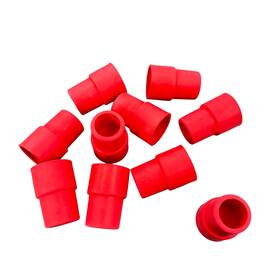
( Brand: Ace Glass ), ( Manufacturer Part Number: 9106-38 ), ( Part Type: Seal Joint ), ( Country Of Origin: United States )
Review ACE GLASS Red Precision Septa Seals 29/42 Joints
The **Ace Glass 9106-38 Precision Septa Seals** are meticulously engineered components designed to deliver uncompromising performance and reliability in laboratory settings where precision and sterility are paramount. Crafted from high-quality **butyl rubber**, these septa seals are specifically tailored for use with **29/42 standard taper joints**, ensuring a secure, leak-proof fit that maintains the integrity of your experimental setup. Each seal features a **smooth, polished surface** and a **precision-ground bore**, which minimizes friction and maximizes compatibility with syringes, needles, and other sampling tools, reducing the risk of contamination or sample loss during transfers. The **self-sealing property** of the butyl rubber allows for repeated punctures without compromising the seal, making these septa ideal for applications requiring frequent access, such as gas chromatography (GC) vials, headspace analysis, or liquid chromatography (LC) sample preparation. Engineered to withstand a wide range of temperatures from cryogenic levels to elevated thermal conditions they provide consistent performance across diverse analytical techniques, including mass spectrometry (MS) and infrared (IR) spectroscopy. Their **durable construction** and resistance to common solvents, oils, and mild acids further enhance their versatility, ensuring longevity even under rigorous laboratory conditions. Whether used in routine quality control, pharmaceutical development, or cutting-edge research, the **Ace Glass 9106-38 septa seals** offer a dependable solution for maintaining sample purity and experimental accuracy while simplifying workflows with their seamless integration into standard glassware systems.
**Pros and Cons of Buying Ace Glass 9106-38 Precision Septa Seals for 29/42 Joints**
**Pros:**1. **Compatibility and Fit:** The Ace Glass 9106-38 septa seals are specifically designed for 29/42 joints, which are standard in many laboratory glassware setups, including round-bottom flasks, condensers, and other glass apparatus. This ensures a secure and leak-free fit, reducing the risk of contamination or loss of reagents.
2. **Precision Engineering:** The term "precision" in the product name indicates that these septa are manufactured to tight tolerances. This precision minimizes gaps between the septum and the joint, improving the seal and reducing the likelihood of leaks during heating or cooling processes.
3. **Versatility:** Septa seals are commonly used for adding or removing samples without breaking the vacuum or exposing the system to air. This makes them useful in applications such as gas chromatography (GC), liquid chromatography (LC), and other analytical techniques where maintaining an inert atmosphere is critical.
4. **Material Quality:** Ace Glass products are known for using high-quality materials, such as silicone or Teflon (PTFE), which are chemically resistant and can withstand a wide range of temperatures and solvents. This durability extends the lifespan of the septa and the glassware they are used with.
5. **Ease of Use:** The design of these septa allows for easy insertion and removal from the joint. They can be punctured repeatedly with needles or syringes for sampling or adding reagents without compromising the seal, provided they are not overused.
6. **Cost-Effective for Laboratory Use:** While the initial cost may be higher than some generic alternatives, the precision and reliability of Ace Glass septa can reduce long-term costs by minimizing equipment damage, leaks, or the need for frequent replacements.
7. **Brand Reputation:** Ace Glass is a well-established brand in the laboratory glassware industry, known for reliability and quality. Purchasing from a reputable brand can provide peace of mind regarding product performance and customer support.
---
**Cons:**1. **Cost:** Ace Glass products, including precision septa seals, are generally more expensive than generic or lower-quality alternatives. For laboratories with tight budgets, this can be a significant drawback, especially if septa need to be replaced frequently.
2. **Limited Customization:** These septa are designed for specific joint sizes (29/42) and may not be compatible with other joint standards (e.g., 14/23, 19/22, or 24/40). Laboratories using multiple joint sizes may need to purchase different septa, increasing costs.
3. **Potential for Wear:** Even precision septa can degrade over time, especially if punctured excessively or exposed to harsh chemicals. Frequent use may require more frequent replacements, offsetting some of the cost savings from durability.
4. **Need for Proper Handling:** Improper handling, such as forcing the septum into the joint or using contaminated needles, can damage the septum or the glass joint. This requires additional training or caution for laboratory staff.
5. **Availability and Lead Times:** Depending on the supplier, these septa may not always be in stock, leading to potential delays in obtaining replacements. This could disrupt laboratory workflows, particularly in urgent or time-sensitive experiments.
6. **Environmental Impact:** Like many single-use laboratory consumables, septa contribute to waste. While they are durable, they are not reusable indefinitely, and disposal may require special handling depending on the materials used (e.g., silicone or PTFE).
7. **Potential for Contamination:** If not stored properly or if the septa are of lower quality, they may absorb or leach contaminants from solvents or reagents. High-purity applications may require additional validation or testing to ensure the septa do not introduce impurities.
---
**Conclusion:**Ace Glass 9106-38 precision septa seals for 29/42 joints offer significant advantages in terms of compatibility, precision, durability, and ease of use. These features make them an excellent choice for laboratories prioritizing reliability, especially in applications requiring tight seals and repeated sampling. The higher upfront cost is often justified by the reduced risk of leaks, contamination, or equipment damage, as well as the longevity of the product.
However, the cons such as the cost, limited customization, potential for wear, and environmental impact must also be considered. Laboratories with budget constraints or those using a variety of joint sizes may need to weigh these factors carefully. Additionally, proper handling and storage are essential to maximize the lifespan and performance of the septa.
For most standard laboratory applications, particularly those involving 29/42 joints and requiring frequent sampling or a secure seal, the **recommendation is to purchase Ace Glass 9106-38 precision septa seals**. Their reputation for quality and precision makes them a reliable investment for long-term use. If cost is a major concern, it may be worth comparing alternatives from other reputable brands while ensuring they meet the same quality and compatibility standards. Always verify the specific requirements of your application and consult with suppliers or colleagues to determine the best fit for your needs.
Details:
This listing is for a pack of 10 ACE Glass red septa designed 29/42 ground Glass joints. Applications: Ideal for: Chemical laboratories. Organic synthesis setups.
Title: Ace Glass 9106-38 Red Precision Septa Seals for 29/42 Joints. Material: Rubber / Elastic. Research labs. Manufactured brace Glass Incorporated, a trusted supplier of high-quality laboratory Glassware and accessories.
Type: Laboratory Septa / Stopper. These septa are commonly used in laboratory Glassware setups for sealing flasks, reactors, and other apparatus while allowing needle or syringe access. Catalog Number: 9106-38. Joint Size: 29/42.
Reaction vessels and flasks.: Brand: ACE Glass.
part #: 910638 price
- $110.00
specifications plasticwarelabsuppy:
- brand: Ace Glass
- mpn: 9106-38
- part type: Seal Joint
- country of origin: United States
general plasticwarelabsuppy:
- condition: New
- Medical, Lab Dental Supplies > Glassware Plasticware > Other Medical Lab Glassware
payments plasticwarelabsuppy:
- other
- credit card: Discover
- wallet: Apple-pay
shipping plasticwarelabsuppy:
- class: Standard
- transit: 4-10 Days
- service: Standard
- cost: $0.00
- type: Fixed
returns plasticwarelabsuppy:
- policy: Returns Accepted
- method: Money back
- paid by: Buyer
- time: 30 Days
seller plasticwarelabsuppy:
- rating: 100.0%
- # reviews: 22
- city: El Cerrito, California
offer plasticwarelabsuppy:
- started: March 6, 2026
- sold: 0
- availability: In Stock
- best offers: True
- quantity: 2
- options: Ship-to-home
Ace Glass 9106-38 Is Similar To:
- 1200ml Ace Glass Instatherm Low Form Oil Bath With Cord (36.5% similar) Review the pictures for included elements and condition of item. See pictures for more details. Max volts :120. This is for one used 1200ML Ace Glass einsteinium oil bath. To make sure you are getting an accurate quote via the shipping calculator, your zip code is default when calculating cost for ...(October 25th, 2018)
- 19-38 Ace Glass Incorporated Lab (30.4% similar) Please see pictures and I will try to answer any questions. It is used and needs to be cleaned up. I honestly don't know exactly what it is so how to better describe. Ace Glass I got it from a university offer with bunch of other stuff...(March 30th, 2019)
- 3840-lco Pyrex Bulb Ace Glass Laboratory Chemistry Glassware (25% similar) I don't know what they are used for, but assume have been used, because were with a group of these items, some which clearly. The pictures you see are of actual item. You are buying on a pair of items. The Ace Glass item has a chip on very bottom. So, I assume they may need to be cleaned for your ...(June 30th, 2019)
- 40-35 Ace Glass Laboratory Total Length Approx Not Sure Porosity Read (21.7% similar) Not sure what its proper name is. Ace Glass laboratory total length approx 15 not sure: porosity maybe - read I picked this up from a local colleges liquidation sale over 10 years ago. It does not come with its original box but is new old stock. I saw some that looked similar called porosity. ...(February 4th, 2019)
- 5005-12 Ace Enlarging Adapter Joints (43.8% similar) Up for offer is a used Ace enlarging adapter joints. Quick stop offers - call us quicksteps this device is in excellent cosmetic condition with few signs of wear and use. Please refer to the pictures provided below for more details on condition of item...(November 10th, 2018)
- 513654 Ace Glass Claisen Distilling Adapter Thread St (31.9% similar) ...(January 14th, 2019)
- 5295-16 Ace Glass Outlet Stopcock Flask Adapter With Straight Tip Size (30.8% similar) Warranty this item is guaranteed to be as described. Power cords and adapters are never included unless specifically mentioned. Good luck buying. It comes with a 14 day guarantee against being DOA from receipt. Always here to help this unit will arrive in the condition shown. On the ask a question ...(March 29th, 2019)
- 5837-53 Ace Glass Ptfe Thread Tip Adapter (35.6% similar) Ace Glass PDF lure-Loki 50 thread tip adapter with o-ring used lightly. Selling as is...(January 23rd, 2019)
- 5846-47 Pyrex Ace Glass Teflon Ptfe Back Seal Plug For Pressure (43.9% similar) Used in excellent condition...(March 3rd, 2019)
- 5848-58 Ace Glass 6 Polyethylene (34.8% similar) 6 per package. Selling as is. 6 Ace Glass polyethylene filter discs unknown porosity new qty...(January 21st, 2018)
- 5964-12 Ace Glass Dewar Type Condenser Id Jacket Joint Od Connect (32% similar) In great used condition. Very small chip on bottom joint. Used Glassware will show signs of wear sometimes including light scratches, discoloration, stickers tape, or exterior markings. Thorough cleaning and sterilization are recommended before use...(November 12th, 2018)