MILLIPORE 93710-47 Chipped Glass Base Stopper Vacuum Filtration Apparatus
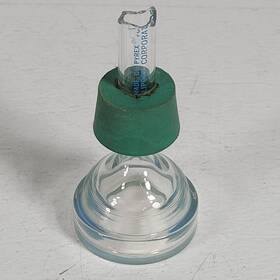
( Brand: Millipore ), ( Manufacturer Part Number: 93710-47 ), ( Part Type: Vacuum Stopper ), ( Unit Type: Unit ), ( Country Of Origin: United States ), ( Intended Use/discipline: Biological Laboratory, Microbiological Laboratory )
Review MILLIPORE Chipped Glass Base And Stopper Vacuum Filtration Apparatus
The **Millipore 93710-47 Chipped Glass Base Stopper Vacuum Filtration Apparatus** is a robust and versatile laboratory tool designed for efficient and reliable liquid filtration under vacuum conditions. This apparatus is engineered to accommodate a wide range of filtration tasks, from routine laboratory procedures to more demanding applications requiring precision and durability. Constructed from high-quality **borosilicate glass (Type 1, Class A)**, the filtration system ensures chemical resistance, thermal stability, and long-term reliability, making it ideal for use with aggressive solvents, acids, and organic reagents. The **chipped glass base stopper** provides a secure, leak-proof seal when combined with the corresponding funnel or filter holder, minimizing the risk of contamination and ensuring consistent vacuum performance. The apparatus features a **standard 29/42 joint**, allowing for easy integration with various Millipore filter holders, vacuum flasks, and other laboratory glassware, thereby enhancing its compatibility with existing filtration setups.
The design of the **93710-47** incorporates a **ground-glass joint**, which offers a tight seal to maintain vacuum integrity during filtration, reducing the need for additional lubrication or sealing agents. This feature not only simplifies assembly and disassembly but also minimizes the potential for leaks, which is critical for experiments requiring high vacuum efficiency. The chipped base further enhances its functionality by providing a stable platform for the filter holder, preventing shifting or misalignment during filtration, which could compromise results. Whether used for **sample preparation, solvent recovery, or analytical filtrations**, this apparatus delivers consistent and reproducible results, making it a staple in laboratories ranging from academic research to industrial quality control.
Beyond its functional advantages, the **Millipore 93710-47** is built to withstand the rigors of frequent use, with its durable construction capable of enduring repeated autoclaving and cleaning cycles. This resilience ensures a long operational lifespan, reducing the need for frequent replacements and lowering long-term costs. The apparatus is particularly well-suited for applications where **fine filtration** is required, such as clarifying solutions, removing particulate matter, or preparing samples for spectroscopy, chromatography, or microbiological analysis. Its compatibility with **Millipore s extensive range of filter membranes**, including cellulose esters, nylon, and PTFE, further expands its utility across diverse experimental protocols. Whether paired with a **0.45 m or 0.2 m membrane** for microbial filtration or a **larger pore size** for preliminary sample cleanup, this vacuum filtration apparatus delivers the precision and efficiency demanded by modern laboratory workflows.
The **Millipore 93710-47 Chipped Glass Base Stopper Vacuum Filtration Apparatus** is a widely used piece of laboratory equipment for filtration applications, particularly in microbiology, cell culture, and biochemical research. Below is a detailed analysis of its pros and cons, followed by a concluding recommendation.
---
### **Pros**
1. **Durability and Longevity**
The chipped glass base design is robust and designed for repeated use, making it suitable for high-throughput or long-term laboratory applications. Glass is chemically inert and resistant to most solvents, acids, and bases, ensuring reliable performance over time.
2. **Compatibility with Millipore Filters**
This apparatus is specifically designed to work seamlessly with Millipore s filter units (e.g., 0.22 m or 0.45 m membranes), which are widely trusted for sterile filtration, cell culture media preparation, and sample clarification. The compatibility ensures consistent filtration efficiency and reduced risk of contamination.
3. **Versatility in Applications**
It can be used for a variety of filtration tasks, including:- Sterile filtration of liquids (e.g., cell culture media, buffers, water).
- Clarification of samples (e.g., removing particulate matter from biological extracts).
- Filtration under vacuum, which speeds up the process compared to gravity filtration.
The stopper design allows for easy attachment and detachment of filter units, making it adaptable to different workflows.
4. **Ease of Cleaning and Maintenance**
Glass components are easier to clean than plastic or some composite materials, especially when dealing with stubborn residues (e.g., proteins, lipids, or dyes). The apparatus can be sterilized by autoclaving or chemical cleaning, extending its lifespan.
5. **Standardized Design**
The Millipore brand is known for consistency in manufacturing, meaning the apparatus is likely to fit standard laboratory setups and accessories (e.g., vacuum pumps, filter holders). This reduces the need for custom modifications or adapters.
6. **Safety Features**
The chipped base design (with a flat, stable surface) helps prevent slipping during use, and the stopper ensures a secure seal, minimizing the risk of leaks or contamination during filtration.
7. **Cost-Effective for High-Use Labs**
While the initial cost may be higher than some disposable alternatives, the durability of glass makes it cost-effective in labs with frequent filtration needs. Replacing a glass apparatus less often than disposable units can save money in the long run.
---
### **Cons**
1. **Fragility Compared to Plastic**
Glass is prone to breaking if dropped or subjected to thermal shock (e.g., rapid temperature changes). This can be a concern in busy labs where equipment is frequently moved or handled by multiple users. The "chipped" base may also indicate prior damage, which could compromise stability or lead to further breakage.
2. **Weight and Bulkiness**
Glass components are heavier than plastic alternatives, which can make the apparatus cumbersome to transport or store. This may be less of an issue in fixed laboratory setups but could be inconvenient for fieldwork or mobile labs.
3. **Limited Temperature Resistance**
While glass can handle a wide range of temperatures, extreme heat (e.g., near boiling) or rapid cooling can cause stress cracks or breakage. This limits its use in applications requiring high-temperature sterilization or filtration of very hot solutions.
4. **Potential for Contamination**
Over time, glass surfaces can develop microscopic scratches or pitting, which may harbor residues or microorganisms. While glass is generally inert, these imperfections can make thorough cleaning more challenging. Plastic alternatives may be easier to sterilize in some cases.
5. **Higher Initial Cost**
Compared to disposable filtration systems or cheaper plastic alternatives, the upfront cost of this glass apparatus is higher. However, this is often justified by its longevity, but labs with tight budgets may hesitate to invest in it.
6. **Maintenance of Seals and Stoppers**
The rubber or silicone stoppers used in the apparatus may degrade over time, especially with frequent use or exposure to organic solvents. Replacing stoppers can add to maintenance costs and downtime.
7. **Incompatibility with Some Solvents**
While glass is resistant to most chemicals, certain highly corrosive solvents (e.g., hydrofluoric acid) can damage it over time. Labs working with such solvents may need to use alternative materials or take extra precautions.
---
### **Conclusion**
The **Millipore 93710-47 Chipped Glass Base Stopper Vacuum Filtration Apparatus** is a high-quality, reliable tool for laboratories requiring durable, reusable filtration equipment. Its strengths lie in its durability, compatibility with Millipore filters, versatility, and ease of cleaning, making it ideal for long-term use in research, microbiology, or cell culture applications. However, its fragility, weight, and higher cost may be drawbacks for labs with limited budgets or those handling extremely harsh conditions.
The "chipped" base suggests it has seen prior use, which could be a cost-saving advantage if the apparatus is still in good condition. If the lab prioritizes reliability and frequent filtration tasks, this apparatus is a strong recommendation. For labs with limited space, budget constraints, or a need for extreme chemical resistance, a disposable or plastic alternative might be more suitable.
### **Recommendation**
**Purchase the Millipore 93710-47 if:**- Your lab performs frequent, high-volume filtration tasks (e.g., media preparation, sample clarification).
- You prioritize durability and long-term cost savings over disposables.
- You work with Millipore filters and need a standardized, compatible system.
- Your lab can accommodate the weight and fragility of glass without significant risk.
**Consider alternatives if:**- Your lab handles highly corrosive solvents or extreme temperatures regularly.
- Budget is a major constraint, and you can justify the cost of disposables or plastic alternatives.
- The apparatus is visibly damaged (e.g., deep chips or cracks), which could pose a safety risk.
- You need portability or plan to move the equipment frequently.
For most standard laboratory settings where reliability and compatibility with Millipore filters are critical, this apparatus is a **strong and practical choice**. Inspect the chipped base carefully to ensure it does not compromise functionality, and pair it with proper handling to maximize its lifespan.
Details:
The Millipore 93710-47 Glass Base-Chipped, Comes with rubber seal.See posted pictures. Used condition, see photos. Chipped glass stem.
part #: 9371047 prices
- $49.00-$89.00
specifications plasticwarelabsuppy:
- brand: Millipore
- mpn: 93710-47
- part type: Vacuum Stopper
- unit type: Unit
- country of origin: United States
- intended use/discipline: Biological Laboratory, Microbiological Laboratory
payments plasticwarelabsuppy:
- other
- wallet: Apple-pay
- credit card: Diners-club
shipping plasticwarelabsuppy:
- class: Standard
- cost: $0.00
- transit: 2-6 Days
- type: Fixed
- service: Standard
seller plasticwarelabsuppy:
- rating: 99.8%
- # reviews: 2877
- city: Fargo, North Dakota
offer plasticwarelabsuppy:
- best offers: True
- options: Ship-to-home
- availability: In Stock
- started: February 17, 2026
- quantity: 1
- sold: 0
general plasticwarelabsuppy:
- condition: Used
- Medical, Lab Dental Supplies > Glassware Plasticware > Other Medical Lab Glassware
returns plasticwarelabsuppy:
- method: Money back
- paid by: Buyer
- time: 30 Days
- policy: Returns Accepted
Millipore 93710-47 Is Similar To:
- 09807-c Millipore Milli-q Water Filtration-filtration (47.7% similar) If you do not have an account no worries. Need this item next day. Our cut-off time for shipping an item is 3:45PM ct...(January 26th, 2018)
- 3.5l Millipore Water Filtration System (47% similar) Millipore 5l plastic tank new...(March 31st, 2017)
- 96100250 Millipore Vantage Preparative Glass Column Cm Mm (34.3% similar) Cm 250MM LC rack 1THIS is new never been used please see the pictures for more detail. No return accepted. All return shipping charges must be prepaid by the customer...(October 27th, 2018)
- 96100500 Millipore New Vantage Preparative Glass Column Only Vl Mm (32.2% similar) A new Millipore vantage laboratory glass column, Val 11 x 500MM, id length :mm , column only, no housing, tube or knob is included...(September 30th, 2018)
- 96160250 Millipore Vantage Preparative Glass Column Cm Mm (34.3% similar) All return shipping charges must be prepaid by the customer. Millipore vantage l preoperative glass column 6 cm 250MM LC rack 1THIS is new never been used please see the pictures for more detail. No return accepted...(August 20th, 2018)
- Ap 200-2500 Millipore Glass Fiber Filter With Binder Resin For Prefiltration (39.2% similar) Material brisket with acrylic binder circles packaging package of 100 ea mfr. 5 cm pore size I have three packages, they are not sealed, there is approximately 100 in each package, counted for a bit, but didn't count all of them package m membranes. M application to protect...(April 2nd, 2018)
- Ap2503500 Millipore Um Hydrophilic Glass Fiber Disc Binder Resin Mm Membr (37.3% similar) Glass fiber filters with binder resin:Millipore resin have superior wet strength and are excellent for qualitative analysis pre filtration, especially heavily contaminated liquids. 9 to 8 m filters, especially for pertinacious and heavily contaminated liquids use upstream protect type AP15 filters ...(July 20th, 2018)
- Maips4510 Millipore Milipore Sterile Plate Filtration (47.7% similar) 96-WELL filtration plate...(August 30th, 2018)
- Mdrpn0410 Millipore Multiscreen Deep Well Filter Filtration Plates (42% similar) New Millipore multi screen deep well filtration 96 plates, cat no MDRPN0410, 10 per box clear, non-sterile. Lot m pore size, hydrophobic PDF, 10 plates, volume...(July 2nd, 2018)
- Mil-ap2504700 Millipore Ap2504700 Glass Fiber (37.7% similar) However, this will not affect the shipping times. They are also widely used for clarification of aqueous solutions. Stability: hydrophilic. 6 dip penetration at 10. 3 cms: 35 air flow liters min squared at 10 psi 63. Brand new Millipore AP2504700 glass fiber filter with binder resin for pre ...(July 2nd, 2017)
- 0.22um-dia Mvhvwps24 Millipore Microfil S Filtration Device White 47mm 21 Units New (35% similar) 22UM DOA 47MM ml funnel sterile quantity 21 cat no...(April 13th, 2016)