CORNING 9820-10 Pyrex Culture Tubes Box No. 3ML 10X75
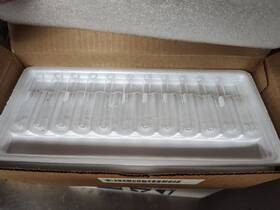
( Brand: Corning ), ( Manufacturer Part Number: 9820-10 ), ( Part Type: Tube Box ), ( Country Of Origin: United States ), ( Intended Use/discipline: Biological Laboratory, Medical Laboratory )
Review CORNING Pyrex No. 3ml Culture Tubes 10x75mm Box Of
The **Corning 9820-10 Pyrex 3 mL Culture Tubes (10 75 mm, Pack of 72)** represent a premium, laboratory-grade solution for a wide range of biological, microbiological, and biochemical applications. Crafted from **borosilicate glass (Type I, according to Ph. Eur., USP, and EP standards)**, these tubes are engineered to deliver exceptional chemical resistance, thermal stability, and optical clarity, making them ideal for demanding procedures such as cell culture, microbial growth, DNA/RNA extraction, and biochemical assays. The **3 mL capacity** strikes a practical balance between volume efficiency and ease of handling, accommodating small-scale experiments while minimizing reagent waste. With a **10 75 mm dimension**, the tubes offer a robust, upright design that ensures secure containment of samples during centrifugation, incubation, or storage, reducing the risk of spills or contamination. The **smooth, non-absorbent glass surface** resists adsorption of proteins, lipids, and other biomolecules, preserving sample integrity and consistency across experiments. Additionally, the **sterile, disposable nature** of these tubes eliminates cross-contamination risks, while their **autoclavable construction** allows for repeated sterilization, extending their utility in both research and clinical settings. Whether used in tissue culture, molecular biology, or microbiology, these Pyrex tubes combine durability, precision, and reliability, making them a trusted choice for laboratories seeking high-performance, glassware solutions.
**Pros and Cons of Buying Corning 9820-10 Pyrex 3mL Culture Tubes (10x75, Box of 72)**
### **Pros:**1. **High-Quality Material:** Corning Pyrex is known for its durable, borosilicate glass composition, which offers excellent chemical resistance, thermal stability, and resistance to breakage compared to standard glassware. This makes them ideal for laboratory applications requiring precision and reliability.
2. **Sterilization Compatibility:** These tubes are designed to withstand autoclaving and other common sterilization methods, ensuring they can be reused multiple times without compromising integrity. This is particularly useful in research, microbiology, and clinical settings where sterility is critical.
3. **Standardized Dimensions:** The 10x75 mm dimensions are a widely accepted industry standard, making them compatible with most laboratory equipment, centrifuges, and automated systems. This ensures ease of use and interchangeability with other labware.
4. **Versatility:** The 3mL capacity is suitable for a variety of applications, including cell culture, microbiological assays, DNA/RNA extraction, and small-scale biochemical reactions. Their conical shape also facilitates efficient centrifugation and resuspension of samples.
5. **Brand Reputation:** Corning is a trusted manufacturer in the laboratory supply industry, known for producing high-quality, consistent products. Their reputation ensures reliability in terms of performance and durability.
6. **Cost-Effective for Bulk Use:** Purchasing in bulk (72 tubes) reduces the per-unit cost, making them a cost-effective option for labs with frequent or large-scale needs. The durability of Pyrex glass also extends the lifespan of the tubes, further reducing long-term expenses.
7. **Compatibility with Lab Protocols:** Many standard laboratory protocols and procedures are designed with Pyrex or borosilicate glass in mind. Using these tubes minimizes the need for adjustments or additional equipment, streamlining workflows.
---
### **Cons:**1. **Higher Initial Cost:** Compared to disposable plastic tubes (e.g., polypropylene or polystyrene), Pyrex glass tubes are more expensive upfront. While they are cost-effective in the long run due to reusability, the initial investment may be a barrier for small labs or budget-conscious users.
2. **Fragility Compared to Plastics:** Although borosilicate glass is more durable than standard glass, it is still more brittle than plastic tubes. Mishandling, dropping, or rough treatment can lead to breakage, which may pose a safety risk in busy lab environments.
3. **Weight:** Glass tubes are heavier than plastic alternatives, which can contribute to fatigue during repetitive tasks (e.g., handling large numbers of tubes). This may not be an issue for automated systems but could be a minor inconvenience for manual procedures.
4. **Limited Flexibility:** Pyrex tubes are not as flexible or impact-resistant as plastic tubes. They cannot be bent or deformed without breaking, which may limit their use in certain applications where flexibility is required (though this is rare in standard lab use).
5. **Maintenance Requirements:** Glassware requires careful cleaning to avoid scratches or residue buildup, which can affect sterility and experimental results. Unlike plastic, which can often be disposed of after single use, glass tubes must be thoroughly washed, dried, and sterilized between uses, adding time and effort to workflows.
6. **Potential for Contamination:** If not cleaned or sterilized properly, glass tubes can harbor residues or microbial contaminants. This risk is mitigated by the durability of Pyrex, but it still requires diligent maintenance to avoid compromising experiments.
7. **Environmental Considerations:** While Pyrex glass is recyclable, the energy-intensive manufacturing process and the potential for breakage (leading to waste) may raise environmental concerns compared to biodegradable or recyclable plastic alternatives. However, the longevity of glassware often outweighs this drawback for labs with high usage.
---
### **Conclusion:**The Corning 9820-10 Pyrex 3mL culture tubes are an excellent choice for laboratories prioritizing durability, chemical resistance, and compatibility with standard protocols. Their borosilicate glass construction ensures reliability in demanding applications, and their standardized dimensions make them universally adaptable. The upfront cost and fragility are the primary drawbacks, but these are outweighed by the tubes' reusability, longevity, and performance in high-stakes environments like microbiology, cell culture, or biochemical research.
For labs with frequent use of culture tubes, high standards for sterility, or those already invested in glassware infrastructure, these tubes are a practical and cost-effective investment. Conversely, labs with limited budgets, high-risk handling environments, or those preferring disposable options may find plastic alternatives more suitable despite their lower durability.
---
### **Recommendation:** **Buy these Corning Pyrex tubes if:**- You require long-term, reusable glassware for applications like cell culture, microbiology, or DNA/RNA work.
- Your lab prioritizes chemical resistance, thermal stability, and compatibility with autoclaving.
- You frequently use standard 10x75 mm tubes and want to avoid compatibility issues with lab equipment.
- You are willing to invest in durable, high-quality glassware that will last for years with proper care.
**Consider alternatives (e.g., plastic tubes) if:**- Your budget is constrained, and you prefer disposable options to reduce maintenance.
- Your lab handles tubes frequently and is concerned about breakage risks.
- You require flexibility or impact resistance (though this is rare for standard lab use).
- You prioritize environmental sustainability and are open to exploring recyclable or biodegradable plastic options.
For most professional laboratories, the Corning 9820-10 Pyrex tubes are a strong recommendation due to their reliability and performance. However, weigh the pros and cons against your specific lab needs to ensure they align with your workflow and budget.
Details:
New Old Stock, 1 box containing 72 pieces, Glass Culture Tubes, rimless, 10 x 75mm, rimless.
part #: 982010 price
- $35.00
specifications plasticwarelabsuppy:
- brand: Corning
- mpn: 9820-10
- part type: Tube Box
- country of origin: United States
- intended use/discipline: Biological Laboratory, Medical Laboratory
offer plasticwarelabsuppy:
- started: April 10, 2026
- sold: 0
- quantity: 1
- availability: In Stock
- options: Ship-to-home
general plasticwarelabsuppy:
- Medical, Lab Dental Supplies > Glassware Plasticware > Other Medical Lab Glassware
- condition: New
payments plasticwarelabsuppy:
- wallet: Google-pay
- credit card: Diners-club
- other
returns plasticwarelabsuppy:
- policy: No Returns
shipping plasticwarelabsuppy:
- service: USPS Ground Advantage
- type: Calculated
- cost: $9.20
- carrier: USPS
- class: Standard
- transit: 5-11 Days
seller plasticwarelabsuppy:
- # reviews: 265
- rating: 100.0%
- city: New Milford, Connecticut
Corning 9820-10 Is Similar To:
- 1000-250 Pyrex Corning Vista Beaker (31.7% similar) Pyrex brand, 150ML wide mouth beaker, glass is clear with no etching, chips or cracks would make unique lamp, light chandelier terrarium, aquarium...(December 24th, 2018)
- 1000-400 Corning Pyrex Glass Graduated Low Form Griffin Beaker (34.4% similar) 400ML low form pyrex griffin beaker with spout, double scale, graduated convenient graduated metric scale for estimating content graduation range: 25-325ML graduation interval: 25ML height : 110MM approx outer diameter: 77MM extra large marking spot...(November 27th, 2018)
- 1000p-250 Corning Unopened Box Of 6 (37.6% similar) This is new stock just received and in original unopened box. 7 cm beaker. yes withstands temp high f 275WITHSTANDS low 32CAPACITY ml 250GRADUATION interval 50 ml manufacturer number 1000P-250MATERIAL polypropylene quantity n OD this is for 6 Corning 250ML polypropylene low-form beakers...(March 4th, 2017)
- 10012 Corning Hyperstack Cell Culture (38.8% similar) Condition is new. Corning hyper stack cell culture vessel 12 layer, treated. Buy one, get one free...(February 20th, 2018)
- 10034 Corning Hyperflask Cell Culture (38.8% similar) Items are from surplus inventory. Please see photos for detail on condition and what is included. Multiple quantity listing actual items may not be pictured all in same like condition. Please refer to pictures. Corning hyper flask cell culture vessel cell bind surface polystyrene 4PACKCORNING : ...(November 16th, 2017)
- 1260-250 Corning Pyrex Ml Heavy Wall Plain Top Centrifuge Bottle (35.4% similar) Clean and chip free Corning pyrex heavy wall plain top centrifuge bottle catalog number ml...(November 22nd, 2018)
- 1260-500 Pyrex Corning Ml Centrifuge Heavy Wall Bottle (41.7% similar) ...(September 22nd, 2018)
- 1367-160 Corning Pyrex Narrow Mouth Milk Dilution Bottles (37.4% similar) This listing is for 5 bottles and caps. 5 Corning pyrex no narrow mouth milk dilution bottles 160ML there are a few that have light faded writing on the labels. Bottles are in good condition...(October 6th, 2018)
- 1395-1l Pyrex Corning Glass Graduated Around Media Storage Bottle (26% similar) Price is for each one. Corning pyrex mixed media glass storage bottles, 1000ML made in Germany trace code excellent condition I will combine shipping if you purchase more than one...(October 14th, 2018)
- 1395-250 Corning Pyrex Glass Round Media Storage Bottle Screw Cap (38.2% similar) In great condition...(October 9th, 2018)
- 1395-50 Corning Lot Of Pyrex Round Media Storage Bottles Used Clean (37.6% similar) Spectrum blabs aims to please. See photos for details. Please message. Make an offer. Lot of 13 Corning pyrex 50ML round media storage bottles used clean used, in excellent condition. Feel free to contact me with any questions. Have a lovely day...(December 28th, 2018)