BERGE A-813 Api Petroleum Hydrometer
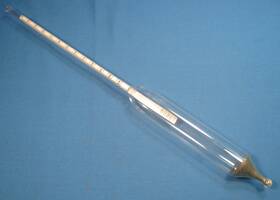
( Brand: Berge ), ( Manufacturer Part Number: A-813 ), ( Part Type: Hydrometer ), ( Intended Use/discipline: Physical Laboratory, Biological Laboratory )
Review BERGE Api Petroleum Hydrometer New Old Stock Shipping
The **Berge A-813 API Petroleum Hydrometer** is a precision-engineered laboratory instrument designed for accurate density measurement of petroleum products, lubricating oils, and other liquid hydrocarbons in compliance with the American Petroleum Institute (API) gravity scale. Built to meet rigorous industry standards, this hydrometer features a robust glass construction with a sealed, temperature-compensated stem that ensures reliable readings across a wide range of fluid viscosities. The A-813 is specifically calibrated to the API gravity scale, which is widely used in the oil and gas industry to quantify the relative density of crude oils, refined products, and other petroleum-based liquids, facilitating consistent quality control, blending calculations, and compliance with regulatory specifications. Its floating design allows for effortless immersion in the sample, while the clearly marked scale ranging from approximately 10 to 70 API provides quick and precise density determinations without the need for complex calculations. The hydrometer s durable, tempered glass body is resistant to chemical corrosion and thermal shock, making it suitable for use in both laboratory and field environments. Additionally, the A-813 is equipped with a protective cap to prevent contamination and damage during storage or transport, ensuring long-term accuracy and reliability. Whether used in refineries, petrochemical plants, or quality assurance laboratories, this hydrometer serves as an indispensable tool for engineers, chemists, and technicians seeking to maintain strict adherence to API standards and optimize petroleum product performance.
**Pros and Cons of buying a Berge A-813 API Petroleum Hydrometer**
The Berge A-813 API Petroleum Hydrometer is a precision instrument used to measure the specific gravity of petroleum products, crude oil, and other liquids in compliance with the American Petroleum Institute (API) gravity scale. Below is a detailed analysis of its advantages and disadvantages.
### **Pros**
1. **High Accuracy and Precision**
The A-813 is designed to meet strict API standards, ensuring reliable and repeatable measurements. This is critical in industries where even minor deviations in specific gravity can affect product quality, pricing, and compliance.
2. **Durability and Robust Construction**
Built with high-quality materials, including borosilicate glass and stainless steel components, the hydrometer is resistant to corrosion, thermal shock, and mechanical stress. This makes it suitable for field use as well as laboratory environments.
3. **API Compliance**
The hydrometer is specifically calibrated to the API gravity scale, which is widely used in the oil and gas industry. This ensures that measurements align with industry standards, avoiding disputes over product specifications or pricing.
4. **Versatility in Applications**
It can be used for a variety of petroleum products, including crude oil, gasoline, diesel, and other refined fuels. This makes it a cost-effective investment for businesses handling multiple liquid types.
5. **Easy to Use**
The design is straightforward, with clear markings and a simple operating procedure. Most users, even those without extensive laboratory experience, can perform accurate readings with minimal training.
6. **Portable and Field-Deployable**
Unlike some laboratory-grade instruments, the A-813 is compact and can be used in remote locations, refineries, storage tanks, or during transportation. This is particularly useful for quality control in the field.
7. **Long-Term Reliability**
With proper care, the hydrometer can last for many years, providing consistent performance. This reduces the need for frequent replacements, lowering long-term operational costs.
8. **Compatibility with Standard Procedures**
It adheres to established testing protocols, such as ASTM D1250 and ASTM D287, making it a trusted choice for quality assurance and regulatory compliance.
---
### **Cons**
1. **Limited to Liquid Samples**
The hydrometer cannot measure solids, gases, or non-liquid substances. If your operations involve multiple phases (e.g., sludges or emulsions), additional testing methods may be required.
2. **Temperature Sensitivity**
While the hydrometer accounts for temperature corrections via the API scale, extreme temperature fluctuations can still affect accuracy. Users must ensure samples are at the correct temperature (typically 60 F/15.6 C for API gravity) before measurement.
3. **Manual Operation**
Unlike automated systems, the A-813 requires manual handling, including sample preparation, thermometer readings, and hydrometer placement. This introduces potential human error if not performed carefully.
4. **Maintenance Requirements**
The glass bulb and stem can become dirty or damaged over time, requiring periodic cleaning with solvents or replacement. Improper handling (e.g., dropping the hydrometer) can lead to breakage.
5. **Cost Relative to Simpler Instruments**
While it is a mid-range instrument, it may be more expensive than basic hydrometers used for non-petroleum liquids. Businesses with tight budgets may need to weigh its necessity against other testing methods.
6. **Sample Volume Constraints**
The hydrometer requires a sufficient volume of liquid to submerge it properly. Small or irregularly shaped containers may not provide accurate readings.
7. **Training Dependency**
Accurate results depend on proper technique. Untrained personnel may struggle with sample preparation, temperature adjustments, or reading the scale correctly, leading to inconsistent data.
8. **Environmental Limitations**
Exposure to harsh conditions (e.g., extreme cold, high humidity, or corrosive fumes) can degrade the instrument over time. It may not be suitable for unprotected outdoor storage in all climates.
---
### **Conclusion**
The Berge A-813 API Petroleum Hydrometer is a highly reliable and industry-standard tool for measuring petroleum-specific gravity. Its precision, durability, and compliance with API/ASTM protocols make it an essential asset for refineries, storage facilities, and quality control laboratories. However, its manual operation, temperature sensitivity, and specific application limitations require careful consideration.
If your operations involve frequent or critical petroleum-specific gravity testing, the A-813 is a strong recommendation due to its accuracy and industry recognition. For businesses with limited testing needs or alternative requirements (e.g., non-petroleum liquids), a simpler or automated system might suffice.
**Final Recommendation:** Purchase the Berge A-813 API Petroleum Hydrometer if:- You need API-compliant measurements for crude oil, gasoline, diesel, or other refined fuels.
- Your workflow involves field or laboratory testing where precision is non-negotiable.
- You can invest in proper training and maintenance to ensure long-term accuracy.
Consider alternatives (e.g., digital density meters or simpler hydrometers) if:- Your budget is constrained.
- You primarily test non-petroleum liquids.
- Automated or higher-tech solutions align better with your operational needs.
Details:
Up for sale is a new, old stock Berge API Petroleum Hydrometer, SIMILAR to Fisher Cat. No chips or cracks. Shipping is free to the 50 states.
part #: a813 price
- $20.00
specifications plasticwarelabsuppy:
- brand: Berge
- mpn: A-813
- part type: Hydrometer
- intended use/discipline: Physical Laboratory, Biological Laboratory
seller plasticwarelabsuppy:
- city: Oak Park, Michigan
- rating: 100.0%
- # reviews: 14959
offer plasticwarelabsuppy:
- availability: In Stock
- options: Ship-to-home
- sold: 0
- started: May 6, 2026
- quantity: 3
general plasticwarelabsuppy:
- Medical, Lab Dental Supplies > Glassware Plasticware > Other Medical Lab Glassware
- condition: New
returns plasticwarelabsuppy:
- method: Money back
- paid by: Buyer
- policy: Returns Accepted
- time: 30 Days
shipping plasticwarelabsuppy:
- class: Standard
- cost: $0.00
- service: USPS First Class
- carrier: USPS
- type: Fixed
- transit: 3-9 Days
payments plasticwarelabsuppy:
- other
- credit card: Mastercard
- wallet: Paypal