WILMAD AP1546 Kimble Kem Semi Micro Borosilicate Kit Kimble/wilmad 19/22
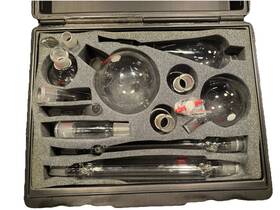
( Brand: Wilmad ), ( Manufacturer Part Number: AP1546 ), ( Intended Use/discipline: Organice Chemistry Set )
Review WILMAD Kimble/wilmad Kem Kit Semi micro 19/22 Borosilicate
The **Wilmad AP1546 Kimble/Wilmad KEM Kit Semi-Micro 19/22 Borosilicate** is a precision-engineered laboratory glassware set designed for high-performance chemical analysis, synthesis, and titration procedures where accuracy, durability, and thermal resistance are paramount. Crafted from **19/22 borosilicate glass**, this kit exemplifies the exceptional clarity, chemical inertness, and thermal shock resistance of Kimble s renowned glassware, making it ideal for demanding applications in academic research, pharmaceutical development, and industrial laboratories. The semi-micro design ensures optimal sample volumes typically ranging from 5 to 50 milliliters while maintaining the precision required for delicate titrations, volumetric measurements, and small-scale reactions. The **AP1546 KEM Kit** is thoughtfully assembled to include a **100 mL semi-micro volumetric flask**, a **50 mL semi-micro volumetric flask**, a **25 mL semi-micro volumetric flask**, a **10 mL semi-micro volumetric flask**, and a **10 mL semi-micro beaker**, all featuring **ground-glass stoppers** for secure sealing and minimal evaporation. The ground-glass joints are meticulously polished to prevent leaks and ensure a tight, airtight fit, which is critical for maintaining sample integrity during extended experiments or when working with volatile or hazardous substances. Beyond its functional versatility, the kit s borosilicate construction provides superior resistance to thermal expansion and contraction, allowing it to withstand repeated heating and cooling cycles without compromising structural integrity a key advantage in applications involving reflux, distillation, or solvent extraction. The **Kimble/Wilmad branding** is synonymous with reliability, and this kit adheres to stringent quality standards, ensuring consistent performance and longevity. Whether used for precise titrations in analytical chemistry, small-scale synthesis in organic laboratories, or routine quality control in pharmaceutical manufacturing, the **AP1546 Semi-Micro 19/22 Borosilicate Kit** delivers the precision, durability, and ease of use that modern laboratories demand. Its compact yet comprehensive design makes it a practical addition to any bench, offering researchers the tools they need to execute experiments with confidence and precision.
### **Pros and Cons of buying a Wilmad AP1546 Kimble/Wilmad KEM Kit (Semi-Micro 19/22 Borosilicate)**
#### **Pros**
1. **High-Quality Borosilicate Glass** The 19/22 borosilicate glass is durable, chemically resistant, and thermally stable, making it ideal for laboratory applications requiring precision and longevity.
2. **Semi-Micro Design** The semi-micro size (15 mL capacity) is well-suited for smaller-scale experiments, reducing reagent consumption while maintaining accuracy.
3. **Compatibility with Standard Lab Equipment** The 19/22 joint standard ensures compatibility with most laboratory glassware, condensers, and adapters, making it versatile for various setups.
4. **Durability and Longevity** Wilmad is a reputable manufacturer known for producing high-quality, long-lasting glassware, reducing the need for frequent replacements.
5. **Precision and Consistency** The KEM (Kimble Extractable Micro) design minimizes dead space, improving reaction efficiency and reproducibility in experiments.
6. **Wide Range of Applications** Suitable for distillation, extraction, reflux, and other common laboratory procedures, making it a versatile addition to any lab.
7. **Easy to Clean and Maintain** Borosilicate glass is resistant to most solvents and acids, simplifying cleaning and reducing contamination risks.
8. **Cost-Effective for Long-Term Use** While the initial cost may be higher than some disposable alternatives, its durability and performance justify the investment over time.
#### **Cons**
1. **Higher Upfront Cost** Compared to plastic or lower-grade glassware, the Wilmad AP1546 is more expensive, which may be a barrier for budget-conscious labs or individual researchers.
2. **Fragility Compared to Plastic** Despite its strength, borosilicate glass can still break if mishandled, especially during thermal shock or rough handling.
3. **Weight** The glassware is heavier than plastic alternatives, which may be less convenient for frequent transport or fieldwork.
4. **Limited Flexibility in Size** If the semi-micro size is not ideal for a specific application, alternative sizes may need to be purchased separately.
5. **Potential for Contamination** Like all glassware, it requires thorough cleaning to avoid residue buildup, which can be time-consuming if not maintained properly.
6. **Not Ideal for High-Pressure Applications** While durable, borosilicate glass is not designed for high-pressure systems, limiting its use in certain specialized setups.
---
### **Conclusion**
The **Wilmad AP1546 Kimble/Wilmad KEM Kit (Semi-Micro 19/22 Borosilicate)** is a high-quality, versatile, and durable piece of laboratory glassware that excels in precision and longevity. Its borosilicate construction ensures resistance to chemicals and thermal stress, making it reliable for a wide range of applications. While the initial cost is higher than some alternatives, its performance, compatibility, and durability make it a worthwhile investment for labs that prioritize accuracy and reliability.
However, if budget constraints or the need for portability are critical factors, alternative options (such as plastic or lower-cost glassware) may be considered. For most standard laboratory applications, particularly those requiring precision and repeatability, this kit is highly recommended.
### **Recommendation**
**Buy the Wilmad AP1546 if:**- You need a durable, high-quality glassware solution for semi-micro-scale experiments.
- Your lab requires compatibility with standard 19/22 joint equipment.
- You prioritize long-term use and minimal maintenance.
- Budget allows for an upfront investment in reliable labware.
**Consider alternatives if:**- Your budget is extremely limited, and you can find equally effective lower-cost options.
- You frequently work in field settings where weight and fragility are concerns.
- Your applications require high-pressure or extreme conditions beyond the glassware s specifications.
Details:
I listed this as used, but am not sure that is used. To be safe I listed it as used. It appears to be new.
part #: ap1546 price
- $150.00
specifications plasticwarelabsuppy:
- brand: Wilmad
- mpn: Ap1546
- intended use/discipline: Organice Chemistry Set
shipping plasticwarelabsuppy:
- transit: 5-11 Days
- carrier: USPS
- service: USPS Ground Advantage
- type: Calculated
- cost: $12.78
- class: Standard
offer plasticwarelabsuppy:
- options: Ship-to-home
- sold: 0
- started: April 4, 2026
- quantity: 1
- availability: In Stock
returns plasticwarelabsuppy:
- paid by: Buyer
- time: 30 Days
- policy: Returns Accepted
- method: Money back
general plasticwarelabsuppy:
- condition: Used
- Medical, Lab Dental Supplies > Glassware Plasticware > Other Medical Lab Glassware
seller plasticwarelabsuppy:
- city: Katy, Texas
- # reviews: 494
- rating: 98.8%
payments plasticwarelabsuppy:
- credit card: Mastercard
- wallet: Paypal
- other