CHEMGLASS CG-1016-05 Bushing Adapter Lower Inner Top Outer 24/40 14/35
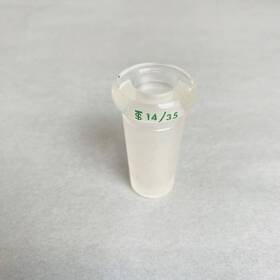
( Brand: Chemglass ), ( Manufacturer Part Number: CG-1016-05 ), ( Part Type: Bushing Adapter ), ( Unit Type: Unit ), ( Country Of Origin: United States ), ( Intended Use/discipline: Biological Laboratory, Dental Laboratory, Medical Laboratory, Microbiological Laboratory, Physical Laboratory )
Review CHEMGLASS Bushing Adapter 24/40 Lower Inner 14/35 Top Outer
The **Chemglass CG-1016-05 Bushing Adapter** is a precision-engineered glass-to-glass connector designed to facilitate seamless transitions between standard laboratory glassware while maintaining optimal chemical resistance, clarity, and structural integrity. This versatile adapter is specifically crafted to bridge the gap between a **24/40 male joint (lower inner)** and a **14/35 female joint (top outer)**, making it an indispensable component for assembling complex glassware setups in analytical chemistry, organic synthesis, and laboratory-scale reactions. Constructed from high-quality borosilicate glass (typically Type I, such as Kimble KG-33 or equivalent), the adapter ensures durability under thermal cycling, resistance to most acids and solvents, and transparency for visual monitoring of reactions. Its **24/40 lower inner joint** features a standard male ground glass connection, allowing it to be securely attached to larger diameter glassware such as round-bottom flasks, distillation columns, or reaction vessels, while its **14/35 top outer joint** provides a precise female ground glass interface for smaller diameter components like condensers, funnels, or additional adapters. The adapter s design minimizes dead space and maximizes flow efficiency, making it ideal for applications requiring controlled liquid transfer, distillation, or filtration. With its smooth, polished ground glass surfaces, the CG-1016-05 ensures a tight, leak-proof seal when properly lubricated with a compatible silicone grease, reducing the risk of contamination or spillage during high-vacuum or high-pressure operations. Whether used in routine laboratory procedures or specialized synthetic workflows, this adapter exemplifies reliability and precision, embodying the high standards of glassblowing craftsmanship that Chemglass is renowned for.
**Pros and Cons of buying a Chemglass CG-1016-05 Bushing Adapter (24/40 Lower Inner, 14/35 Top Outer)**
### **Pros**
1. **Compatibility with Standard Joints** This adapter is designed to connect a 24/40 standard taper joint to a 14/35 joint, making it useful for setups requiring a transition between these two common sizes. This is particularly helpful in laboratory glassware where different components may use different taper standards.
2. **Durability and Quality** Chemglass is a well-established manufacturer of laboratory glassware and adapters, known for producing high-quality, precision-ground glass components. The CG-1016-05 is likely to be well-engineered for longevity, especially if used within its intended temperature and pressure limits.
3. **Versatility in Laboratory Setups** The adapter allows for flexibility in assembling glassware configurations, such as connecting a condenser with a 24/40 joint to a flask or other equipment with a 14/35 joint. This can simplify workflows where multiple joint sizes are involved.
4. **Compatibility with Common Laboratory Equipment** Many standard laboratory glassware pieces (e.g., condensers, funnels, or adapters) use either 24/40 or 14/35 joints. This adapter bridges the gap, reducing the need for additional custom fittings.
5. **Easy to Clean and Maintain** Glass components like this adapter are generally easy to clean, especially if they are made of borosilicate glass (a common material for Chemglass products). They can be washed with solvents or heated for sterilization, depending on the application.
6. **Cost-Effective for Common Needs** While not the cheapest adapter on the market, it represents a reasonable investment for a reliable, off-the-shelf solution to a common joint compatibility issue. Purchasing it avoids the time and expense of custom fabrication.
---
### **Cons**
1. **Limited Temperature and Pressure Ratings** Like all glass joints, this adapter has temperature and pressure limitations. Exceeding these (e.g., using it in high-vacuum or extreme heat applications) can cause cracking or failure. Chemglass typically specifies these limits, so it s important to verify compatibility with your specific use case.
2. **Potential for Leaks** Improper sealing or contamination (e.g., dust, grease, or moisture) can lead to leaks at the joint interfaces. This requires careful handling and sometimes the use of high-vacuum grease or other sealants, depending on the application.
3. **Fragility** Glass adapters are brittle and can shatter if dropped or subjected to thermal shock (e.g., rapid heating or cooling). This makes them less durable than metal or plastic alternatives in rough handling environments.
4. **Maintenance of Sealants** Over time, the grease or sealant used on glass joints may degrade or dry out, requiring reapplication. This adds to the maintenance burden compared to permanent seals found in some metal or plastic fittings.
5. **Size Limitations** This specific adapter is designed for a single joint transition (24/40 to 14/35). If your setup requires multiple transitions or different joint sizes, you may need additional adapters, increasing complexity and cost.
6. **Potential for Misalignment** If not assembled carefully, the adapter may not seat properly, leading to uneven sealing or difficulty in connecting the joints. This requires precision during installation.
7. **Cost Compared to Alternatives** While reasonable, the cost of this adapter may be higher than plastic or metal alternatives if those are suitable for your application. For example, some PTFE or metal fittings may offer similar functionality at a lower price point, though they may lack the chemical resistance or thermal stability of glass.
---
### **Conclusion**
The Chemglass CG-1016-05 adapter is a practical and reliable solution for connecting 24/40 and 14/35 glass joints in laboratory settings. Its precision engineering, compatibility with standard glassware, and durability make it a strong choice for applications where glass joints are appropriate. However, its fragility, maintenance requirements, and limitations in extreme conditions mean it may not be ideal for high-stress or non-laboratory environments.
If your application involves standard laboratory glassware, requires a transition between 24/40 and 14/35 joints, and operates within the adapter s specified temperature and pressure limits, this adapter is a sound investment. For applications involving high pressure, extreme temperatures, or rough handling, consider alternative materials like metal or reinforced plastic fittings.
---
### **Recommendation**
**Buy the Chemglass CG-1016-05 adapter if:**- You need to connect 24/40 and 14/35 glass joints in a laboratory setting.
- Your application involves moderate temperatures and pressures within the adapter s rated limits.
- You prioritize chemical resistance, precision, and compatibility with standard glassware.
- You are willing to handle the adapter carefully to avoid damage.
**Avoid or consider alternatives if:**- Your application involves high pressure, extreme temperatures, or thermal shock.
- You require frequent assembly/disassembly in a high-traffic or rough environment (where metal or plastic fittings may be more durable).
- You need a solution that doesn t require greasing or sealing (some metal or PTFE fittings offer permanent seals).
- Your budget is constrained, and a lower-cost alternative (e.g., a plastic adapter) would suffice for your needs.
For most standard laboratory uses, this adapter is a well-justified purchase. Always verify the adapter s specifications with Chemglass or your supplier to ensure it meets your exact requirements.
Details:
Chemglass CG-1016-05 Bushing Adapter 24/40 Lower Inner 14/35 Top Outer.
part #: cg101605 prices
- $17.29-$33.00
specifications plasticwarelabsuppy:
- brand: Chemglass
- mpn: Cg-1016-05
- part type: Bushing Adapter
- unit type: Unit
- country of origin: United States
- intended use/discipline: Biological Laboratory, Dental Laboratory, Medical Laboratory, Microbiological Laboratory, Physical Laboratory
returns plasticwarelabsuppy:
- policy: Returns Accepted
- method: Money back
- time: 30 Days
- paid by: Buyer
seller plasticwarelabsuppy:
- # reviews: 2535
- rating: 100.0%
- city: Ponder, Texas
general plasticwarelabsuppy:
- condition: Used
- Medical, Lab Dental Supplies > Glassware Plasticware > Other Medical Lab Glassware
shipping plasticwarelabsuppy:
- class: Standard, Expedited
- cost: $0.00
- service: USPS Ground Advantage, Expedited
- carrier: USPS
- type: Fixed
- transit: 5-8 Days
offer plasticwarelabsuppy:
- options: Ship-to-home
- availability: In Stock
- started: June 4, 2026
- sold: 0
- quantity: 2
- best offers: True
payments plasticwarelabsuppy:
- credit card: Visa
- wallet: Google-pay
- other
Chemglass CG-1016-05 Is Similar To:
- Cg-1042-01 Chemglass Thermometer Inlet Adapter With Inner Joint (45.1% similar) Between 4 and 7MM. 24 40 inner joint 7 chem-thread 80MM height Chemglass cg thermometer inlet adapter with joint. Adapter has a 7 or 15 chem-thread at the top for vacuum tight seal of plain stem Thermos-meters any other tube having an. Supplied complete with a Ceylon compression cap and Vito o-...(September 9th, 2018)
- Cg-1049-j-30 Chemglass Series Vacuum Adapter Outer To Gpi Thread Ptfe Stopcock (33.8% similar) Please for more details the unique design of long stem filter funnel and vacuum adapter makes it unnecessary to clean after each use. Hose connection is 10MM OD at the largest serration. The 2MM PDF stopcock between outer joint and standard taper inner permits control of vacuum source...(January 17th, 2019)
- Cg-1318-25 Chemglass New Plastic Rotary Evaporator Vial Adapter Connector Thread (40% similar) ...(April 16th, 2018)
- Cg-1321-01 Chemglass Rotary Evaporator Modified Bump Trap With Top Outer (38% similar) Traps have a top outer joint and the listed size of lower inner. Chemglass cg rotary evaporator modified bump trap with top outer and lower inner, 100ML capacity inner similar to CG-1320, but the addition of two 4MM drain holes at base tube allow solvent back into evaporation flask...(March 20th, 2019)
- Cg 1321-14 Chemglass Rotary Evaporator Bump Trap Modified Top Bottom (36.2% similar) Has 2 small drainage holes at base of inner tube. Rotary evaporator bump trap modified. 24 40 top and bottom joint 500ML...(December 28th, 2018)
- Cg-1759-26 Chemglass 8 Top Eco-funnel (31.8% similar) New in package, great deal...(August 1st, 2017)
- Cg-2071-01 Chemglass Glass Connecting Adapter Top Bottom Enlarging (42.6% similar) Great used condition. Used items will show signs of wear sometimes including light scratches, discoloration, stickers tape, or exterior markings...(December 8th, 2018)
- Cg-3022-24 Chemglass Rubber Sleeve Type Septum Stopper For Outer (38.8% similar) Sold exactly as is in pics. Brand new 100 count bag...(January 7th, 2019)
- Cg-4512-02 Chemglass Vacuum Trap Body Od Inner Tube (43% similar) ...(February 7th, 2019)
- Cg-4515-06 Chemglass Vacuum Trap Stopper Only Inner Jt (41.9% similar) Chemglass vacuum trap stopper only inner jet cg new - no retail box: two piece construction for easy removal of condensate. Inlet and outlet are apart for installation into a variety of vacuum systems. Stopper has a standard taper inner joint and body an outer. Of 13MM at the smallest serration and ...(November 12th, 2018)
- Eco-funnel Chemglass 8 Top Threaded (30.5% similar) As pictured...(August 19th, 2016)