CHEMGLASS CG-1181-02 Joint Plate Cylindrical Tlc Developing 34/15 1X4 Chamber
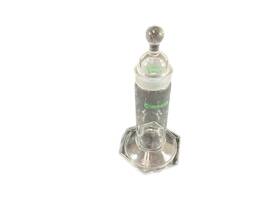
( Brand: Chemglass ), ( Manufacturer Part Number: CG-1181-02 ), ( Part Type: Joint Plate ), ( Intended Use/discipline: Biological Laboratory, Dental Laboratory, Microbiological Laboratory, Medical Laboratory, Physical Laboratory ), ( Unit Type: Unit ), ( Additional Information: Surplus Laboratory Consumable Supplies ), ( Country Of Origin: United States )
Review CHEMGLASS 34/15 1x4 Joint Plate Cylindrical Tlc Developing Chamber
The **Chemglass CG-1181-02 34/15 1x4 Joint Plate Cylindrical TLC Developing Chamber** is a precision-engineered analytical tool designed for high-performance thin-layer chromatography (TLC), offering researchers and laboratories a reliable, versatile, and efficient platform for separating and visualizing complex mixtures. Constructed from high-quality borosilicate glass, this chamber combines durability with optical clarity, ensuring consistent performance across a wide range of applications, from routine qualitative analysis to advanced quantitative studies. Its cylindrical design, featuring a **34/15 standard taper joint**, allows for secure, leak-proof sealing with compatible glassware, minimizing solvent evaporation and maintaining a stable, saturated vapor environment essential for reproducible TLC development. The **1x4 joint plate configuration** accommodates four standard-sized TLC plates (typically 20 cm x 20 cm) simultaneously, maximizing throughput while preserving the integrity of each separation. The chamber s internal dimensions are optimized to create an even distribution of solvent vapor, reducing edge effects and ensuring uniform migration rates across the entire plate surface. This design is particularly advantageous for analyzing samples with varying polarities, as it promotes consistent development fronts and sharp band resolution, critical for accurate identification and quantification. Additionally, the chamber s transparent walls enable real-time monitoring of solvent progression without disrupting the development process, while its robust construction withstands repeated use with standard organic solvents, including hexane, ethyl acetate, methanol, and chloroform-based systems. Whether employed in pharmaceutical research, environmental analysis, or natural product chemistry, this developing chamber delivers the precision and reliability demanded by modern chromatographic techniques, making it an indispensable asset for any laboratory focused on high-efficiency sample purification and analysis.
**Pros and Cons of buying a Chemglass CG-1181-02 (34/15 1x4 Joint Plate Cylindrical TLC Developing Chamber)**
### **Pros:**1. **High Quality and Durability** Chemglass is a well-established manufacturer known for producing high-quality glassware designed for laboratory use. This chamber is built to withstand repeated use, ensuring longevity and reliability in thin-layer chromatography (TLC) applications.
2. **Precision Engineering** The cylindrical design with a 1x4 joint plate allows for precise control over solvent development, minimizing edge effects and ensuring uniform solvent front movement. This is critical for accurate and reproducible TLC results.
3. **Compatibility with Standard Lab Equipment** The 34/15 joint standard ensures compatibility with other glassware, such as funnels, adapters, and solvent reservoirs commonly used in TLC setups. This makes it easy to integrate into existing workflows.
4. **Efficient Solvent Development** The cylindrical shape promotes even solvent distribution, reducing the risk of uneven sample separation. This is particularly useful for analyzing multiple samples simultaneously.
5. **Chemical Resistance** Glass is inert and resistant to most organic solvents, acids, and bases, making this chamber suitable for a wide range of TLC applications without risking contamination or degradation.
6. **Easy to Clean and Maintain** Glass surfaces are straightforward to clean with solvents or mild detergents, reducing the risk of carryover between experiments. The lack of plastic components also minimizes potential leaching issues.
7. **Transparency for Visual Inspection** The glass construction allows for clear visualization of the solvent front and sample separation during development, enabling real-time monitoring without disassembly.
8. **Versatility** The 1x4 joint plate configuration accommodates multiple sample lanes, making it ideal for comparative analysis or screening multiple compounds in a single run.
---
### **Cons:**1. **Fragility** Glassware is inherently more fragile than plastic alternatives, requiring careful handling to avoid breakage. This can be a concern in busy or high-throughput laboratories where accidental drops or impacts are more likely.
2. **Weight** Glass chambers are heavier than plastic counterparts, which may make them less convenient for frequent transport or use in field settings.
3. **Limited Temperature Resistance** While glass can handle most laboratory conditions, extreme temperature fluctuations or thermal shock (e.g., rapid heating or cooling) could cause cracking or breakage.
4. **Cost** High-quality glassware like this Chemglass product is generally more expensive than plastic or disposable alternatives. The initial investment may be higher, though the durability often justifies the cost over time.
5. **Maintenance Requirements** Regular cleaning is essential to prevent residue buildup, which can affect TLC results. Improper cleaning or neglect may lead to cross-contamination or inconsistent performance.
6. **Space Requirements** The cylindrical design and joint plate may occupy more bench space compared to smaller or more compact chambers, which could be a limitation in labs with limited workspace.
7. **Potential for Scratches or Etching** Prolonged use with abrasive cleaning tools or harsh chemicals can scratch or etch the glass surface, potentially affecting solvent wicking and separation quality over time.
---
### **Conclusion:**The **Chemglass CG-1181-02 34/15 1x4 Joint Plate Cylindrical TLC Developing Chamber** is a robust, high-performance tool for laboratories requiring precise and reproducible TLC results. Its durability, chemical resistance, and compatibility with standard lab equipment make it a reliable choice for routine and advanced applications. However, its fragility, higher cost, and maintenance needs may pose challenges in certain environments, particularly those with limited space, high throughput, or strict budget constraints.
For **research laboratories, academic institutions, or industrial settings** where precision, longevity, and chemical compatibility are prioritized, this chamber is highly recommended. It is particularly well-suited for users who perform frequent TLC analyses and require consistent, high-quality results.
For **smaller labs, fieldwork, or budget-conscious settings**, alternatives such as plastic TLC chambers or disposable systems might be more practical, despite potential trade-offs in performance and durability. Ultimately, the decision should align with the specific needs of the laboratory, including budget, workflow demands, and the importance of reproducibility.
Details:
See pictures for details. GSR veers 1730 GS 9.9.4 1730 Used item in excellent condition. No chips or cracks throughout.
part #: cg118102 price
- $79.99
specifications plasticwarelabsuppy:
- brand: Chemglass
- mpn: Cg-1181-02
- part type: Joint Plate
- intended use/discipline: Biological Laboratory, Dental Laboratory, Microbiological Laboratory, Medical Laboratory, Physical Laboratory
- unit type: Unit
- additional information: Surplus Laboratory Consumable Supplies
- country of origin: United States
payments plasticwarelabsuppy:
- other
- wallet: Apple-pay
- credit card: Visa
general plasticwarelabsuppy:
- condition: Used
- Medical, Lab Dental Supplies > Glassware Plasticware > Other Medical Lab Glassware
offer plasticwarelabsuppy:
- availability: In Stock
- sold: 0
- started: May 29, 2026
- quantity: 1
- options: Ship-to-home
seller plasticwarelabsuppy:
- city: Cotati, California
- rating: 99.9%
- # reviews: 7974
shipping plasticwarelabsuppy:
- service: Standard, FedEx 2Day, FedEx Standard Overnight
- carrier: FedEx
- cost: $0.00
- transit: 5-12 Days
- class: Standard, Expedited, One-day
- type: Fixed
returns plasticwarelabsuppy:
- paid by: Seller
- time: 30 Days
- method: Money back
- policy: Returns Accepted
Chemglass CG-1181-02 Is Similar To:
- Cg-1042-01 Chemglass Thermometer Inlet Adapter With Inner Joint (25.7% similar) Between 4 and 7MM. 24 40 inner joint 7 chem-thread 80MM height Chemglass cg thermometer inlet adapter with joint. Adapter has a 7 or 15 chem-thread at the top for vacuum tight seal of plain stem Thermos-meters any other tube having an. Supplied complete with a Ceylon compression cap and Vito o-...(September 9th, 2018)
- Cg-1181-01 Chemglass Tlc Chromatography Developing Chamber Ts (46.4% similar) Item is like new with no chips, cracks or blemishes. Theres no other parts, cables, manuals, software included. Please see actual pictures. Contact me for details on combined shipping. Chemglass thin layer chromatography tlc developing chamber 1 x 3 plate gifts stopper cg pulled from a working ...(July 20th, 2018)
- Cg-1209-a-26 Chemglass Series Dewar Type Condenser Joint Mm (29.4% similar) Dewar type condenser...(January 15th, 2019)
- Cg-1215-a-12 Chemglass Glass Reflux Condenser Jacket Length Joint (25.4% similar) This will include powering on the unit and checking all major functions. We check and respond to our messages often. Packaging opened manufacturer. Quality all merchandise is tested prior to listing unless it sealed in the factory package. Does not appear to have been used. This helps our buyers ...(October 27th, 2018)
- Cg-1239-02 Chemglass Short Path Distilling Head Thermometer Joint (25.4% similar) What you see in photos is will receive...(November 2nd, 2018)
- Cg-1317-20 Chemglass Series Steam Duct Vapor Tube Mm Joint (26.7% similar) 1142378CHEMOB133. Q: what is the shipping cost. Grab the best deal. Please for details. Q: is local pick-up available. Protectorates. The offered shipping cost in listing applies only to 48 states...(August 11th, 2018)
- Cg-2077-g-02 Chemglass 29-42 Joint Ptfe (37.9% similar) Thorough cleaning and sterilization are recommended before use. Multiple available. Used glassware will show signs of wear sometimes including light scratches, discoloration, stickers tape, or exterior markings. Brand: Chemglass part: CG-2077-G-02 joint: 29 42 inner material: PDF includes: peek ...(December 1st, 2017)
- Cg-2077-g-04 Chemglass 45-50 Joint Ptfe (37.9% similar) In good condition otherwise. Thorough cleaning and sterilization are recommended before use. Brand: Chemglass part: CG-2077-G-04 joint: 45 50 inner material: PDF includes: peek compression spring sleeve - for use with 10MM shafts not included used yellow discoloration on the joint, some residue and ...(December 1st, 2017)
- Cg-3003-02 60725 Chemglass Safe-lab 14-20 Joint Solid (36.9% similar) Brand: Chemglass, safe-lab part: cg, 60725 joint: 14 20 material: solid PDF Teflon - autoclave safe at 121 c f new old stock used glassware will show signs of wear sometimes including residue, light scratches, stickers tape or exterior markings...(March 6th, 2017)
- Chem5000 Chemglass Triple Neck Round Bottom Joint (28.6% similar) ...(August 30th, 2018)
- Cls-3613-01b Chemglass Polypropylene Blue Pcr Thin Wall Plate Cells Microlite (32.5% similar) One new case of Chemglass polypropylene blue CPR thin wall plate 96 cells, 250 micro liters volume, 3MM rim please see pictures for any further details...(July 23rd, 2018)