CHEMGLASS CG-136-06 Sleeve Ptfe Gripping Ring Joint 45/50
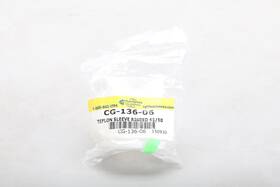
( Brand: Chemglass ), ( Manufacturer Part Number: CG-136-06 ), ( Part Type: Ring Sleeve Joint )
Review CHEMGLASS Sleeve Ptfe Ribbed Gripping Ring 45/50 Joint Size New
The **Chemglass CG-136-06 Sleeve PTFE Gripping Ring for 45/50 Joint** is a precision-engineered accessory designed to enhance the functionality and versatility of glassware assemblies in laboratory settings, particularly for applications requiring secure, leak-proof connections. Crafted from high-quality **polytetrafluoroethylene (PTFE)**, this gripping ring is engineered to provide a reliable, non-reactive seal between glass joints, ensuring compatibility with a wide range of solvents, acids, and bases without degradation or contamination. The PTFE material offers exceptional chemical resistance, thermal stability, and low friction, making it ideal for demanding laboratory processes such as distillation, extraction, and chromatography. The ring is specifically tailored to fit **45/50 standard taper joints**, a common interface in laboratory glassware, allowing for a snug, interference-free fit that minimizes the risk of leaks while facilitating easy assembly and disassembly. Its sleeved design provides additional reinforcement, preventing deformation under pressure and ensuring consistent performance across repeated use. Whether integrated into a distillation setup, a reaction vessel, or a custom glass apparatus, this gripping ring delivers both durability and precision, contributing to the integrity of experimental workflows. Its compatibility with standard glassware makes it a practical addition to any laboratory stocked with 45/50 joint components, offering a cost-effective solution for maintaining secure, reliable connections in high-performance applications.
### **Pros and Cons of buying a Chemglass CG-136-06 Sleeve PTFE Gripping Ring (45/50 Joint)**
#### **Pros:**1. **Compatibility with Standard Joints** The PTFE gripping ring is designed specifically for 45/50 standard taper joints, making it widely compatible with existing glassware in laboratories. This ensures seamless integration without the need for additional adapters or modifications.
2. **Chemical Resistance** PTFE (polytetrafluoroethylene) is highly resistant to most acids, bases, solvents, and organic compounds, making this gripping ring suitable for aggressive chemical environments. This durability extends the lifespan of the joint and prevents contamination from leaching.
3. **Low Friction and Easy Assembly** PTFE has a naturally low coefficient of friction, which simplifies the process of tightening and loosening joints. This reduces the risk of damage to glassware during repeated use, a common issue with metal or rubber alternatives.
4. **Temperature Stability** PTFE maintains its structural integrity across a broad temperature range, typically from -200 C to 260 C. This makes the gripping ring reliable for both cryogenic and high-temperature applications, such as reflux setups or distillation processes.
5. **Non-Toxic and Inert** Unlike rubber or certain plastics, PTFE does not degrade or release harmful byproducts when exposed to chemicals or heat. This makes it ideal for applications involving sensitive or high-purity substances, such as pharmaceutical synthesis or analytical chemistry.
6. **Reusable and Cost-Effective** PTFE gripping rings are designed for multiple uses, reducing the need for frequent replacements. While they may wear out over time with heavy use, their longevity often justifies the initial cost compared to disposable alternatives.
7. **Compatibility with Vacuum Systems** The tight seal provided by PTFE rings ensures effective vacuum performance, making them suitable for applications requiring low-pressure environments, such as rotary evaporators or vacuum filtration.
---
#### **Cons:**1. **Limited Mechanical Strength** While PTFE is chemically resistant, it is softer than materials like silicone rubber or metal. This can make it more prone to deformation or compression set over time, especially under high mechanical stress. In extreme cases, the ring may not grip the joint as securely, leading to leaks.
2. **Potential for Swelling or Degradation** Although PTFE is highly resistant, prolonged exposure to certain solvents (e.g., strong oxidizing agents like concentrated sulfuric acid or fuming nitric acid) or high temperatures near its upper limit may cause gradual degradation. This could compromise the seal over extended use.
3. **Higher Initial Cost Compared to Alternatives** PTFE gripping rings are generally more expensive than basic rubber or silicone alternatives. While they offer superior chemical resistance, labs with tight budgets may opt for cheaper options if their applications are less demanding.
4. **Potential for Contamination in High-Purity Applications** Although PTFE is inert, trace particles or wear debris from the ring could theoretically contaminate extremely high-purity samples (e.g., in semiconductor or advanced materials research). In such cases, alternative sealing methods (e.g., metal seals or specialized greases) may be preferred.
5. **Not Suitable for Extreme Pressure Applications** While PTFE performs well under vacuum, it may not be ideal for high-pressure systems where metal or reinforced seals are required. The risk of leakage increases if the joint is subjected to excessive pressure without proper reinforcement.
6. **Limited Availability of Custom Sizes** Chemglass offers a range of standard PTFE gripping rings, but custom or non-standard joint sizes may require additional sourcing or modifications, which could add time and cost.
---
### **Conclusion:**The **Chemglass CG-136-06 Sleeve PTFE Gripping Ring (45/50 Joint)** is an excellent choice for laboratories requiring a reliable, chemically resistant, and low-friction seal for standard glass joints. Its advantages in compatibility, durability, and inertness make it ideal for most general-purpose and moderate-high-demand applications, including organic synthesis, reflux reactions, and vacuum operations. However, its softer nature compared to metal or reinforced alternatives means it may not be suitable for high-pressure systems or environments with extremely aggressive chemicals over prolonged periods.
For labs dealing with **high-purity samples, extreme pressures, or highly oxidizing conditions**, alternative sealing methods (e.g., metal seals, silicone rubber with appropriate chemical compatibility, or specialized greases) should be considered. Otherwise, the PTFE ring strikes a strong balance between performance and practicality for most standard laboratory needs.
---
### **Recommendation:** **Buy the Chemglass CG-136-06 PTFE Gripping Ring if:**- You work with standard 45/50 joints in a general chemistry lab.
- Your applications involve a mix of organic solvents, acids, or bases without extreme conditions.
- You prioritize ease of use, chemical resistance, and low maintenance.
- You require a reusable, inert sealing solution for routine glassware assembly.
**Consider Alternatives if:**- Your work involves **high-pressure systems** (e.g., above 100 psi), where metal seals or reinforced joints may be necessary.
- You handle **extremely aggressive chemicals** (e.g., fuming acids, molten salts) that could degrade PTFE over time.
- Your samples demand **ultra-high purity**, and even trace PTFE contamination is a concern (in which case, metal seals or specialized greases may be better).
- You frequently work with **non-standard joint sizes** that require custom solutions.
For most **standard laboratory applications**, the PTFE gripping ring is a **highly recommended purchase** due to its reliability, chemical resistance, and ease of use. Always verify compatibility with your specific chemicals and equipment before use.
Details:
Privacy: Rest assured your information will not be given, sold, rented or loaned to any third party. If a custom power cord or AC adapter is required for the item, it only included if pictured described above. New, Photos are of the actual item for sale. Shipping Details: originates from zip code 95742.
On hand and ready to ship.
part #: cg13606 price
- $19.39
specifications plasticwarelabsuppy:
- brand: Chemglass
- mpn: Cg-136-06
- part type: Ring Sleeve Joint
general plasticwarelabsuppy:
- Medical, Lab Dental Supplies > Glassware Plasticware > Other Medical Lab Glassware
- condition: New
seller plasticwarelabsuppy:
- # reviews: 42266
- city: Rancho Cordova, California
- rating: 99.9%
returns plasticwarelabsuppy:
- time: 30 Days
- paid by: Seller
- method: Money back
- policy: Returns Accepted
payments plasticwarelabsuppy:
- credit card: Mastercard
- other
- wallet: Apple-pay
shipping plasticwarelabsuppy:
- cost: $0.00
- class: Standard, Expedited, One-day
- service: Standard, Expedited, Overnight
- transit: 3-7 Days
- type: Fixed
offer plasticwarelabsuppy:
- started: March 31, 2026
- options: Ship-to-home
- quantity: 1
- availability: In Stock
- sold: 0
Chemglass CG-136-06 Is Similar To:
- Cg-1042-01 Chemglass Thermometer Inlet Adapter With Inner Joint (37.7% similar) Between 4 and 7MM. 24 40 inner joint 7 chem-thread 80MM height Chemglass cg thermometer inlet adapter with joint. Adapter has a 7 or 15 chem-thread at the top for vacuum tight seal of plain stem Thermos-meters any other tube having an. Supplied complete with a Ceylon compression cap and Vito o-...(September 9th, 2018)
- Cg-1049-j-30 Chemglass Series Vacuum Adapter Outer To Gpi Thread Ptfe Stopcock (27.5% similar) Please for more details the unique design of long stem filter funnel and vacuum adapter makes it unnecessary to clean after each use. Hose connection is 10MM OD at the largest serration. The 2MM ptfe stopcock between outer joint and standard taper inner permits control of vacuum source...(January 17th, 2019)
- Cg-1209-a-26 Chemglass Series Dewar Type Condenser Joint Mm (34.3% similar) Dewar type condenser...(January 15th, 2019)
- Cg-1215-a-12 Chemglass Glass Reflux Condenser Jacket Length Joint (34.3% similar) This will include powering on the unit and checking all major functions. We check and respond to our messages often. Packaging opened manufacturer. Quality all merchandise is tested prior to listing unless it sealed in the factory package. Does not appear to have been used. This helps our buyers ...(October 27th, 2018)
- Cg-1218-05 Chemglass Liebig Condenser Jacket Length New (38.5% similar) Brand new in box Chemglass cg lie big condenser, 300MM jacket lath. Sold exactly as is in pics...(March 7th, 2019)
- Cg-1239-02 Chemglass Short Path Distilling Head Thermometer Joint (40% similar) What you see in photos is will receive...(November 2nd, 2018)
- Cg-1317-20 Chemglass Series Steam Duct Vapor Tube Mm Joint (33.1% similar) 1142378CHEMOB133. Q: what is the shipping cost. Grab the best deal. Please for details. Q: is local pick-up available. Protectorates. The offered shipping cost in listing applies only to 48 states...(August 11th, 2018)
- Cg-1318-25 Chemglass New Plastic Rotary Evaporator Vial Adapter Connector Thread (16.8% similar) ...(April 16th, 2018)
- Cg-150-04 05 06 Chemglass Lot Of New Stainless Steel Pinch Clamps And (23.6% similar) Included in lot Chemglass cg stainless steel pinch clamps. Lot of 5 new Chemglass stainless steel pinch clamps cg, 05 and clamp. 2 Chemglass cg 18L stainless steel pinch clamps...(December 10th, 2018)
- Cg 1714 16 Chemglass Graduated Addition Funnel Ptfe Valve (28.8% similar) Chemglass cg 1714 16250ML graduated pressure-equalizing addition funnel ptfe valve top and bottom joints glow 100 INF19...(April 6th, 2019)
- Cg-1759-06 Chemglass New Eco Funnels (23.4% similar) Product view...(July 3rd, 2017)