CHEMGLASS CG-1406-07 Glass Coarse Frit Vacuum Buchner Filter 24/40 60ML Funnel
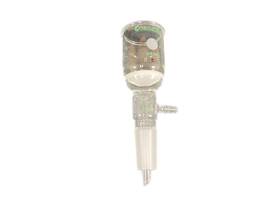
( Brand: Chemglass ), ( Manufacturer Part Number: CG-1406-07 ), ( Part Type: Vacuum Filter ), ( Intended Use/discipline: Biological Laboratory, Dental Laboratory, Microbiological Laboratory, Medical Laboratory, Physical Laboratory ), ( Country Of Origin: United States ), ( Unit Type: Unit ), ( Additional Information: Surplus Laboratory Consumable Supplies )
Review CHEMGLASS Glass 24/40 Coarse Frit 60ml Vacuum Buchner Filter Funnel
The **Chemglass CG-1406-07 Glass 24/40 Coarse Frit 60 mL Vacuum Buchner Filter Funnel** is a precision-engineered laboratory accessory designed for efficient and reliable filtration under reduced pressure, making it an indispensable tool in chemical synthesis, analytical chemistry, and materials science. Crafted from high-quality borosilicate glass (Type I, according to Ph. Eur., USP, and EP standards), this funnel ensures exceptional chemical resistance, thermal stability, and optical clarity, allowing for accurate observations during filtration processes. The **24/40 standard taper joint** guarantees a secure, leak-proof connection to compatible glassware, including Erlenmeyer flasks, filter flasks, and vacuum manifolds, while minimizing dead volume and maximizing throughput. The **coarse frit** (frit #3 or #4, depending on the specific variant) features a uniform pore size distribution, typically ranging between **10 40 m**, which optimizes flow rate while effectively retaining fine particulate matter, precipitates, or suspended solids without clogging prematurely. With a **60 mL capacity**, this funnel strikes an ideal balance between efficiency and sample volume, accommodating moderate-scale filtrations while maintaining ease of handling. Its **flat-bottomed design** ensures stable placement on a filter flask, reducing the risk of tipping or misalignment during use, while the **smooth, polished surface** minimizes adsorption of analytes, preserving the integrity of sensitive samples. Whether employed in routine laboratory procedures, such as recrystallization, drying, or sample preparation, or in specialized applications like vacuum distillation or solvent extraction, this funnel delivers consistent performance with minimal maintenance. Its durability and compatibility with standard laboratory glassware make it a versatile choice for both academic research and industrial settings, where precision and reliability are paramount.
**Pros and Cons of buying a Chemglass CG-1406-07 Glass 24/40 Coarse Frit 60mL Vacuum Buchner Filter Funnel**
### **Pros:**1. **Durability and Quality** Chemglass products are known for their high-quality borosilicate glass (typically Type 1 or 3.3), which is chemically resistant, heat-resistant, and durable for repeated use. This funnel is designed for laboratory applications where reliability is critical.
2. **Standardized Dimensions** The 24/40 joint ensures compatibility with most standard laboratory glassware, making it easy to integrate into existing setups without the need for adapters.
3. **Efficient Filtration** The coarse frit (frit #3 or similar, depending on the exact model) allows for rapid filtration of solids from liquids under vacuum, which is essential for processes like recrystallization, drying, or sample preparation.
4. **Versatility** The 60mL capacity strikes a balance between small-scale and moderate-scale applications, making it suitable for teaching labs, research, or small-scale industrial processes.
5. **Easy Cleaning and Maintenance** Borosilicate glass is non-reactive and can be cleaned thoroughly with solvents, acids, or basic solutions. The funnel s design allows for easy disassembly if needed (though this specific model may be solid).
6. **Compatibility with Vacuum Systems** The funnel is designed to work seamlessly with standard vacuum setups, including water aspirators or vacuum pumps, which is a common requirement in laboratory filtration.
7. **Long Lifespan** Properly cared for, this funnel can last for years, reducing the need for frequent replacements and lowering long-term costs.
8. **Safety** Glass is inert and does not leach contaminants into samples, which is crucial for analytical or pharmaceutical applications where purity is non-negotiable.
---
### **Cons:**1. **Fragility** Despite its durability, glassware is inherently fragile. It can shatter if dropped or subjected to thermal shock (e.g., rapid heating or cooling). This requires careful handling, especially in busy or high-traffic labs.
2. **Limited Reusability with Certain Samples** If filtering highly abrasive or corrosive materials (e.g., certain metals, strong acids, or silica gels), the frit or glass may degrade over time, reducing efficiency or requiring replacement sooner.
3. **Cleaning Time** Thorough cleaning between uses can be time-consuming, especially if residues are stubborn. Some samples may require soaking or ultrasonic cleaning, adding to the workflow.
4. **Weight and Bulk** Glass is heavier than plastic alternatives, which can be cumbersome for frequent use or in labs with limited bench space. Transporting it also requires care to avoid breakage.
5. **Cost** While Chemglass products are high-quality, they are more expensive upfront compared to cheaper plastic or disposable alternatives. However, the long-term cost may be lower due to durability.
6. **Potential for Contamination** If not cleaned properly, glassware can harbor residues from previous experiments, which may contaminate new samples. This is particularly critical in analytical chemistry.
7. **Incompatibility with Some Solvents** While borosilicate glass is resistant to most chemicals, extremely aggressive solvents (e.g., hydrofluoric acid) can etch the glass over time, compromising its integrity.
8. **Single-Use Considerations** In some cases (e.g., highly hazardous or radioactive materials), glassware may be disposed of after use for safety reasons, negating the cost savings of reusability.
---
### **Ending Conclusion:**The Chemglass CG-1406-07 is an excellent investment for laboratories requiring reliable, high-quality filtration equipment. Its borosilicate construction, standardized joint, and efficient filtration make it ideal for routine use in teaching labs, research, or small-scale industrial applications. The trade-offs primarily fragility, cleaning effort, and upfront cost are outweighed by its durability and performance for most users. If your workflow involves frequent filtration of non-abrasive or non-corrosive samples, this funnel will provide long-term value. However, if you work with highly hazardous or abrasive materials, consider whether a more specialized or disposable alternative might be more practical.
### **Recommendation:** **Buy this funnel if:**- You need a durable, reusable filtration tool for standard laboratory applications.
- Your lab prioritizes glassware for purity and compatibility with a wide range of solvents.
- You are willing to invest in quality equipment that will last for years with proper care.
- Your workflow involves moderate-scale filtration (60mL capacity) and you have space for glassware storage.
**Consider alternatives if:**- You frequently handle highly abrasive or corrosive materials that may damage the glass or frit.
- Your lab has limited budget or space, and you prefer disposable or plastic options for convenience.
- You work with extremely hazardous substances where single-use or specialized filtration systems are safer.
- You need a larger capacity or a different frit size (e.g., fine frit for finer particles).
For most general laboratory applications, the Chemglass CG-1406-07 is a strong recommendation due to its balance of performance, durability, and compatibility.
Details:
GSR veers 1730 GS 9.9.4 1730. No chips or cracks throughout. Used item in great condition. See pictures for details.
part #: cg140607 prices
- $26.99-$105.00
specifications plasticwarelabsuppy:
- brand: Chemglass
- mpn: Cg-1406-07
- part type: Vacuum Filter
- intended use/discipline: Biological Laboratory, Dental Laboratory, Microbiological Laboratory, Medical Laboratory, Physical Laboratory
- country of origin: United States
- unit type: Unit
- additional information: Surplus Laboratory Consumable Supplies
returns plasticwarelabsuppy:
- policy: Returns Accepted
- method: Money back
- time: 30 Days
- paid by: Seller
payments plasticwarelabsuppy:
- credit card: Diners-club
- other
- wallet: Paypal
seller plasticwarelabsuppy:
- city: Cotati, California
- # reviews: 7670
- rating: 99.9%
offer plasticwarelabsuppy:
- quantity: 1
- sold: 0
- availability: In Stock
- options: Ship-to-home
- started: April 3, 2026
shipping plasticwarelabsuppy:
- cost: $0.00
- service: USPS First Class, FedEx 2Day, FedEx Standard Overnight
- carrier: USPS, FedEx
- class: Standard, Expedited, One-day
- type: Fixed
- transit: 5-12 Days
general plasticwarelabsuppy:
- condition: Used
- Medical, Lab Dental Supplies > Glassware Plasticware > Other Medical Lab Glassware
Chemglass CG-1406-07 Is Similar To:
- Cg-1049-j-30 Chemglass Series Vacuum Adapter Outer To Gpi Thread Ptfe Stopcock (34.6% similar) Please for more details the unique design of long stem filter funnel and vacuum adapter makes it unnecessary to clean after each use. Hose connection is 10MM OD at the largest serration. The 2MM PDF stopcock between outer joint and standard taper inner permits control of vacuum source...(January 17th, 2019)
- Cg-1215-a-11 Chemglass Dual Coil Glass Reflux Condenser With Receiving Flask And (39.2% similar) ...(December 22nd, 2018)
- Cg-1215-a-12 Chemglass Glass Reflux Condenser Jacket Length Joint (36.4% similar) This will include powering on the unit and checking all major functions. We check and respond to our messages often. Packaging opened manufacturer. Quality all merchandise is tested prior to listing unless it sealed in the factory package. Does not appear to have been used. This helps our buyers ...(October 27th, 2018)
- Cg-1320-09 Kontes Chemglass Glass Rotary Evaporator Rotovap Bump Trap Joints (36.4% similar) Chemglass glass 500ML rotary evaporator rooftop bump trap joints condition is used. Shipped with USPS priority mail...(June 9th, 2019)
- Cg 1403-07 Chemglass Jacketed Filter (35.1% similar) Chemglass jacketed filter funnel capacity 60ML porosity m disc OD 40MM stem length 60MM...(May 10th, 2017)
- Cg 1714 16 Chemglass Graduated Addition Funnel Ptfe Valve (34.1% similar) Chemglass cg 1714 16250ML graduated pressure-equalizing addition funnel PDF valve top and bottom joints glow 100 INF19...(April 6th, 2019)
- Cg-1759-26 Chemglass 8 Top Eco-funnel (33% similar) New in package, great deal...(August 1st, 2017)
- Cg-1866-05 Chemglass Glass Ml Solid Phase Peptide Synthesis Vessel Medium Frit (33.3% similar) Medium frit, vacuum, t-bore PDF stopcock, 24 40 outer joint.: cg Chemglass cat. No chips, cracks. A used Chemglass 250 ml glass solid phase peptide synthesis vessel in very good condition...(September 30th, 2018)
- Cg-2071-01 Chemglass Glass Connecting Adapter Top Bottom Enlarging (37.5% similar) Great used condition. Used items will show signs of wear sometimes including light scratches, discoloration, stickers tape, or exterior markings...(December 8th, 2018)
- Cg-4023-03 Chemglass Connecting Tube Glass Shaped Mm New In Open Box (38.4% similar) 7MM cg new in open box this listing is for a Chemglass connecting tube glass, y shaped, Arlington Hts road, suite 2336ARLINGTON height , il. 7MM cg that is new in open box...(November 9th, 2018)
- Cg-410-03 Chemglass Stopcock With Glass Plug Bore Od Sidearms Stopckcock (33.3% similar) Stopcock has three sidearms sealed 90 apart. For sale is one new old stock Chemglass t-bore stopcock with a glass plug, 4MM bore, 17 40 plug size, 10MM OD sidearms, 4 clip size. No outer box or literature. To make sure you are getting an accurate quote via the shipping calculator, your zip code is ...(March 17th, 2019)