CHEMGLASS CG-145-P-34 Standard Taper Joint Clamp Ptfe Total 34/35
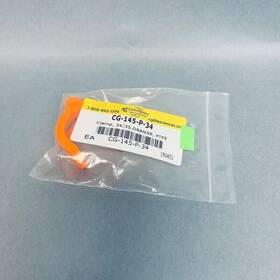
( Brand: Chemglass ), ( Manufacturer Part Number: CG-145-P-34 ), ( Part Type: Joint Clamp ), ( Unit Type: Unit ), ( Country Of Origin: United States ), ( Intended Use/discipline: Biological Laboratory, Dental Laboratory, Medical Laboratory, Microbiological Laboratory, Physical Laboratory )
Review CHEMGLASS Standard Taper Joint Clamp Ptfe Orange 34/35 Total Of Clamps
The **Chemglass CG-145-P-34 Standard Taper Joint Clamp with PTFE** is a precision-engineered laboratory accessory designed to provide secure, leak-proof connections for glassware featuring **34/35 total joint standards**, commonly used in chemical synthesis, distillation, extraction, and other high-precision laboratory procedures. Constructed from durable **polyoxymethylene (POM)**, this clamp offers exceptional strength and resistance to wear, ensuring reliable performance over extended use in demanding applications. The **PTFE (polytetrafluoroethylene) lining** embedded within the clamp s gripping surfaces enhances its chemical resistance, preventing corrosion from aggressive solvents, acids, or bases, while also reducing friction to minimize damage to delicate glass joints during repeated assembly and disassembly. The clamp s **adjustable design** allows for precise positioning and secure clamping of standard taper joints, accommodating a wide range of glassware configurations from simple adapters to complex reaction setups without compromising the integrity of the seal. Its **smooth, ergonomic grip** facilitates easy installation and removal, reducing the risk of slippage or misalignment, which is critical in procedures requiring precise control over flow rates, pressure, or temperature. Whether used in routine laboratory maintenance or advanced research involving volatile or corrosive substances, the **Chemglass CG-145-P-34** clamp delivers a dependable, versatile solution for maintaining tight, leak-free connections in glassware assemblies. Its compatibility with standard **34/35 total joints** ensures seamless integration into existing laboratory equipment, making it an indispensable tool for chemists, researchers, and technicians who demand both reliability and precision in their experimental workflows.
### **Pros and Cons of buying a Chemglass CG-145-P-34 Standard Taper Joint Clamp (PTFE, 34/35 Total Clamps)**
#### **Pros:**1. **Material Quality** The clamp is made of **PTFE (polytetrafluoroethylene)**, a chemically inert, non-reactive material that resists corrosion, solvents, and most acids/bases. This makes it ideal for laboratory glassware and chemical applications where contamination must be avoided.
2. **Durability and Longevity** PTFE is highly durable and resistant to wear, meaning the clamp will last for years with proper care. Unlike metal clamps, it won t rust or degrade over time when exposed to harsh chemicals.
3. **Chemical Resistance** Since PTFE is non-reactive, it won t leach contaminants into sensitive samples, making it suitable for analytical chemistry, pharmaceutical testing, and other precision applications.
4. **Easy to Clean** PTFE surfaces are smooth and non-porous, allowing for thorough cleaning with solvents, detergents, or even harsh acids. This is crucial in laboratories where sterility and purity are paramount.
5. **Versatility** The **34/35 total joint** size is a standard taper in laboratory glassware, meaning it will fit a wide range of condensers, adapters, and other glass components commonly used in distillation, extraction, and reaction setups.
6. **Non-Conductive** Unlike metal clamps, PTFE does not conduct electricity, making it safer for use in electrochemistry or high-voltage applications.
7. **Low Maintenance** Unlike rubber or silicone clamps, PTFE does not degrade under UV light or high temperatures, reducing the need for frequent replacements.
8. **Precision Fit** Chemglass products are known for their precision engineering, ensuring a secure and leak-free seal when properly tightened.
---
#### **Cons:**1. **Higher Cost** PTFE clamps are generally more expensive than metal or plastic alternatives due to the material s superior properties and manufacturing precision.
2. **Limited Temperature Range** While PTFE is stable under most chemical conditions, it has a **maximum operating temperature of around 260 C (500 F)**. For high-temperature applications (e.g., some industrial processes or extreme distillation), alternative materials like **Kel-F or metal clamps with PTFE inserts** may be required.
3. **Not Ideal for High-Pressure Systems** PTFE is strong but not as rigid as metal. In high-pressure applications (e.g., some industrial reactors), a metal clamp or reinforced design may be necessary to prevent deformation.
4. **Potential for Slippage if Over-Tightened** While PTFE is flexible, over-tightening can cause the clamp to deform or slip, leading to improper sealing. Proper torque control is required to avoid damage.
5. **Limited Availability of Replacement Parts** If the clamp fails, finding an exact replacement may be difficult compared to more common metal clamps, though Chemglass and other reputable suppliers should carry them.
6. **Slightly Less Rigid Than Metal** In applications requiring extreme stability (e.g., very heavy glassware or high-vibration environments), a metal clamp might provide better structural support.
7. **Potential for Static Buildup** PTFE is an insulator, which means it can accumulate static electricity in dry environments. While this is rarely an issue in most lab settings, it could be a concern in sensitive electronics or high-static environments.
---
### **Conclusion:**The **Chemglass CG-145-P-34 PTFE clamp** is an excellent choice for most laboratory applications requiring **chemical resistance, durability, and precision**. Its superior material properties make it ideal for **analytical chemistry, pharmaceutical testing, and general glassware use**, where contamination and corrosion are major concerns. However, if your application involves **extreme temperatures, high pressures, or heavy-duty industrial use**, alternative materials (e.g., reinforced metal clamps or Kel-F) may be more suitable.
For **standard lab work distillation, extraction, chromatography, or routine glassware assembly the PTFE clamp is a reliable, long-lasting, and low-maintenance solution**. Its cost is justified by its performance and longevity, especially in environments where chemical compatibility is critical.
### **Recommendation:** **Buy the Chemglass CG-145-P-34 PTFE clamp if:**- You need a **chemically inert, non-reactive clamp** for glassware.
- Your applications involve **solvents, acids, bases, or sensitive samples**.
- You require **easy cleaning and durability** in a laboratory setting.
- You work with **standard 34/35 joint glassware** (condensers, adapters, etc.).
**Consider alternatives if:**- You need **higher temperature resistance** (look for Kel-F or metal clamps).
- Your setup involves **high-pressure systems** (metal clamps may be necessary).
- You are working in an **industrial environment** with heavy mechanical stress.
For most chemists and lab technicians, this clamp is a **high-quality, practical investment** that will serve well for years with minimal maintenance.
Details:
Chemglass CG-145-P-34 Standard Taper Joint Clamp PTFE Orange 34/35 Lot of 3 Clamps.
part #: cg145p34 price
- $35.00
specifications plasticwarelabsuppy:
- brand: Chemglass
- mpn: Cg-145-p-34
- part type: Joint Clamp
- unit type: Unit
- country of origin: United States
- intended use/discipline: Biological Laboratory, Dental Laboratory, Medical Laboratory, Microbiological Laboratory, Physical Laboratory
returns plasticwarelabsuppy:
- paid by: Buyer
- policy: Returns Accepted
- method: Money back
- time: 30 Days
payments plasticwarelabsuppy:
- credit card: Discover
- other
- wallet: Google-pay
general plasticwarelabsuppy:
- condition: New
- Medical, Lab Dental Supplies > Glassware Plasticware > Other Medical Lab Glassware
seller plasticwarelabsuppy:
- city: Ponder, Texas
- # reviews: 2517
- rating: 100.0%
shipping plasticwarelabsuppy:
- carrier: UPS, USPS
- class: Standard, Expedited
- cost: $17.41
- service: UPS Ground, UPS 2nd Day Air, USPS Ground Advantage
- type: Calculated
- transit: 4-8 Days
offer plasticwarelabsuppy:
- options: Ship-to-home
- started: June 1, 2026
- best offers: True
- sold: 0
- availability: In Stock
- quantity: 6
Chemglass CG-145-P-34 Is Similar To:
- Cg-1042-01 Chemglass Thermometer Inlet Adapter With Inner Joint (31.3% similar) Between 4 and 7MM. 24 40 inner joint 7 chem-thread 80MM height Chemglass cg thermometer inlet adapter with joint. Adapter has a 7 or 15 chem-thread at the top for vacuum tight seal of plain stem Thermos-meters any other tube having an. Supplied complete with a Ceylon compression cap and Vito o-...(September 9th, 2018)
- Cg-1049-j-30 Chemglass Series Vacuum Adapter Outer To Gpi Thread Ptfe Stopcock (35.8% similar) Please for more details the unique design of long stem filter funnel and vacuum adapter makes it unnecessary to clean after each use. Hose connection is 10MM OD at the largest serration. The 2MM ptfe stopcock between outer joint and standard taper inner permits control of vacuum source...(January 17th, 2019)
- Cg-1209-a-26 Chemglass Series Dewar Type Condenser Joint Mm (36.4% similar) Dewar type condenser...(January 15th, 2019)
- Cg-1215-a-12 Chemglass Glass Reflux Condenser Jacket Length Joint (28.2% similar) This will include powering on the unit and checking all major functions. We check and respond to our messages often. Packaging opened manufacturer. Quality all merchandise is tested prior to listing unless it sealed in the factory package. Does not appear to have been used. This helps our buyers ...(October 27th, 2018)
- Cg-1239-02 Chemglass Short Path Distilling Head Thermometer Joint (30.9% similar) What you see in photos is will receive...(November 2nd, 2018)
- Cg-1317-20 Chemglass Series Steam Duct Vapor Tube Mm Joint (33.8% similar) 1142378CHEMOB133. Q: what is the shipping cost. Grab the best deal. Please for details. Q: is local pick-up available. Protectorates. The offered shipping cost in listing applies only to 48 states...(August 11th, 2018)
- Cg-150-04 05 06 Chemglass Lot Of New Stainless Steel Pinch Clamps And (30.1% similar) Included in lot Chemglass cg stainless steel pinch clamps. Lot of 5 new Chemglass stainless steel pinch clamps cg, 05 and clamp. 2 Chemglass cg 18L stainless steel pinch clamps...(December 10th, 2018)
- Cg 1714 16 Chemglass Graduated Addition Funnel Ptfe Valve (35.5% similar) Chemglass cg 1714 16250ML graduated pressure-equalizing addition funnel ptfe valve top and bottom joints glow 100 INF19...(April 6th, 2019)
- Cg-2077-g-02 Chemglass 29-42 Joint Ptfe (37.4% similar) Thorough cleaning and sterilization are recommended before use. Multiple available. Used glassware will show signs of wear sometimes including light scratches, discoloration, stickers tape, or exterior markings. Brand: Chemglass part: CG-2077-G-02 joint: 29 42 inner material: ptfe includes: peek ...(December 1st, 2017)
- Cg-2077-g-04 Chemglass 45-50 Joint Ptfe (39% similar) In good condition otherwise. Thorough cleaning and sterilization are recommended before use. Brand: Chemglass part: CG-2077-G-04 joint: 45 50 inner material: ptfe includes: peek compression spring sleeve - for use with 10MM shafts not included used yellow discoloration on the joint, some residue and...(December 1st, 2017)
- Cg-3002-l-14 Chemglass 14 Solid Ptfe (35% similar) Thorough cleaning and sterilization are recommended before use used glassware will show signs of wear sometimes including light scratches, discoloration, stickers tape, or exterior markings. Size: 14, 14 20 joint - ptfe stopper has a polypropylene extraction nut permitting easy removal of the from ...(November 30th, 2017)