CHEMGLASS CG-145-T-01 Ptfe Clamps Joint 14/20
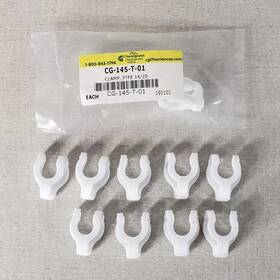
( Brand: Chemglass ), ( Manufacturer Part Number: CG-145-T-01 ), ( Model: CHEMGLASS CG-145-T-01 ), ( Part Type: Clamp Joint ), ( Unit Type: Unit ), ( Country Of Origin: United States )
Review CHEMGLASS Lot Of White Ptfe Clamps Joint Size 14/20
The **Chemglass CG-145-T-01 10-Piece PTFE Clamp Set for 14/20 Joints** is a precision-engineered laboratory accessory designed to provide secure, leak-proof connections in glassware assemblies while minimizing stress on delicate joints. Crafted from high-quality **polytetrafluoroethylene (PTFE)**, these clamps are engineered to offer superior chemical resistance, ensuring compatibility with a wide range of solvents, acids, and bases commonly used in organic synthesis, chromatography, and analytical chemistry. The PTFE construction also eliminates the risk of corrosion or contamination, making these clamps ideal for applications requiring stringent purity standards. Each clamp features a **smooth, non-abrasive grip** that gently cradles 14/20 standard ground glass joints without marring or damaging the joint surfaces, reducing the likelihood of leaks or breakage during assembly. The ergonomic design allows for easy installation and adjustment, accommodating various joint sizes and configurations while maintaining a secure seal. Whether used in distillation setups, reaction flasks, or column chromatography systems, these clamps ensure reliable performance under vacuum or pressure conditions, making them a versatile addition to any laboratory workflow. Their durable yet flexible construction also prevents over-tightening, which can compromise glass integrity, while the consistent, uniform clamping force guarantees repeatable and reproducible results. Perfect for both routine and high-precision applications, the **CG-145-T-01 set** exemplifies Chemglass s commitment to quality and functionality in laboratory glassware accessories.
**Pros and Cons of Buying Chemglass CG-145-T-01 (10 PTFE Clamps for Joint 14/20)**
### **Pros:**1. **High-Quality Materials:** The clamps are made from **PTFE (polytetrafluoroethylene)**, a durable, chemically resistant, and non-reactive material that is ideal for laboratory glassware. PTFE is also resistant to corrosion, solvents, and extreme temperatures, making it suitable for a wide range of applications, including organic synthesis, chromatography, and other chemical processes.
2. **Precision Fit:** Designed specifically for **14/20 standard ground glass joints**, these clamps ensure a secure and leak-tight seal when properly tightened. This is crucial for maintaining pressure or vacuum in experiments.
3. **Durability:** PTFE is known for its long lifespan, even under repeated use and cleaning. Unlike metal clamps, which may rust or warp over time, PTFE clamps remain chemically inert and resistant to degradation.
4. **Easy to Clean:** PTFE surfaces are smooth and non-porous, making them easy to clean with solvents, detergents, or even harsh chemicals without absorbing residues. This is essential in laboratories where contamination must be minimized.
5. **Compatibility:** These clamps are widely compatible with standard **14/20 joint glassware**, meaning they can be used with a variety of laboratory equipment, including flasks, condensers, and adapters.
6. **Temperature Resistance:** PTFE can withstand a broad temperature range, typically from **-200 C to 260 C**, making these clamps suitable for both cryogenic and high-temperature applications.
7. **Non-Toxic and Inert:** Since PTFE does not react with most chemicals, it is safe for use with a wide range of substances, including acids, bases, and organic solvents.
8. **Cost-Effective for Long-Term Use:** While the initial cost may be higher than some metal alternatives, their durability and resistance to wear reduce the need for frequent replacements, making them cost-effective over time.
---
### **Cons:**1. **Limited Temperature Range (Compared to Some Alternatives):** While PTFE is highly resistant to most temperatures, it may degrade or lose structural integrity at **extremely high temperatures (above 260 C)** or under prolonged exposure to very high heat. For applications requiring even higher temperatures, other materials like **quartz or certain metals** may be necessary.
2. **Not as Strong as Metal Clamps:** PTFE is softer than metals like stainless steel, which means it may not provide the same level of clamping force in very large or heavy setups. Over-tightening can potentially damage the PTFE or the glass joint.
3. **Potential for Wear Over Time:** While PTFE is durable, it can still wear down with **extreme friction or repeated use**, especially if the clamps are not properly maintained or if they are used with abrasive materials.
4. **Higher Initial Cost:** Compared to basic metal clamps, PTFE clamps are more expensive upfront. However, this is often justified by their longevity and chemical resistance.
5. **Not Suitable for Extreme Pressure Applications:** While PTFE clamps work well for standard laboratory pressures, they may not be ideal for **high-pressure systems** where metal clamps or specialized fittings are required.
6. **Limited Availability of Replacements:** If a clamp fails, finding exact replacements (especially from Chemglass or high-quality suppliers) may be more challenging than for generic metal clamps.
---
### **Conclusion:**Chemglass CG-145-T-01 PTFE clamps are an **excellent choice for most standard laboratory applications** involving 14/20 joints. Their **chemical resistance, durability, ease of cleaning, and compatibility with a wide range of glassware** make them a reliable investment for chemists, researchers, and educators. However, they may not be suitable for **high-temperature, high-pressure, or extreme abrasion environments**, where alternative materials would be more appropriate.
### **Recommendation:**If you are working in a **general chemistry lab, organic synthesis, or routine glassware assembly**, these PTFE clamps are highly recommended due to their **superior performance and longevity**. They are particularly valuable in settings where **chemical compatibility and ease of cleaning** are critical.
For applications involving **extreme temperatures, high pressures, or heavy-duty use**, consider supplementing or replacing them with **metal clamps or specialized fittings** as needed. Always ensure that the clamps are **properly tightened but not over-torqued** to avoid damaging the PTFE or the glass joints.
In summary, **buy these clamps if you need a durable, chemical-resistant, and low-maintenance solution for standard 14/20 joint applications**. They are a worthwhile investment for most laboratory environments.
Details:
Lot Of 10 Chemglass CG-145-T-01 White PFTE Clamps For Joint Size 14/20 Used, see photos -BJ.
part #: cg145t01 price
- $59.00
specifications plasticwarelabsuppy:
- brand: Chemglass
- mpn: Cg-145-t-01
- model: Chemglass Cg-145-t-01
- part type: Clamp Joint
- unit type: Unit
- country of origin: United States
returns plasticwarelabsuppy:
- time: 30 Days
- policy: Returns Accepted
- paid by: Buyer
- method: Money back
shipping plasticwarelabsuppy:
- class: Standard
- cost: $0.00
- service: Standard
- transit: 2-4 Days
- type: Fixed
seller plasticwarelabsuppy:
- city: Fargo, North Dakota
- rating: 99.9%
- # reviews: 3555
offer plasticwarelabsuppy:
- best offers: True
- started: June 8, 2026
- quantity: 1
- options: Ship-to-home
- availability: In Stock
- sold: 0
general plasticwarelabsuppy:
- condition: Used
- Medical, Lab Dental Supplies > Glassware Plasticware > Other Medical Lab Glassware
payments plasticwarelabsuppy:
- credit card: Visa
- wallet: Google-pay
- other
Chemglass CG-145-T-01 Is Similar To:
- Cg-1042-01 Chemglass Thermometer Inlet Adapter With Inner Joint (34.6% similar) Between 4 and 7MM. 24 40 inner joint 7 chem-thread 80MM height Chemglass cg thermometer inlet adapter with joint. Adapter has a 7 or 15 chem-thread at the top for vacuum tight seal of plain stem Thermos-meters any other tube having an. Supplied complete with a Ceylon compression cap and Vito o-...(September 9th, 2018)
- Cg-1049-j-30 Chemglass Series Vacuum Adapter Outer To Gpi Thread Ptfe Stopcock (27% similar) Please for more details the unique design of long stem filter funnel and vacuum adapter makes it unnecessary to clean after each use. Hose connection is 10MM od at the largest serration. The 2MM ptfe stopcock between outer joint and standard taper inner permits control of vacuum source...(January 17th, 2019)
- Cg-1209-a-26 Chemglass Series Dewar Type Condenser Joint Mm (37.2% similar) Dewar type condenser...(January 15th, 2019)
- Cg-1215-a-12 Chemglass Glass Reflux Condenser Jacket Length Joint (32.6% similar) This will include powering on the unit and checking all major functions. We check and respond to our messages often. Packaging opened manufacturer. Quality all merchandise is tested prior to listing unless it sealed in the factory package. Does not appear to have been used. This helps our buyers ...(October 27th, 2018)
- Cg-1239-02 Chemglass Short Path Distilling Head Thermometer Joint (35.6% similar) What you see in photos is will receive...(November 2nd, 2018)
- Cg-1317-20 Chemglass Series Steam Duct Vapor Tube Mm Joint (34.4% similar) 1142378CHEMOB133. Q: what is the shipping cost. Grab the best deal. Please for details. Q: is local pick-up available. Protectorates. The offered shipping cost in listing applies only to 48 states...(August 11th, 2018)
- Cg-150-04 05 06 Chemglass Lot Of New Stainless Steel Pinch Clamps And (46% similar) Included in lot Chemglass cg stainless steel pinch clamps. Lot of 5 new Chemglass stainless steel pinch clamps cg, 05 and clamp. 2 Chemglass cg 18L stainless steel pinch clamps...(December 10th, 2018)
- Cg 1714 16 Chemglass Graduated Addition Funnel Ptfe Valve (31.5% similar) Chemglass cg 1714 16250ML graduated pressure-equalizing addition funnel ptfe valve top and bottom joints glow 100 INF19...(April 6th, 2019)
- Cg-2077-g-02 Chemglass 29-42 Joint Ptfe (36.7% similar) Thorough cleaning and sterilization are recommended before use. Multiple available. Used glassware will show signs of wear sometimes including light scratches, discoloration, stickers tape, or exterior markings. Brand: Chemglass part: CG-2077-G-02 joint: 29 42 inner material: ptfe includes: peek ...(December 1st, 2017)
- Cg-2077-g-04 Chemglass 45-50 Joint Ptfe (40.4% similar) In good condition otherwise. Thorough cleaning and sterilization are recommended before use. Brand: Chemglass part: CG-2077-G-04 joint: 45 50 inner material: ptfe includes: peek compression spring sleeve - for use with 10MM shafts not included used yellow discoloration on the joint, some residue and...(December 1st, 2017)
- Cg-3000-14 Chemglass Lot Hollow Stopper (34.9% similar) This lot 5 Chemglass cg hollow stopper appear to be in good cosmetic condition with little no signs of prior use, only storage wear. However, I really lack the knowledge and equipment to test them, so due little testing, they are being sold as-is. No software, power cords, or other accessories are ...(March 7th, 2019)