CHEMGLASS CG-1702-12 Addition Funnel Joint Ptfe Stopcock 14/20 Stopper
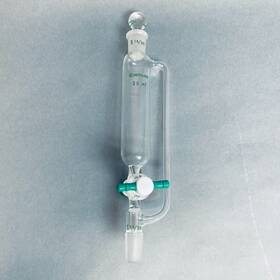
( Brand: Chemglass ), ( Manufacturer Part Number: CG-1702-12 ), ( Part Type: Stopcock Joint Stopper ), ( Unit Type: Unit ), ( Volume: 25 Ml ), ( Country Of Origin: United States ), ( Intended Use/discipline: Biological Laboratory, Dental Laboratory, Medical Laboratory, Microbiological Laboratory, Physical Laboratory )
Review CHEMGLASS Addition Funnel Ml 14/20 Joint Ptfe Stopcock Stopper
The Chemglass CG-1702-12 Addition Funnel is a precision-engineered laboratory accessory designed for seamless integration into glassware setups where controlled liquid additions are essential. Featuring a robust **25 mL capacity**, this funnel is ideal for applications requiring gradual, metered delivery of reagents, solvents, or reaction components without disrupting the primary reaction vessel. The **14/20 standard taper joint** ensures a secure, leak-proof connection to compatible glassware, including round-bottom flasks, distillation apparatuses, or reaction kettles, while minimizing dead volume and maximizing efficiency. The **PTFE (polytetrafluoroethylene) stopcock** is a standout feature, offering superior chemical resistance, low friction, and durability across a wide range of solvents, acids, and bases from aqueous solutions to highly corrosive media like hydrofluoric acid or concentrated sulfuric acid. Unlike rubber or silicone stopcocks, PTFE remains inert, non-porous, and resistant to swelling or degradation, making it a reliable choice for both routine and high-purity laboratory procedures. The **glass stopper** provides an additional layer of control, allowing for temporary sealing when the stopcock is not in use, while its smooth, polished surface reduces the risk of particulate contamination. Constructed from borosilicate glass (Type I, per USP/EP standards), the funnel is thermally stable, chemically inert, and capable of withstanding repeated autoclaving or harsh cleaning protocols, including strong oxidizing agents like chromic acid or alkaline detergents. Its **clear, uncolored glass** allows for visual monitoring of liquid levels, ensuring accurate dosing without guesswork. Whether used in organic synthesis, analytical chemistry, or pharmaceutical development, the CG-1702-12 delivers a perfect balance of functionality, precision, and longevity, making it an indispensable tool for laboratories demanding both performance and reliability.
**Pros and Cons of buying a Chemglass CG-1702-12 Addition Funnel (25/14 20 Joint, PTFE Stopcock, Stopper)**
### **Pros:**1. **Durability and Material Quality** The addition funnel is constructed from borosilicate glass (likely Type 1 or 3.3), which is chemically resistant, heat-resistant, and durable. This makes it suitable for a wide range of laboratory applications, including corrosive reagents and high-temperature reactions.
2. **PTFE Stopcock** The PTFE (polytetrafluoroethylene) stopcock provides a tight seal and is resistant to most chemicals, reducing the risk of leaks or contamination. PTFE is also easier to clean than rubber or silicone stopcocks, making maintenance simpler.
3. **Standard Joint Compatibility** The 25/14 20 joint is a common laboratory joint size, meaning it is widely compatible with other glassware, adapters, and laboratory equipment. This makes it easy to integrate into existing setups without needing specialized fittings.
4. **Stopper Included** The inclusion of a stopper (likely a PTFE or glass stopper) ensures that the funnel can be sealed when not in use, preventing spills or contamination from dust or airborne particles.
5. **Precision and Control** Addition funnels allow for controlled, dropwise or slow addition of liquids to reactions, which is critical in titrations, slow reactions, or sensitive procedures where precise dosing is required.
6. **Reusable and Cost-Effective** Unlike disposable plastic funnels, this glass addition funnel is reusable, making it a cost-effective long-term investment for laboratories that perform frequent additions.
7. **Compatibility with Vacuum Systems** The design can often accommodate vacuum or pressure applications, depending on the setup, though this would depend on additional components like adapters or clamps.
8. **Easy to Clean** Glass surfaces are straightforward to clean and sterilize, which is essential for maintaining consistency in experimental results, especially in research or pharmaceutical settings.
---
### **Cons:**1. **Fragility** Glassware is inherently fragile and can break if dropped or subjected to thermal shock (e.g., rapid heating or cooling). This requires careful handling and storage to prevent damage.
2. **Weight and Portability** Glass funnels are heavier than plastic alternatives, which can make them less convenient for fieldwork or mobile laboratories. Moving them requires additional care to avoid breakage.
3. **Limited Chemical Resistance (Theoretical)** While borosilicate glass is highly resistant, no material is universally compatible with *all* chemicals. Extremely aggressive reagents (e.g., hydrofluoric acid, strong alkalis at high temperatures) may eventually degrade the glass over time, though this is rare with proper use.
4. **Maintenance of PTFE Stopcock** PTFE stopcocks can wear out over time, especially with frequent use or abrasive materials. They may require periodic lubrication (with a compatible grease) or replacement, adding to long-term maintenance costs.
5. **Cost Upfront** Compared to disposable plastic funnels, the initial purchase price of a high-quality glass addition funnel is higher. However, this is often justified by its longevity and performance.
6. **Specialized Storage Needs** Glassware should be stored in a way that prevents it from coming into contact with other items (e.g., in a dedicated glassware cabinet or wrapped in cloth to avoid scratches). Improper storage can lead to damage.
7. **Potential for Leaks** If the PTFE stopcock or joint is not properly lubricated or if the glass is scratched, leaks can occur. This requires regular inspection and maintenance to ensure a proper seal.
8. **Not Ideal for High-Pressure Applications** Without additional reinforcement (e.g., a pressure-rated joint or adapter), this funnel is not designed for high-pressure operations. Standard addition funnels are typically used in atmospheric or low-pressure setups.
---
### **Conclusion:**The **Chemglass CG-1702-12 addition funnel** is a high-quality, versatile tool well-suited for laboratory applications requiring precise liquid additions. Its borosilicate glass construction, PTFE stopcock, and standard joint compatibility make it a reliable choice for routine and advanced laboratory work. While it has some drawbacks primarily related to fragility and maintenance the benefits of durability, chemical resistance, and reusability far outweigh these limitations for most laboratory settings.
This funnel is particularly recommended for:- Academic and industrial research laboratories.
- Settings where chemical compatibility and precision are critical (e.g., organic synthesis, analytical chemistry).
- Users who prioritize long-term investment over disposable alternatives.
For users who frequently handle highly corrosive or abrasive substances, or who require extreme durability, it may be worth considering additional protective measures (e.g., using a protective sleeve or ensuring proper lubrication of the PTFE stopcock). However, for standard laboratory use, this addition funnel is an excellent and practical choice.
**Final Recommendation:** Purchase the Chemglass CG-1702-12 addition funnel if you need a durable, precise, and reusable tool for controlled liquid additions in a laboratory setting. Ensure proper handling and maintenance to maximize its lifespan and performance.
Details:
Chemglass CG-1702-12 Addition Funnel 25 ml 14/20 Joint PTFE Stopcock with Stopper.
part #: cg170212 price
- $75.00
specifications plasticwarelabsuppy:
- brand: Chemglass
- mpn: Cg-1702-12
- part type: Stopcock Joint Stopper
- unit type: Unit
- volume: 25 Ml
- country of origin: United States
- intended use/discipline: Biological Laboratory, Dental Laboratory, Medical Laboratory, Microbiological Laboratory, Physical Laboratory
offer plasticwarelabsuppy:
- availability: In Stock
- sold: 0
- quantity: 1
- options: Ship-to-home
- started: May 7, 2026
- best offers: True
payments plasticwarelabsuppy:
- other
- credit card: Diners-club
- wallet: Google-pay
returns plasticwarelabsuppy:
- time: 30 Days
- paid by: Buyer
- policy: Returns Accepted
- method: Money back
general plasticwarelabsuppy:
- condition: New Open box
- Medical, Lab Dental Supplies > Glassware Plasticware > Other Medical Lab Glassware
seller plasticwarelabsuppy:
- # reviews: 2435
- city: Ponder, Texas
- rating: 100.0%
shipping plasticwarelabsuppy:
- cost: $0.00
- carrier: USPS
- type: Fixed
- transit: 4-9 Days
- service: USPS Ground Advantage, Expedited
- class: Standard, Expedited
Chemglass CG-1702-12 Is Similar To:
- Cg-1042-01 Chemglass Thermometer Inlet Adapter With Inner Joint (30.6% similar) Between 4 and 7MM. 24 40 inner joint 7 chem-thread 80MM height Chemglass cg thermometer inlet adapter with joint. Adapter has a 7 or 15 chem-thread at the top for vacuum tight seal of plain stem Thermos-meters any other tube having an. Supplied complete with a Ceylon compression cap and Vito o-...(September 9th, 2018)
- Cg-1049-j-30 Chemglass Series Vacuum Adapter Outer To Gpi Thread Ptfe Stopcock (39% similar) Please for more details the unique design of long stem filter funnel and vacuum adapter makes it unnecessary to clean after each use. Hose connection is 10MM OD at the largest serration. The 2MM ptfe stopcock between outer joint and standard taper inner permits control of vacuum source...(January 17th, 2019)
- Cg-1209-a-26 Chemglass Series Dewar Type Condenser Joint Mm (30% similar) Dewar type condenser...(January 15th, 2019)
- Cg-1215-a-11 Chemglass Dual Coil Glass Reflux Condenser With Receiving Flask And (31.1% similar) ...(December 22nd, 2018)
- Cg-1215-a-12 Chemglass Glass Reflux Condenser Jacket Length Joint (30.1% similar) This will include powering on the unit and checking all major functions. We check and respond to our messages often. Packaging opened manufacturer. Quality all merchandise is tested prior to listing unless it sealed in the factory package. Does not appear to have been used. This helps our buyers ...(October 27th, 2018)
- Cg-1239-02 Chemglass Short Path Distilling Head Thermometer Joint (31.5% similar) What you see in photos is will receive...(November 2nd, 2018)
- Cg-1317-20 Chemglass Series Steam Duct Vapor Tube Mm Joint (28.8% similar) 1142378CHEMOB133. Q: what is the shipping cost. Grab the best deal. Please for details. Q: is local pick-up available. Protectorates. The offered shipping cost in listing applies only to 48 states...(August 11th, 2018)
- Cg-1321-01 Chemglass Rotary Evaporator Modified Bump Trap With Top Outer (34% similar) Traps have a top outer joint and the listed size of lower inner. Chemglass cg rotary evaporator modified bump trap with top outer and lower inner, 100ML capacity inner similar to CG-1320, but the addition of two 4MM drain holes at base tube allow solvent back into evaporation flask...(March 20th, 2019)
- Cg 1714 16 Chemglass Graduated Addition Funnel Ptfe Valve (47.8% similar) Chemglass cg 1714 16250ML graduated pressure-equalizing addition funnel ptfe valve top and bottom joints glow 100 INF19...(April 6th, 2019)
- Cg-1759-26 Chemglass 8 Top Eco-funnel (30.5% similar) New in package, great deal...(August 1st, 2017)
- Cg-2077-g-02 Chemglass 29-42 Joint Ptfe (41.7% similar) Thorough cleaning and sterilization are recommended before use. Multiple available. Used glassware will show signs of wear sometimes including light scratches, discoloration, stickers tape, or exterior markings. Brand: Chemglass part: CG-2077-G-02 joint: 29 42 inner material: ptfe includes: peek ...(December 1st, 2017)