CHEMGLASS CG-203-03 Fritted Gas Dispersion Tube Coarse Frit 5/16 Od
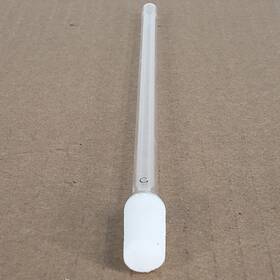
( Brand: Chemglass ), ( Manufacturer Part Number: CG-203-03 ), ( Model: CHEMGLASS CG-203-03 ), ( Part Type: Tube ), ( Unit Type: Unit ), ( Country Of Origin: United States )
Review CHEMGLASS Fritted Gas Dispersion Tube Coarse Frit Inch Long 5/16 Od
The **Chemglass CG-203-03 Fritted Gas Dispersion Tube with Coarse Frit (5/16" OD)** is a precision-engineered laboratory accessory designed to facilitate efficient and controlled gas dispersion in chemical reactions, extraction processes, or analytical procedures. Crafted from high-quality borosilicate glass (Type 1, meeting or exceeding USP Class A standards), this tube combines durability with exceptional chemical resistance, ensuring reliability across a wide range of applications, from routine synthesis to demanding research environments. The **coarse frit** characterized by its larger pore size relative to finer alternatives enables rapid and uniform gas distribution while minimizing pressure drop, making it ideal for processes where consistent bubbling is critical, such as sparging solvents, degassing liquids, or introducing inert atmospheres in reactions. With an **outer diameter of 5/16 inch (8 mm)**, the tube strikes a balance between functionality and compatibility with standard laboratory glassware, including adapters, joints, and reaction vessels, ensuring seamless integration into existing setups. Its robust construction resists thermal shock, allowing for use in both ambient and moderately elevated temperature conditions, while its smooth, polished surface prevents clogging and simplifies cleaning. Whether employed in organic synthesis, biochemistry, or material science, this fritted tube enhances experimental precision by promoting homogeneous gas-liquid contact, reducing foaming, and minimizing dead zones where reactions or contaminations might otherwise occur. For laboratories prioritizing both performance and longevity, the CG-203-03 represents a versatile, cost-effective solution for gas dispersion needs.
### **Pros and Cons of buying a Chemglass CG-203-03 Fritted Gas Dispersion Tube (Coarse Frit, 5/16 OD)**
#### **Pros:**1. **High-Quality Construction** Chemglass is a well-established manufacturer known for producing durable, precision glassware designed for laboratory use. This fritted tube is likely made from borosilicate glass (e.g., Pyrex), which is chemically resistant and thermally stable, making it suitable for a wide range of applications, including gas dispersion, filtration, and solvent extraction.
2. **Coarse Frit Design** The coarse frit (rated at 40 60 m) allows for efficient gas dispersion while maintaining good flow rates. This makes it ideal for applications where rapid gas introduction is needed, such as in distillation, sparging, or gas-liquid reactions (e.g., hydrogenation, bubbling air/oxygen in reactions).
3. **Standardized Dimensions** The 5/16 OD (outer diameter) fits common laboratory adapters and joints (e.g., 14/20 or 24/40 ground glass joints, depending on the assembly), ensuring compatibility with existing glassware setups. This reduces the need for custom fittings or adapters.
4. **Versatility** The tube can be used in various laboratory setups, including:- **Distillation apparatus** (e.g., as a gas inlet for inert gas purging).
- **Reaction vessels** (e.g., for sparging gases like nitrogen, argon, or oxygen).
- **Filtration or extraction systems** where controlled gas flow is required.
- **Chromatography or gas chromatography** (though finer frits are typically preferred for GC, coarse frits can work for rough gas dispersion).
5. **Easy to Clean and Reuse** Glass frits are generally easy to clean with solvents (e.g., acetone, methanol) and can be reused multiple times, provided they are not damaged. Chemglass products are designed for longevity in laboratory environments.
6. **Compatibility with Standard Lab Equipment** The frit can be integrated into common glassware like round-bottom flasks, Erlenmeyer flasks, or custom assemblies with minimal modifications. It works well with rubber septa, stopcocks, or glass joints.
7. **Cost-Effective for Bulk Use** While individual units may seem expensive, fritted tubes are reusable and durable, making them cost-effective for long-term laboratory use compared to disposable alternatives.
8. **Chemical Resistance** Borosilicate glass resists most acids, bases, and organic solvents, ensuring the frit remains functional even in harsh chemical environments.
---
#### **Cons:**1. **Potential for Clogging** The coarse frit (while efficient for gas dispersion) can still become clogged with particulate matter, especially if the gas being introduced contains dust, moisture, or impurities. This may require frequent cleaning or replacement, particularly in industrial or less controlled settings.
2. **Limited Fine Gas Dispersion** If the application requires very fine gas bubbles (e.g., for high-surface-area reactions or sensitive processes like electrochemistry), a finer frit (e.g., medium or fine porosity) would be more appropriate. The coarse frit may produce larger bubbles, which could affect reaction kinetics or mixing efficiency.
3. **Fragility** Glassware, including fritted tubes, is prone to breakage if mishandled (e.g., dropping, thermal shock from rapid temperature changes, or mechanical stress). This is a risk in any laboratory setting, though Chemglass products are generally robust.
4. **Sealing Challenges** Depending on the assembly, achieving a proper seal with rubber septa, Teflon tape, or ground glass joints can be tricky. Improper sealing may lead to leaks, especially under pressure or with reactive gases.
5. **Cost Compared to Alternatives** While durable, the upfront cost of a Chemglass fritted tube may be higher than disposable alternatives (e.g., some plastic or ceramic frits). However, for long-term use, the investment is justified.
6. **Maintenance Requirements** Regular cleaning with strong solvents or ultrasonic baths may be necessary to prevent clogging or contamination, adding to the time and effort required for upkeep.
7. **Limited Customization** Chemglass offers standard sizes and frit porosities. If a specific porosity or size is needed, custom orders may incur additional costs or lead times.
8. **Potential for Glass Delamination** Over time, the frit surface may degrade or delaminate, especially if exposed to harsh chemicals or thermal cycling. This can reduce efficiency and may require replacement.
---
### **Conclusion**
The **Chemglass CG-203-03 fritted gas dispersion tube (coarse frit, 5/16 OD)** is a reliable, high-quality tool for laboratory applications requiring efficient gas dispersion. Its borosilicate glass construction, standardized dimensions, and durability make it a strong choice for general-purpose use in distillation, sparging, or gas-liquid reactions. However, its coarse porosity may not suit applications needing ultra-fine gas bubbles, and its fragility and maintenance needs are inherent risks of glassware.
### **Recommendation**
- **Buy it if:**- You need a durable, reusable fritted tube for general gas dispersion (e.g., inert gas purging, air sparging).
- Your application tolerates slightly larger gas bubbles (e.g., not high-surface-area reactions).
- You have a setup compatible with 5/16 OD glassware (e.g., 14/20 or 24/40 joints).
- You prioritize long-term cost savings over disposable alternatives.
- **Consider alternatives if:**- You require finer gas dispersion (opt for a medium or fine frit, e.g., Chemglass CG-203-05 or CG-203-07).
- Your work involves highly corrosive or abrasive substances that may clog or damage the frit quickly.
- You frequently handle delicate glassware and are concerned about breakage risks (e.g., consider plastic or ceramic frits for lower-risk applications).
- Budget constraints are a concern (compare with other brands like Kontes or Ace Glass, though Chemglass is generally high-quality).
For most standard laboratory uses, the **Chemglass CG-203-03 is a solid, well-supported choice** that balances performance, durability, and compatibility. Always ensure proper handling and cleaning to maximize its lifespan.
Details:
Chemglass CG-203-03 Fritted Gas Dispersion Tube w/Coarse Frit 9 Long 5/16 OD Used, see photos -BJ.
part #: cg20303 price
- $44.00
specifications plasticwarelabsuppy:
- brand: Chemglass
- mpn: Cg-203-03
- model: Chemglass Cg-203-03
- part type: Tube
- unit type: Unit
- country of origin: United States
offer plasticwarelabsuppy:
- options: Ship-to-home
- best offers: True
- quantity: 1
- availability: In Stock
- started: May 29, 2026
- sold: 0
general plasticwarelabsuppy:
- condition: Used
- Medical, Lab Dental Supplies > Glassware Plasticware > Other Medical Lab Glassware
returns plasticwarelabsuppy:
- time: 30 Days
- method: Money back
- paid by: Buyer
- policy: Returns Accepted
shipping plasticwarelabsuppy:
- cost: $0.00
- class: Standard
- service: Standard
- type: Fixed
- transit: 4-7 Days
seller plasticwarelabsuppy:
- rating: 99.9%
- city: Fargo, North Dakota
- # reviews: 3513
payments plasticwarelabsuppy:
- other
- wallet: Google-pay
- credit card: Discover
Chemglass CG-203-03 Is Similar To:
- Cg-1042-01 Chemglass Thermometer Inlet Adapter With Inner Joint (32.7% similar) Between 4 and 7MM. 24 40 inner joint 7 chem-thread 80MM height Chemglass cg thermometer inlet adapter with joint. Adapter has a 7 or 15 chem-thread at the top for vacuum tight seal of plain stem Thermos-meters any other tube having an. Supplied complete with a Ceylon compression cap and Vito o-...(September 9th, 2018)
- Cg-1215-a-11 Chemglass Dual Coil Glass Reflux Condenser With Receiving Flask And (41.5% similar) ...(December 22nd, 2018)
- Cg-1317-20 Chemglass Series Steam Duct Vapor Tube Mm Joint (33.8% similar) 1142378CHEMOB133. Q: what is the shipping cost. Grab the best deal. Please for details. Q: is local pick-up available. Protectorates. The offered shipping cost in listing applies only to 48 states...(August 11th, 2018)
- Cg-1321-01 Chemglass Rotary Evaporator Modified Bump Trap With Top Outer (34.6% similar) Traps have a top outer joint and the listed size of lower inner. Chemglass cg rotary evaporator modified bump trap with top outer and lower inner, 100ML capacity inner similar to CG-1320, but the addition of two 4MM drain holes at base tube allow solvent back into evaporation flask...(March 20th, 2019)
- Cg-1866-05 Chemglass Glass Ml Solid Phase Peptide Synthesis Vessel Medium Frit (18.5% similar) Medium frit, vacuum, t-bore PDF stopcock, 24 40 outer joint.: cg Chemglass cat. No chips, cracks. A used Chemglass 250 ml glass solid phase peptide synthesis vessel in very good condition...(September 30th, 2018)
- Cg-203-02 Chemglass Medium Fritted Straight (36.2% similar) Used glassware will show signs of wear sometimes including residue, light scratches, stickers tape or exterior markings...(October 17th, 2017)
- Cg-2077-m-03 Cg-1968-q-01 Cg-2077-m-03 Chemglass Gas Scrubber Reactor Components New (31% similar) No return accepted. 85CG-2033-13HORIZONTAL electric motor, 1/4 hp, 500 max rpm, 25 in-lbs torque, 5/8 motor shaft size each 1,128. 50CG-9253-10SMALL Kirk lamp each 51. 55CG-3498-01TEMPERATURE monitor only, digital, type t, 120V, 200 to 250 each all return shipping charges must be prepaid by the ...(August 20th, 2018)
- Cg-4023-03 Chemglass Connecting Tube Glass Shaped Mm New In Open Box (36.8% similar) 7MM cg new in open box this listing is for a Chemglass connecting tube glass, y shaped, Arlington Hts road, suite 2336ARLINGTON height , IL. 7MM cg that is new in open box...(November 9th, 2018)
- Cg-410-03 Chemglass Stopcock With Glass Plug Bore Od Sidearms Stopckcock (33.3% similar) Stopcock has three sidearms sealed 90 apart. For sale is one new old stock Chemglass t-bore stopcock with a glass plug, 4MM bore, 17 40 plug size, 10MM od sidearms, 4 clip size. No outer box or literature. To make sure you are getting an accurate quote via the shipping calculator, your zip code is ...(March 17th, 2019)
- Cg 4434 Chemglass Gas Vacuum Manifold Ports Single Bank (30.2% similar) Chemglass gas vacuum manifold 5 ports single stopcocks not included like cg 4434...(December 28th, 2018)
- Cg-4512-02 Chemglass Vacuum Trap Body Od Inner Tube (31.1% similar) ...(February 7th, 2019)