CHEMGLASS CG-424-77 Ptfe Stopcock Plug 11/25
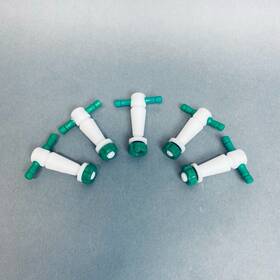
( Brand: Chemglass ), ( Manufacturer Part Number: CG-424-77 ), ( Part Type: Stopcock Plug ), ( Unit Type: Unit ), ( Country Of Origin: United States ), ( Intended Use/discipline: Biological Laboratory, Dental Laboratory, Medical Laboratory, Microbiological Laboratory, Physical Laboratory )
Review CHEMGLASS Ptfe Stopcock 2mm Bore 11/25 Plug Size Lot Of Stopcocks
The **Chemglass CG-424-77 PTFE Stopcock with 11/25 Plug** is a precision-engineered, high-performance valve designed for demanding laboratory applications where reliability, chemical resistance, and leak-free performance are paramount. Crafted from durable **glass** and featuring a **polytetrafluoroethylene (PTFE) plug**, this stopcock is engineered to withstand aggressive solvents, acids, bases, and high-pressure conditions without degradation or contamination, making it an indispensable component in analytical chemistry, pharmaceutical research, and industrial synthesis. The **11/25 plug** a standard joint size in glassware ensures seamless compatibility with a wide range of glassware, including adapters, condensers, and reaction vessels, while its **smooth, low-friction PTFE surface** allows for effortless and precise control of fluid flow with minimal dead volume. The stopcock s **ground glass joint** provides an airtight seal when properly lubricated, reducing the risk of leaks and ensuring consistent performance over countless cycles. Ideal for applications requiring **sterility, chemical inertness, and durability**, this stopcock is particularly well-suited for use in **gas chromatography, distillation setups, and automated synthesis systems**, where reliability under repeated use is critical. Its robust construction and resistance to thermal shock make it a versatile choice for both bench-top experiments and larger-scale laboratory operations, where precision and longevity are non-negotiable.
**Pros and Cons of buying a Chemglass CG-424-77 PTFE Stopcock (11/25 Plug)**
### **Pros:**1. **High-Quality Construction** Chemglass is a reputable manufacturer known for producing durable, precision-engineered glassware and stopcocks. The PTFE (polytetrafluoroethylene) plug ensures resistance to most chemicals, making it suitable for a wide range of laboratory applications.
2. **Chemical Resistance** PTFE is highly resistant to corrosion, solvents, and acids, which makes this stopcock ideal for use with aggressive reagents, organic solvents, and corrosive substances. It is less likely to degrade or contaminate samples compared to rubber or silicone plugs.
3. **Precision and Leak Resistance** The 11/25 ground glass joint provides a tight seal, reducing the risk of leaks during use. This is particularly important in applications requiring controlled flow or vacuum systems.
4. **Versatility** The stopcock can be used in various laboratory setups, including distillation, filtration, and reaction vessels, making it a versatile tool for general chemistry, organic synthesis, and analytical procedures.
5. **Compatibility with Glassware** Since it uses standard 11/25 joints, it is compatible with most Chemglass and other high-quality glassware systems, allowing for easy integration into existing setups.
6. **Durability** PTFE is known for its long lifespan and resistance to wear, reducing the need for frequent replacements compared to softer materials like rubber.
7. **Easy to Clean** The smooth surface of PTFE makes it relatively easy to clean and sterilize, which is beneficial for maintaining sterile conditions in microbiological or pharmaceutical applications.
---
### **Cons:**1. **Limited Temperature Range** While PTFE has a high chemical resistance, it has a relatively low maximum operating temperature (around 260 C). For high-temperature applications (e.g., refluxing with strong heating), alternative materials like glass or metal stopcocks may be more suitable.
2. **Potential for Wear Over Time** Although durable, the PTFE plug can wear down with frequent use, especially if abrasive materials or improper handling occurs. This may eventually lead to leaks or reduced sealing efficiency.
3. **Cost** Chemglass products are generally more expensive than lower-quality or generic stopcocks. The price reflects the material quality and precision, but it may be a significant investment for small labs or students on a tight budget.
4. **Maintenance Requirements** PTFE stopcocks require periodic lubrication with a compatible grease (e.g., Apiezon or silicone-based grease) to maintain a tight seal. Failure to lubricate can lead to sticking or leaks.
5. **Not Ideal for Extreme Vacuum Applications** While it performs well under moderate vacuum, PTFE stopcocks may not be the best choice for high-vacuum systems, where specialized stopcocks (e.g., metal-sealed or rubber-sealed) are often preferred.
6. **Potential for Contamination** Although PTFE is chemically inert, trace amounts of PTFE particles can sometimes flake off, particularly if the stopcock is mishandled or subjected to mechanical stress. This is less of an issue in most chemical applications but could be a concern in highly sensitive or pharmaceutical settings.
7. **Limited Availability of Replacement Parts** If the PTFE plug or joint becomes damaged, finding exact replacements may be challenging, especially for older models. Chemglass may not stock all parts indefinitely.
---
### **Conclusion:**The Chemglass CG-424-77 PTFE stopcock is an excellent choice for laboratories requiring a reliable, chemically resistant, and versatile stopcock for general use. Its durability, compatibility with standard glassware, and resistance to a wide range of chemicals make it a valuable tool for organic synthesis, chemical reactions, and other routine laboratory procedures. However, its limitations such as temperature restrictions, potential wear over time, and the need for maintenance should be considered before purchase.
For users working with highly corrosive substances, frequent high-temperature applications, or extreme vacuum conditions, alternative stopcock materials (e.g., glass, metal, or rubber-sealed) may be more appropriate. That said, for most standard laboratory applications, the CG-424-77 is a high-quality investment that offers long-term reliability.
### **Recommendation:**If you require a stopcock for general laboratory use with moderate chemical resistance and compatibility with standard glassware, the Chemglass CG-424-77 PTFE stopcock is highly recommended. Ensure you store it properly, lubricate it as needed, and handle it carefully to maximize its lifespan. For specialized applications (e.g., high-temperature or high-vacuum work), consider complementary or alternative stopcock designs to meet your specific needs. Always verify compatibility with your existing glassware and reagents before use.
Details:
Chemglass CG-424-77 PTFE Stopcock 2mm Bore 11/25 Plug Size Lot of 5 Stopcocks.
part #: cg42477 price
- $90.00
specifications plasticwarelabsuppy:
- brand: Chemglass
- mpn: Cg-424-77
- part type: Stopcock Plug
- unit type: Unit
- country of origin: United States
- intended use/discipline: Biological Laboratory, Dental Laboratory, Medical Laboratory, Microbiological Laboratory, Physical Laboratory
returns plasticwarelabsuppy:
- policy: Returns Accepted
- paid by: Buyer
- time: 30 Days
- method: Money back
shipping plasticwarelabsuppy:
- cost: $0.00
- carrier: USPS
- transit: 3-9 Days
- type: Fixed
- class: Standard, Expedited
- service: USPS Ground Advantage, Expedited
seller plasticwarelabsuppy:
- # reviews: 2277
- rating: 100.0%
- city: Ponder, Texas
payments plasticwarelabsuppy:
- credit card: Mastercard
- other
- wallet: Apple-pay
general plasticwarelabsuppy:
- Medical, Lab Dental Supplies > Glassware Plasticware > Other Medical Lab Glassware
- condition: Used
offer plasticwarelabsuppy:
- best offers: True
- options: Ship-to-home
- quantity: 2
- availability: In Stock
- started: March 25, 2026
- sold: 0
Chemglass CG-424-77 Is Similar To:
- Cg-1049-j-30 Chemglass Series Vacuum Adapter Outer To Gpi Thread Ptfe Stopcock (30.8% similar) Please for more details the unique design of long stem filter funnel and vacuum adapter makes it unnecessary to clean after each use. Hose connection is 10MM OD at the largest serration. The 2MM ptfe stopcock between outer joint and standard taper inner permits control of vacuum source...(January 17th, 2019)
- Cg-150-04 05 06 Chemglass Lot Of New Stainless Steel Pinch Clamps And (28.6% similar) Included in lot Chemglass cg stainless steel pinch clamps. Lot of 5 new Chemglass stainless steel pinch clamps cg, 05 and clamp. 2 Chemglass cg 18L stainless steel pinch clamps...(December 10th, 2018)
- Cg 1714 16 Chemglass Graduated Addition Funnel Ptfe Valve (26.7% similar) Chemglass cg 1714 16250ML graduated pressure-equalizing addition funnel ptfe valve top and bottom joints glow 100 INF19...(April 6th, 2019)
- Cg-2077-g-02 Chemglass 29-42 Joint Ptfe (30.8% similar) Thorough cleaning and sterilization are recommended before use. Multiple available. Used glassware will show signs of wear sometimes including light scratches, discoloration, stickers tape, or exterior markings. Brand: Chemglass part: CG-2077-G-02 joint: 29 42 inner material: ptfe includes: peek ...(December 1st, 2017)
- Cg-2077-g-04 Chemglass 45-50 Joint Ptfe (29.1% similar) In good condition otherwise. Thorough cleaning and sterilization are recommended before use. Brand: Chemglass part: CG-2077-G-04 joint: 45 50 inner material: ptfe includes: peek compression spring sleeve - for use with 10MM shafts not included used yellow discoloration on the joint, some residue and...(December 1st, 2017)
- Cg-3000-14 Chemglass Lot Hollow Stopper (29.1% similar) This lot 5 Chemglass cg hollow stopper appear to be in good cosmetic condition with little no signs of prior use, only storage wear. However, I really lack the knowledge and equipment to test them, so due little testing, they are being sold as-is. No software, power cords, or other accessories are ...(March 7th, 2019)
- Cg-3002-l-14 Chemglass 14 Solid Ptfe (28.1% similar) Thorough cleaning and sterilization are recommended before use used glassware will show signs of wear sometimes including light scratches, discoloration, stickers tape, or exterior markings. Size: 14, 14 20 joint - ptfe stopper has a polypropylene extraction nut permitting easy removal of the from ...(November 30th, 2017)
- Cg-363-03 Chemglass Plastic 15 Ptfe (26.5% similar) 40MM length . Thorough cleaning and sterilization are recommended before use. Great used condition. Used items will show signs of wear sometimes including light scratches, discoloration, stickers tape, or exterior markings...(January 25th, 2018)
- Cg-410-03 Chemglass Stopcock With Glass Plug Bore Od Sidearms Stopckcock (52% similar) Stopcock has three sidearms sealed 90 apart. For sale is one new old stock Chemglass t-bore stopcock with a glass plug, 4MM bore, 17 40 plug size, 10MM OD sidearms, 4 clip size. No outer box or literature. To make sure you are getting an accurate quote via the shipping calculator, your zip code is ...(March 17th, 2019)
- Cg-410-88 Chemglass Glass Plug For Joints Stopcock (34.4% similar) Chemglass cg glass plug for joints stopcock 4MM V11 new - open box fast shipping...(October 14th, 2018)
- Cg-9800-01 Chemglass Nib Model Organic Chemistry Labkit Size (30.4% similar) Chemglass cg includes each of following items: CG-1078-01ADAPTER, inlet, bleed tube, 7MM OD x 265MM AOL CG-1020-14ADAPTER, clause, 14 20 joint size, 117MM70MM WCG-1022-14ADAPTER, distillation, side inner at 75 CG-1038-14ADAPTER, thermometer, joint, 55MM height CG-1050-14ADAPTER, vacuum take-off, a...(October 18th, 2018)