CHEMGLASS CG-4516-01 Vacuum Trap Od Inner Joint 32MM 200MM 29/42
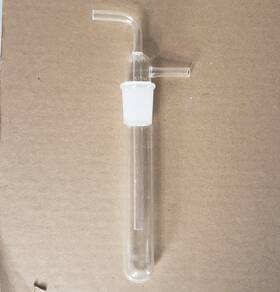
( Brand: Chemglass ), ( Manufacturer Part Number: CG-4516-01 ), ( Model: CHEMGLASS CG-4516-01 ), ( Part Type: Vacuum Trap Joint ), ( Unit Type: Unit ), ( Country Of Origin: United States )
Review CHEMGLASS Vacuum Trap 32mm Od 200mm Length 29/42 Inner Joint
The **Chemglass CG-4516-01 Vacuum Trap** is a precision-engineered glassware component meticulously designed for high-performance laboratory applications requiring efficient gas and vapor removal in vacuum systems. Constructed from borosilicate glass (Type 3.3, equivalent to Kimble KIMAX or equivalent), this trap combines durability with exceptional chemical resistance, ensuring reliability across a wide range of experimental conditions, from routine synthetic procedures to demanding analytical processes. With an outer diameter (OD) of **32 mm** and an overall length of **200 mm**, the trap strikes an optimal balance between compactness and functionality, making it ideal for integration into standard laboratory setups without excessive space constraints.
The **29/42 inner joint** at the top facilitates seamless connection to glassware, adapters, or vacuum lines, adhering to the ISO standard for compatibility with a broad spectrum of laboratory glassware, including condensers, distillation heads, and other vacuum-compatible components. The trap s design incorporates a **narrow, tapered bore** that maximizes surface area for efficient condensation or adsorption of volatile contaminants, gases, or vapors, thereby protecting downstream equipment from potential damage or contamination. The smooth, polished interior minimizes dead spaces and ensures even flow distribution, enhancing the trap s effectiveness in maintaining clean vacuum conditions.
Beyond its technical specifications, the CG-4516-01 is engineered with safety and usability in mind. The robust construction of borosilicate glass provides thermal stability, allowing it to withstand temperature fluctuations without compromising structural integrity a critical feature in applications involving heating or cooling cycles. Additionally, the trap s design simplifies maintenance, as its straightforward, one-piece construction eliminates the need for complex disassembly or sealing components. Whether employed in organic synthesis, gas chromatography, or material science research, this vacuum trap serves as a dependable barrier against particulate matter, moisture, and reactive gases, thereby extending the lifespan of sensitive instrumentation and ensuring the purity of experimental results. Its versatility, combined with the precision of Chemglass s manufacturing standards, makes it an indispensable tool for laboratories prioritizing both performance and reliability.
**Pros and Cons of buying a Chemglass CG-4516-01 Vacuum Trap (32mm OD, 200mm, 29/42 Inner Joint)**
### **Pros**
1. **High-Quality Construction** Chemglass is a well-established manufacturer known for producing durable, precision glassware designed for laboratory use. The CG-4516-01 is built to withstand repeated vacuum cycles without leaking or cracking, making it reliable for long-term use.
2. **Standardized Dimensions** The 32mm outer diameter and 29/42 inner joint compatibility ensure compatibility with most standard laboratory glassware and vacuum systems. This reduces the need for custom adapters or additional fittings.
3. **Efficient Trapping of Condensables** The trap s design allows it to effectively capture and condense volatile solvents or gases during vacuum distillation or other processes, improving yield and purity in experiments.
4. **Easy to Clean and Maintain** Glass traps are generally easier to clean than metal or plastic alternatives, especially when dealing with corrosive or sticky residues. They can be rinsed with solvents or soaked in cleaning solutions without risk of degradation.
5. **Chemical Resistance** Since it is made of borosilicate glass (likely Type 3.3 or similar), it resists most acids, bases, and organic solvents, making it suitable for a wide range of chemical applications.
6. **Compatibility with Vacuum Systems** The 29/42 joint is a standard vacuum joint, meaning it can be easily integrated into rotary evaporators, vacuum pumps, or other setups without modification.
7. **Cost-Effective for Laboratory Use** While not the cheapest option, it offers a balance between affordability and performance, especially when considering its longevity and reliability compared to disposable alternatives.
---
### **Cons**
1. **Fragility** Glassware is inherently brittle and can shatter if dropped or subjected to thermal shock (e.g., rapid heating or cooling). This requires careful handling, which may be a drawback in busy or less controlled laboratory environments.
2. **Limited Temperature Range** While borosilicate glass can handle moderate temperatures, extreme heat (e.g., open flame) or sudden temperature changes can cause cracking or failure. This restricts its use in high-temperature applications.
3. **Potential for Leaks** Over time, the joints or seals (if rubber gaskets are used) may degrade, leading to leaks in the vacuum system. Regular inspection and maintenance are required to prevent this.
4. **Replacement Costs** If the trap cracks or breaks, replacing it can be costly, especially if it is a specialized part. Some laboratories may opt for cheaper alternatives that are less durable.
5. **Space Requirements** The 200mm length makes it bulkier than some compact alternatives, which may be a consideration in space-constrained setups.
6. **Not Ideal for High-Pressure Applications** While designed for vacuum use, it is not suitable for high-pressure environments, limiting its versatility in certain processes.
7. **Cleaning Time** Glassware can take longer to clean thoroughly compared to metal or disposable traps, especially if residues are stubborn. This may add to the overall workflow time.
---
### **Conclusion**
The Chemglass CG-4516-01 vacuum trap is a high-quality, reliable piece of glassware that excels in laboratory settings requiring precise vacuum trapping of condensables. Its standardized dimensions, chemical resistance, and durability make it a strong choice for routine use in chemistry, biochemistry, or related fields. However, its fragility, maintenance requirements, and potential for leaks or breakage must be carefully considered, particularly in environments where rough handling or extreme conditions are a risk.
For most standard laboratory applications such as vacuum distillation, solvent trapping, or rotary evaporation the benefits outweigh the drawbacks. If budget is a concern and the application is low-risk, it remains a worthwhile investment due to its longevity and performance.
### **Recommendation**
**Buy the Chemglass CG-4516-01 if:**- You need a durable, high-quality vacuum trap for routine laboratory use.
- Compatibility with standard 29/42 joints is a priority.
- You are working with solvents or gases that require efficient trapping.
- You can accommodate the fragility and maintenance requirements of glassware.
**Consider alternatives if:**- You frequently encounter extreme thermal shock or rough handling.
- You require a more compact or disposable option for cost savings.
- Your application involves high-pressure or non-vacuum conditions where glass is unsuitable.
For most chemists and researchers, this trap is a solid, long-term investment that enhances the efficiency and reliability of vacuum-based processes.
Details:
Chemglass CG-4516-01 Vacuum Trap 32mm OD 200mm length 29/42 Inner Joint Used, see photos -BJ.
part #: cg451601 price
- $79.00
specifications plasticwarelabsuppy:
- brand: Chemglass
- mpn: Cg-4516-01
- model: Chemglass Cg-4516-01
- part type: Vacuum Trap Joint
- unit type: Unit
- country of origin: United States
general plasticwarelabsuppy:
- condition: Used
- Medical, Lab Dental Supplies > Glassware Plasticware > Other Medical Lab Glassware
seller plasticwarelabsuppy:
- city: Fargo, North Dakota
- rating: 99.9%
- # reviews: 3453
offer plasticwarelabsuppy:
- options: Ship-to-home
- quantity: 1
- sold: 0
- started: May 20, 2026
- availability: In Stock
- best offers: True
returns plasticwarelabsuppy:
- paid by: Buyer
- policy: Returns Accepted
- method: Money back
- time: 30 Days
payments plasticwarelabsuppy:
- credit card: Diners-club
- other
- wallet: Apple-pay
shipping plasticwarelabsuppy:
- class: Standard
- type: Fixed
- service: Standard
- cost: $0.00
- transit: 3-8 Days
Chemglass CG-4516-01 Is Similar To:
- Cg-1042-01 Chemglass Thermometer Inlet Adapter With Inner Joint (43.3% similar) Between 4 and 7MM. 24 40 inner joint 7 chem-thread 80MM height Chemglass cg thermometer inlet adapter with joint. Adapter has a 7 or 15 chem-thread at the top for vacuum tight seal of plain stem Thermos-meters any other tube having an. Supplied complete with a Ceylon compression cap and Vito o-...(September 9th, 2018)
- Cg-1049-j-30 Chemglass Series Vacuum Adapter Outer To Gpi Thread Ptfe Stopcock (33.6% similar) Please for more details the unique design of long stem filter funnel and vacuum adapter makes it unnecessary to clean after each use. Hose connection is 10MM od at the largest serration. The 2MM PDF stopcock between outer joint and standard taper inner permits control of vacuum source...(January 17th, 2019)
- Cg-1209-a-26 Chemglass Series Dewar Type Condenser Joint Mm (41.5% similar) Dewar type condenser...(January 15th, 2019)
- Cg-1215-a-12 Chemglass Glass Reflux Condenser Jacket Length Joint (38.2% similar) This will include powering on the unit and checking all major functions. We check and respond to our messages often. Packaging opened manufacturer. Quality all merchandise is tested prior to listing unless it sealed in the factory package. Does not appear to have been used. This helps our buyers ...(October 27th, 2018)
- Cg-1218-05 Chemglass Liebig Condenser Jacket Length New (36.5% similar) Brand new in box Chemglass cg lie big condenser, 300MM jacket lath. Sold exactly as is in pics...(March 7th, 2019)
- Cg-1239-02 Chemglass Short Path Distilling Head Thermometer Joint (35.3% similar) What you see in photos is will receive...(November 2nd, 2018)
- Cg-1317-20 Chemglass Series Steam Duct Vapor Tube Mm Joint (35.7% similar) 1142378CHEMOB133. Q: what is the shipping cost. Grab the best deal. Please for details. Q: is local pick-up available. Protectorates. The offered shipping cost in listing applies only to 48 states...(August 11th, 2018)
- Cg-1319-01 Chemglass Bump Trap Socket Cone (40.7% similar) This is Chemglass part cg here a bump trap for your rotary evaporator. The piece of equipment is clean and undamaged. The top is a standard taper socket, bottom cone...(November 21st, 2018)
- Cg-1320-03 Chemglass Bump Trap Rotary Evaporator Rotovap (37.8% similar) It comes with a 14 day guarantee against being DOA from receipt. Good luck buying. Warranty this item is guaranteed to be as described. Shipping buyer pays for all shipping costs. Orders are shipped to the cardholders billing address. Power cords and adapters are never included unless specifically ...(March 29th, 2019)
- Cg-1320-09 Kontes Chemglass Glass Rotary Evaporator Rotovap Bump Trap Joints (32.7% similar) Chemglass glass 500ML rotary evaporator rooftop bump trap joints condition is used. Shipped with USPS priority mail...(June 9th, 2019)
- Cg-1321-01 Chemglass Rotary Evaporator Modified Bump Trap With Top Outer (35% similar) Traps have a top outer joint and the listed size of lower inner. Chemglass cg rotary evaporator modified bump trap with top outer and lower inner, 100ML capacity inner similar to CG-1320, but the addition of two 4MM drain holes at base tube allow solvent back into evaporation flask...(March 20th, 2019)