RAYONET Quartz Reaction Vessel Joint RQV-118 187ML 24/40 RPR-200/100
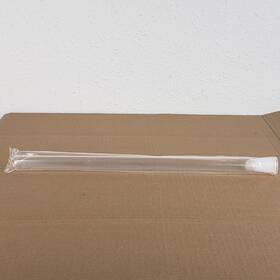
( Brand: Rayonet ), ( Manufacturer Part Number: RPR-200 ), ( Part Type: Joint ), ( Unit Type: Unit ), ( Country Of Origin: United States )
Review RAYONET Large Quartz Reaction Vessel 187ml 24/40 Joint Rpr-200/100
The **Rayonet RPR-200/RQV-118 Quartz Reaction Vessel (187 mL, 24/40 Joint, RPR-200/100)** is a high-performance, precision-engineered glassware component designed for demanding photochemical and UV-initiated reactions in laboratory settings. Crafted from **high-purity fused quartz**, this vessel combines exceptional optical clarity with superior chemical resistance, making it ideal for applications requiring transparent, inert containment under intense ultraviolet irradiation. The **187 mL capacity** provides ample volume for medium-scale experiments while maintaining efficient light penetration, ensuring uniform exposure across the reaction mixture. The **24/40 standard taper joint** facilitates seamless integration with a wide range of complementary glassware, including condensers, adapters, and reaction flasks, enhancing versatility for custom setups. Engineered to operate within the **RPR-200/100 Rayonet reactor system**, this vessel is specifically optimized for use with the **Rayonet RPR-200 photoreactor**, which delivers precise, high-intensity UV irradiation at wavelengths as low as 254 nm. The robust construction minimizes thermal stress and ensures durability under repeated exposure to UV light, making it suitable for prolonged photochemical syntheses, polymerizations, and degradation studies. Whether employed in academic research, pharmaceutical development, or materials science, this quartz reaction vessel delivers reliability and performance, enabling researchers to conduct sophisticated photochemical processes with confidence. Its seamless compatibility with the Rayonet system further simplifies experimental workflows, offering a streamlined solution for those seeking reproducible and efficient UV-driven chemical transformations.
### **Pros and Cons of buying a Rayonet RPR-200/RQV-118 Quartz Reaction Vessel (187 mL, 24/40 Joint)**
#### **Pros:**1. **High-Quality Quartz Construction** The vessel is made from high-purity quartz, which is chemically inert, resistant to most acids and bases, and can withstand high temperatures and UV radiation. This makes it ideal for photochemical reactions, UV polymerization, and other sensitive processes.
2. **Compatibility with Rayonet Reactors** Designed specifically for use with the Rayonet RPR-200 photoreactor, ensuring proper alignment and efficient UV irradiation. The RQV-118 is part of a standardized system, which simplifies setup and replacement.
3. **Standard 24/40 Joint** The joint size is widely used in laboratory glassware, making it easy to connect to condensers, adapters, or other glass components. This flexibility enhances its utility in various setups.
4. **Durability and Longevity** Quartz is more durable than standard glass under UV exposure, reducing the risk of cracking or degradation over time. Proper care extends its lifespan significantly.
5. **Transparency to UV Light** The quartz material allows efficient transmission of UV radiation (typically 200 300 nm), which is critical for photochemical reactions where light penetration is essential.
6. **Compatibility with Inert Atmospheres** Can be used with inert gas purges (e.g., nitrogen or argon) to prevent oxidation-sensitive reactions, making it suitable for air-sensitive chemistry.
7. **Modular Design** The system allows for easy replacement of the reaction vessel if damaged, reducing downtime and maintenance costs.
8. **Versatility in Applications** Suitable for a range of photochemical processes, including:- UV polymerization and crosslinking
- Photodegradation studies
- Synthesis of photoresponsive materials
- Environmental and materials science research
---
#### **Cons:**1. **High Cost** Quartz reaction vessels are significantly more expensive than standard borosilicate glassware. The price reflects the material s quality and specialized applications, but it may be prohibitive for budget-conscious researchers or small-scale users.
2. **Fragility Compared to Glass** While quartz is durable, it is still more brittle than borosilicate glass. Improper handling (e.g., thermal shock, mechanical stress) can lead to cracking or breakage. Care must be taken during assembly and cleaning.
3. **Limited Availability of Replacement Parts** Unlike common laboratory glassware, finding replacement seals, joints, or adapters for Rayonet systems may be challenging. Stocking spare parts is advisable for long-term use.
4. **Specialized Maintenance Requirements** Quartz requires gentle cleaning methods (e.g., ultrasonic baths with mild detergents, avoiding abrasive materials) to prevent scratches or contamination. Harsh chemicals or abrasive pads can damage the surface.
5. **Not Suitable for High-Pressure Applications** While quartz can handle moderate pressure, it is not designed for high-pressure reactions. For such applications, specialized high-pressure quartz cells or alternative materials (e.g., sapphire) may be required.
6. **Potential for UV Absorption Over Time** Prolonged exposure to UV light can gradually degrade the quartz, reducing its transparency. Regular inspection and replacement may be necessary for critical applications.
7. **Learning Curve for Setup** The Rayonet system requires proper alignment of the photoreactor bulbs and the reaction vessel. Misalignment can lead to inefficient irradiation or uneven reaction conditions, which may require troubleshooting.
8. **Limited Compatibility with Non-Quartz Components** Some adapters or fittings may not be compatible with quartz due to differences in thermal expansion or chemical resistance. Ensuring all components are quartz or UV-resistant is essential.
---
### **Conclusion:**The **Rayonet RPR-200/RQV-118 quartz reaction vessel** is a high-performance tool for photochemical research, offering superior UV transparency, chemical resistance, and durability. Its specialized design makes it indispensable for applications requiring precise UV irradiation, such as polymerization, photodegradation, or synthesis of light-sensitive materials. However, its cost, fragility, and maintenance requirements may pose challenges for users with limited budgets or experience in handling quartz glassware.
For researchers engaged in **photochemical studies, materials science, or UV-driven synthesis**, the investment is justified by its reliability and performance. For general laboratory use or non-photochemical applications, standard borosilicate glassware may suffice and be more cost-effective.
---
### **Recommendation:** - **Buy if:**- You are conducting **photochemical reactions** requiring UV light (e.g., polymerization, photolysis, or photodegradation studies).
- Your work involves **high-purity or air-sensitive reactions** where quartz s inertness is critical.
- You are part of a **research group or lab** with a dedicated Rayonet photoreactor system and can justify the cost.
- You prioritize **long-term durability and reproducibility** in UV-exposed experiments.
- **Avoid if:**- Your budget is constrained, and you can use **standard borosilicate glassware** for non-photochemical applications.
- You lack experience handling **fragile quartz components** or maintaining specialized glassware.
- Your reactions do not require **UV irradiation** (e.g., thermal or non-photo-driven processes).
- You anticipate **high-pressure or extreme thermal conditions** that may exceed the vessel s limits.
- **Alternatives to Consider:**- **Borosilicate Glass Reaction Vessels** (e.g., Pyrex) for non-UV applications.
- **Sapphire or Fused Silica Cells** if higher pressure or broader UV transparency is needed.
- **Used or Refurbished Units** (if available) to reduce costs while maintaining quality.
For most **photochemical research applications**, the RQV-118 is a worthwhile purchase due to its precision and reliability. However, weigh the pros and cons carefully against your specific needs before committing.
Details:
Rayonet own product page confirms quartz construction, 24/40 joint, and 187 mL capacity. Rayonet RQV-118 Large Quartz Reaction Vessel 187mL 24/40 Joint RPR-200/100. It is compatible with Rayonet RPR-1 RPR-2 and RMR-600 photo chemical reactor systems, making it useful for UV irradiation, catalysis, photo catalysis, synthesis, degradation studies, other wave length -driven chemistry where ordinary brisket glass would be the wrong material. This Rayonet RQV-118 is a large quartz photo chemical reaction vessel for UV reactor workflows, with 187 mL capacity and 24/40 standard taper joint.
Good replacement or spare vessel for labs already running Rayonet reactor platforms. New, see photos.
part #: rpr200 prices
- $349.00-$1999.99
specifications plasticwarelabsuppy:
- brand: Rayonet
- mpn: Rpr-200
- part type: Joint
- unit type: Unit
- country of origin: United States
seller plasticwarelabsuppy:
- city: Fargo, North Dakota
- # reviews: 3453
- rating: 99.9%
returns plasticwarelabsuppy:
- time: 30 Days
- paid by: Buyer
- policy: Returns Accepted
- method: Money back
offer plasticwarelabsuppy:
- best offers: True
- sold: 0
- quantity: 2
- options: Ship-to-home
- availability: In Stock
- started: May 20, 2026
general plasticwarelabsuppy:
- Medical, Lab Dental Supplies > Glassware Plasticware > Other Medical Lab Glassware
- condition: New
payments plasticwarelabsuppy:
- wallet: Apple-pay
- other
- credit card: Mastercard
shipping plasticwarelabsuppy:
- type: Fixed
- class: Standard
- cost: $0.00
- service: Standard
- transit: 3-8 Days
Rayonet RPR-200 Is Similar To:
- Rayonet Rma-500 Rqv-8 Quartz Reaction Tube 70ml Capacity Compatable With (54.5% similar) This Rayonet RQV-8 quartz reaction tube is a 70ML photo chemical vessel for use with merry-go-round sample holders, including RMA-400 and RMA-500 systems. Rayonet RQV-8 quartz reaction tube 70ML capacity comparable with RMA-500. Rayonet lists the RQV-8 as quartz glassware with 70ML capacity and ...(May 20th, 2026)
- Rayonet Rqv-218 Large Quartz Reaction Vessel 660ml 24 40 Joint Rpr-200 Rpr-100 (86.3% similar) This Rayonet RQV-218 is a large 660 ml quartz photo chemical reaction vessel with 24/40 standard taper joint, made for use southern new England ultraviolet / reactor systems including the RPR-1 RPR-2 and RMR-600. Quartz construction makes it suitable for UV photo chemistry, irradiation studies, ...(May 20th, 2026)