SIMAX SX3608 Laboratory Reagent Media Bottle Borosilicate Glass 100-1000ML Amber
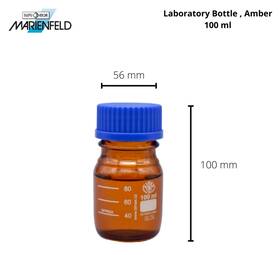
( Brand: Simax ), ( Manufacturer Part Number: SX3608 ), ( Size: 100 Ml ), ( Material: Borosilicate Glass ), ( Country Of Origin: Czech Republic )
Review SIMAX Laboratory Reagent Media Bottle Borosilicate Amber Glass
The **Simax SX3608 Laboratory Reagent Media Bottle** represents an exemplary fusion of precision engineering and chemical resistance, designed specifically for the rigorous demands of laboratory environments. Crafted from **Type I borosilicate glass** (ISO 3585 compliant), these bottles exhibit an exceptional combination of clarity, durability, and chemical inertness, making them indispensable for storing, transporting, and dispensing a wide range of sensitive reagents, solvents, and biological media. The **amber tint** of the glass provides superior protection against photodegradation, ensuring that light-sensitive compounds such as vitamins, antibiotics, or certain organic solvents remain stable over extended periods without degradation or contamination from external light sources. The **100 mL to 1000 mL capacity range** accommodates both small-scale experiments and larger-scale preparations, offering versatility for researchers working across disciplines, from microbiology and biochemistry to pharmaceutical development and analytical chemistry.
The bottle s design incorporates a **high-precision screw-cap closure** with a **PTFE-lined septum**, which not only ensures an airtight seal to prevent evaporation or microbial contamination but also facilitates easy access for pipetting or dispensing without compromising sterility. The **smooth, rounded contours** of the bottle minimize dead spaces, reducing the risk of residue buildup and simplifying thorough cleaning a critical factor in maintaining experimental integrity. Additionally, the **reinforced neck and base** enhance structural integrity, making the bottles resistant to thermal shock and mechanical stress, whether they are stored in refrigerators, freezers, or subjected to autoclaving for sterilization. The **graduated markings** on the body of the bottle provide accurate volume measurement, while the **ergonomic grip** ensures comfortable handling, reducing the likelihood of spills during routine laboratory procedures.
Beyond its functional attributes, the Simax SX3608 is engineered with **safety and compliance** in mind. The borosilicate glass composition adheres to stringent industry standards, ensuring compatibility with a vast array of chemicals, including acids, bases, and organic solvents, without leaching or reacting. The amber tint not only protects contents from light but also aligns with Good Manufacturing Practice (GMP) and Good Laboratory Practice (GLP) guidelines, making these bottles suitable for regulated environments such as pharmaceutical manufacturing, clinical diagnostics, and research laboratories. Whether used for storing cell culture media, preparing calibration standards, or dispensing hazardous reagents, the Simax SX3608 embodies reliability, precision, and long-term performance making it a cornerstone of modern laboratory workflows.
**Pros and Cons of buying a Simax SX3608 Laboratory Reagent Media Bottle (100 1000 ml, Borosilicate, Amber Glass)**
### **Pros**
1. **Chemical Resistance** Borosilicate glass (e.g., Type I or Type II) is highly resistant to most acids, bases, and organic solvents, making it ideal for storing reactive or corrosive reagents. This ensures the integrity of stored substances and prevents contamination.
2. **Light Protection** The amber (brown) color blocks ultraviolet and visible light, which is crucial for preserving light-sensitive compounds such as vitamins, pharmaceuticals, or biological samples that degrade upon exposure to light.
3. **Durability and Longevity** Borosilicate glass has a low thermal expansion coefficient, allowing it to withstand temperature fluctuations without cracking or warping. This makes it suitable for autoclaving, freezing, or heating applications.
4. **Inert Material** Unlike plastic or certain metals, borosilicate glass does not leach chemicals into stored reagents, ensuring purity and compliance with stringent laboratory standards (e.g., USP, EP, or FDA requirements).
5. **Versatility in Sizes** The bottle is available in multiple volumes (100 1000 ml), accommodating small-scale experiments, stock solutions, or larger reagent preparations without needing multiple container types.
6. **Compatibility with Lab Equipment** The design is likely compatible with standard laboratory accessories, such as caps, droppers, or automated dispensing systems, reducing the need for additional adapters.
7. **Sterilization Capability** Borosilicate glass can be autoclaved or steam-sterilized, which is essential for maintaining aseptic conditions in microbiology or sterile pharmaceutical applications.
8. **Recyclability and Sustainability** Glass is fully recyclable and does not degrade like single-use plastics, aligning with environmentally conscious laboratory practices.
9. **Visual Clarity (When Needed)** While amber blocks light, the glass is still transparent enough to visually inspect contents, which can be useful for checking levels or detecting particulate matter.
10. **Regulatory Compliance** Many industries (e.g., pharmaceuticals, biotech, and research) require glass containers for reagent storage due to their reliability and inertness, making this bottle a compliant choice.
---
### **Cons**
1. **Fragility Compared to Plastic** While borosilicate is more durable than standard glass, it can still shatter if dropped or subjected to sudden impacts, posing a risk in busy or high-traffic labs. This requires careful handling and storage.
2. **Weight and Bulk** Glass bottles are heavier than plastic alternatives, which can increase shipping costs and make them less convenient for fieldwork or portable setups.
3. **Cost** Borosilicate glass is more expensive than plastic or certain metals, which may be a limiting factor for budget-conscious laboratories or small-scale users.
4. **Limited Flexibility in Design** Unlike plastic, which can be molded into complex shapes, borosilicate glass bottles have standard designs. Special features (e.g., integrated droppers or spouts) may require additional accessories.
5. **Potential for Scratches or Contamination** Glass surfaces can accumulate dust, fingerprints, or residues from handling, which may introduce contaminants if not cleaned thoroughly. Scratches can also harbor microbial growth.
6. **Not Ideal for High-Pressure Applications** While borosilicate is strong, it is not designed for high-pressure environments (e.g., pressurized reactors or certain types of chromatography), where specialized glass or metal containers may be required.
7. **Single-Use Considerations (If Not Reused Properly)** If bottles are not cleaned and sterilized between uses, they can become sources of cross-contamination, though this is mitigated by their inert nature when properly maintained.
8. **Limited Availability of Customizations** Unlike plastic, which can be easily colored or labeled, customizing borosilicate glass bottles (e.g., with permanent markers or labels) may require additional steps to avoid damaging the surface.
9. **Time-Consuming Cleaning** Glass bottles may take longer to clean than plastic, especially if they contain viscous or dried residues, as they cannot be disposed of or melted down like plastic waste.
10. **Potential for Thermal Shock in Extreme Cases** Although borosilicate is resistant to thermal changes, abrupt temperature shifts (e.g., placing a hot bottle in ice water) can still risk cracking if not handled carefully.
---
### **Ending Conclusion**
The **Simax SX3608 borosilicate amber glass reagent bottle** is an excellent choice for laboratories requiring **chemical resistance, light protection, and long-term storage stability**. Its suitability depends on the specific needs of the application:
- **Best for:** Storing light-sensitive reagents, acids/bases, pharmaceutical intermediates, biological samples, or any substance where purity and inertness are critical.
- **Less ideal for:** High-pressure applications, fieldwork where weight is a concern, or situations where frequent handling or potential impact damage is a risk.
The trade-offs between **durability, cost, and fragility** must be weighed against the **benefits of chemical compatibility and regulatory compliance**. For most traditional laboratory settings, the advantages outweigh the drawbacks, making this a **highly recommended** option for reagent storage.
---
### **Recommendation**
Purchase the **Simax SX3608 borosilicate amber glass bottle** if:- You work with **light-sensitive or reactive chemicals** that require protection from UV/visible light and chemical degradation.
- Your lab adheres to **strict purity standards** (e.g., pharmaceutical, biotech, or research-grade applications).
- You need **long-term storage solutions** that can withstand autoclaving or temperature variations.
Consider alternatives (e.g., **plastic HDPE bottles for non-reactive, non-light-sensitive liquids** or **specialized glassware for high-pressure applications**) only if cost, weight, or fragility is a critical concern. For most standard laboratory uses, this bottle is a **superior and reliable investment**.
Details:
Complete with pouring ring and screw cap made of blue polypropylene Max 140 C. Not suitable for working under pressure or vacuum. at 121 C. SIMAX Laboratory Bottle ISO 4796, borosilicate glass, clear graduated, with DIN-thread GL 45, pouring ring and screw cap blue PP Reagent.
Minimal thermal expansion. Specifications. Very good chemical resistance. With retrace code for traceability.
White graduation. High resistance to thermal shocks. Serializable steam 134 C.
part #: sx3608 price
- $28.19
specifications plasticwarelabsuppy:
- brand: Simax
- mpn: Sx3608
- size: 100 Ml
- material: Borosilicate Glass
- country of origin: Czech Republic
seller plasticwarelabsuppy:
- rating: 0.0%
- city: Miami, Florida
- # reviews: 0
payments plasticwarelabsuppy:
- credit card: Discover
- wallet: Google-pay
- other
offer plasticwarelabsuppy:
- options: Ship-to-home
- availability: In Stock
- started: April 9, 2026
- sold: 0
shipping plasticwarelabsuppy:
- carrier: FedEx, USPS, UPS
- type: Calculated
- cost: $0.00
- class: Economy, Standard, Expedited
- transit: 5-11 Days
- service: FedEx Ground Economy, USPS Ground Advantage, UPS Ground, USPS Priority Mail
returns plasticwarelabsuppy:
- paid by: Buyer
- time: 30 Days
- policy: Returns Accepted
- method: Money back
general plasticwarelabsuppy:
- Medical, Lab Dental Supplies > Glassware Plasticware > Other Medical Lab Glassware
- condition: New
Simax SX3608 Is Similar To:
- Bm0100 United Scientific Simax Glass Media Storage Bottle (29.2% similar) The screw thread opening has an id of approximately 30MM. Capacity ml graduation range outside diameter x height 100. Actual bottle will differ slightly from representative image shown. The supplied blue caps are liner-less...(November 17th, 2018)
- Bm0250 United Scientific Simax Glass Media Storage Bottle (29.2% similar) His background is in science, and he has been the lab supply business since much of success our can be attributed to mike McNamara, science education director. Mike has thirty years experience in almost every area of the science education field. Buy what you want for one single low-priced shipping ...(December 8th, 2018)
- United Scientific Bm1000-ea Supplies Simax 1000ml 1l Laboratory Grade Leakproof Media (32.7% similar) Container type: bottle. Re usability: reusable. Type 1 class a borosilicate glass. Recommended uses for product: liquid storage, laboratory, home. Age range: adult. Color: clear. Includes: 45MM polypropylene blue screw cap and pouring ring. Size: 1000ML 1L. They include a liner less, one-piece ...(October 13th, 2024)
- United Scientific Bswm1000ea Simax Bswm1000 Gl80 Leakproof Media storage Bottles Clear (34.9% similar) Caution: do not tighten caps immediately after autoclave as the vacuum resulting from cooling can cause breakage. Item model number: BSWM1000EA. Manufacturer: united scientific. Bottle type: wide mouth, reusable, GL80. Brand: united scientific. Material: borosilicate glass. Caution - these bottles ...(December 25th, 2024)
- United Scientific Bswm2000ea Simax Borosilicate Glass Gl80 Media Bottle Wide Clear (29.6% similar) This 2l 2000 ML wide mouth storage media bottle is designed for heavy duty storage as well mixing and sampling. Caution - these bottles are not designed and for vacuum use. Country of origin: czech republic. Every bottle is and comes with easy to read imprinted graduations. Manufacturer: united ...(July 22nd, 2025)
- Simax 1632414321950 2000ml 2l Borosilicate Laboratory Glass Media Bottles Case Of 6 New In Box (40.2% similar) Sold in packs of 6, multiple available the Simax 2000 ML 2l borosilicate laboratory glass media bottles are high-quality glass storage containers designed for use in various laboratory settings such as physical labs, extraction and biological labs. Manufactured in the czech republic, these bottles ...(September 13th, 2025)
- Simax 2070 pc 2000 2000ml Plastic-coated Glass Graduated Media Storage Bottle With Gl-45 Cap (40.7% similar) No chips or cracks. Thorough cleaning and sterilization are recommended before use. Used items will show signs of wear sometimes including light scratches, discoloration, stickers/tape, or exterior markings. Lab bench supplies. Good used condition. Biotech bargains item for sale...(March 9th, 2026)
- Simax 2070 pc 500 4 500ml And 1000ml Plastic-coated Glass Media Storage Bottles Gl-45 Caps (32.9% similar) GSR veers 1730 gs 9.9.4 1730 lot of 4 includes: 3x 500ML and 1x 1000ML. Used items will show signs of wear sometimes including light scratches, discoloration, stickers/tape, or exterior markings. Biotech bargains item for sale. Includes pour ring, GL45 cap and rubber bottle bands shown in pictures ...(March 9th, 2026)
- Simax Sx3607 Laboratory Reagent Media Bottle 100-2000 Ml Borosilicate Glass Clear (88.2% similar) Minimal thermal expansion. Very good chemical resistance. at 121 white graduation. Not suitable for working under pressure or vacuum. Simax laboratory bottle ISO 4796, borosilicate glass, clear graduated, with din-thread gl 45, pouring ring and screw cap blue pp reagent. Specifications. ...(April 10th, 2026)