DESCHEM 200MM2440SL Graham Condenser Jacket Coil Glass 7445046820824 24/40 Laboratory Glassware
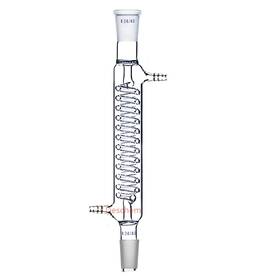
( Brand: Deschem ), ( Manufacturer Part Number: 200MM2440SL ), ( Part Type: Condenser Jacket Coil ), ( Item Weight: 11.4 Ounces ), ( Package Dimensions: 14.72 X 3.74 X 2.4 Inches ), ( UPC: 445046820824 )
Review DESCHEM Graham Condenser 24/40 Jacket 200mm Coil Glass Laboratory Glassware
The **Deschem 200mm 24/40 Graham Condenser with a 24/40 Jacket and 200mm Coil** is a precision-engineered piece of laboratory glassware designed to elevate the efficiency and reliability of distillation, reflux, and condensation processes in chemical synthesis, pharmaceutical development, and analytical laboratories. Crafted from high-quality borosilicate glass (typically Type I or Type II, depending on the model), this condenser ensures exceptional thermal resistance, chemical inertness, and optical clarity, making it ideal for demanding applications where accuracy and durability are paramount. The **24/40 standard taper joint** ensures a secure, leak-proof connection to compatible glassware, such as round-bottom flasks, distillation columns, or reaction vessels, while the **200mm coil length** provides optimal surface area for efficient heat exchange, maximizing condensation rates without compromising flow dynamics. The **jacketed design** adds an extra layer of functionality, allowing for temperature-controlled condensation through the circulation of cooling fluids (such as water or refrigerated glycol solutions), which is particularly advantageous in high-temperature reactions or when working with volatile solvents that require precise temperature regulation. The **200mm overall height** strikes a balance between compact workspace utilization and sufficient coil length, ensuring versatility in laboratory setups ranging from bench-top experiments to larger-scale preparations. Whether used in routine organic synthesis, fractional distillation, or specialized processes like vacuum distillation, this condenser delivers consistent performance with minimal maintenance, thanks to its smooth, polished glass surface that resists fouling and corrosion. Its robust construction and adherence to international safety standards make it a trusted component in laboratories worldwide, where precision and repeatability are non-negotiable.
**Pros and Cons of buying a Deschem 200mm 4/24 Condenser (24/40 Jacket, 200mm Coil, Glass Laboratory Glassware)**
### **Pros**
1. **High Efficiency and Performance** The 200mm surface area maximizes heat exchange, making it ideal for large-scale distillations, reflux setups, or reactions requiring precise temperature control. The extended coil length (200mm) enhances cooling efficiency, reducing condensation time and improving yield.
2. **Durability and Quality** Deschem is a reputable brand known for producing high-quality glassware designed to withstand repeated use in laboratory settings. The borosilicate glass (likely Type 3.3 or similar) ensures resistance to thermal shock and chemical corrosion, extending the condenser s lifespan.
3. **Versatility** The 24/40 joint compatibility allows it to fit seamlessly with standard laboratory glassware, making it suitable for a wide range of applications, from simple distillations to complex multi-step syntheses. The jacketed design (24/40) also enables the use of cooling baths (e.g., ice-water or refrigerated circulators) for more controlled temperature management.
4. **Ease of Cleaning and Maintenance** Glass condensers are generally easier to clean than metal alternatives, especially when dealing with sticky or corrosive residues. The smooth interior surface reduces the risk of residue buildup, though thorough cleaning is still necessary after use.
5. **Compatibility with Jacketed Systems** The jacketed design allows for external cooling, which can be particularly useful in applications where internal cooling alone is insufficient. This is beneficial for high-boiling or heat-sensitive compounds where rapid cooling is critical.
6. **Safety** Glass condensers are chemically inert and do not introduce contaminants into the reaction, unlike some metal or plastic alternatives. They also reduce the risk of sparking or corrosion-related failures.
7. **Cost-Effective for Long-Term Use** While the initial cost may be higher than some plastic or basic metal condensers, the durability and performance of a high-quality glass condenser often justify the investment, especially in academic or industrial settings where reliability is paramount.
---
### **Cons**
1. **Fragility** Glassware is prone to breakage from thermal shock (e.g., sudden temperature changes), mechanical impact, or rough handling. This can be a significant drawback in environments where equipment is frequently moved or exposed to rough conditions.
2. **Weight and Bulk** Glass condensers are heavier than plastic or aluminum alternatives, which can make them cumbersome to transport or store. This may be less of an issue in stationary laboratory setups but could be a consideration for fieldwork or portable applications.
3. **Limited Temperature Range** While borosilicate glass can handle moderate temperature fluctuations, extreme temperatures (e.g., very high heating or rapid cooling) can still risk cracking. This limits its use in certain high-temperature applications without proper precautions.
4. **Cost** High-quality glass condensers like this one are more expensive upfront compared to basic plastic or metal condensers. For one-time or low-budget experiments, this may not be justified.
5. **Maintenance Requirements** Despite being easy to clean, glass condensers require regular inspection for scratches, cracks, or residue buildup. Neglecting maintenance can lead to reduced efficiency or failure over time.
6. **Not Ideal for High-Pressure Applications** Glass is not suitable for high-pressure systems, as it lacks the structural integrity to handle elevated pressures safely. For such applications, metal condensers or specialized glassware (e.g., reinforced) would be required.
7. **Potential for Contamination** While glass is chemically inert, improper cleaning (e.g., using abrasive materials) can introduce microscopic scratches or residues that may affect sensitive reactions. This requires careful handling and cleaning protocols.
---
### **Conclusion**
The Deschem 200mm 24/40 jacketed condenser is a robust and efficient piece of laboratory glassware well-suited for applications requiring high cooling performance, durability, and chemical compatibility. Its extended coil and jacketed design make it particularly valuable for large-scale or temperature-sensitive processes. However, its fragility, weight, and higher cost may pose challenges depending on the specific use case, laboratory environment, or budget constraints.
For **academic research, pharmaceutical synthesis, or industrial-scale operations** where reliability and performance are critical, this condenser is an excellent investment. It is less ideal for **high-risk handling environments, high-pressure applications, or budget-limited setups** where alternatives like plastic or metal condensers might suffice.
---
### **Recommendation**
**Buy this condenser if:**- You require a high-performance, durable condenser for frequent or large-scale use.
- Your applications involve temperature-sensitive or high-boiling compounds where efficient cooling is essential.
- You prioritize chemical inertness and long-term reliability over cost or portability.
- Your laboratory has the space and safety protocols to handle glassware properly.
**Consider alternatives if:**- You work in a high-risk environment where breakage is a concern (e.g., fieldwork, rough handling).
- Your budget is limited, and you can achieve similar results with a lower-cost condenser.
- You need a lighter or more portable solution (e.g., for travel or temporary setups).
- Your applications involve high-pressure systems or extreme temperatures beyond the condenser s safe operating range.
For most **serious laboratory users**, the Deschem condenser represents a worthwhile purchase due to its balance of performance, durability, and versatility. Pair it with proper safety measures (e.g., protective gloves, careful handling) to maximize its lifespan and effectiveness.
Details:
Softening Point 820. Made By Brisket Glass. Linear Coefficient of Expansion 32 10-7/. Be Made From G3.3 Brisket Glass.
Annealing Point 560.
part #: 200mm2440sl price
- $39.99
specifications plasticwarelabsuppy:
- brand: Deschem
- mpn: 200mm2440sl
- part type: Condenser Jacket Coil
- item weight: 11.4 Ounces
- package dimensions: 14.72 X 3.74 X 2.4 Inches
- upc: 445046820824
general plasticwarelabsuppy:
- condition: New
- Medical, Lab Dental Supplies > Glassware Plasticware > Other Medical Lab Glassware
shipping plasticwarelabsuppy:
- class: Expedited
- transit: 4-10 Days
- service: Expedited
- type: Fixed
- cost: $0.00
payments plasticwarelabsuppy:
- other
- credit card: Discover
- wallet: Google-pay
seller plasticwarelabsuppy:
- city: Denver, Colorado
- # reviews: 10
- rating: 100.0%
offer plasticwarelabsuppy:
- sold: 0
- started: March 27, 2026
- availability: In Stock
- options: Ship-to-home
- quantity: 1
returns plasticwarelabsuppy:
- paid by: Seller
- time: 30 Days
- method: Money back
- policy: Returns Accepted
Deschem 200MM2440SL Is Similar To:
- Cxzlz3002440 Deschem Glass Vigreux Distilling Column With Side Arm Lab Chemical (22.9% similar) Moving and my lab equipment needs to go. Used, vigorous distilling column with side arm used only twice thoroughly cleaned...(November 10th, 2018)
- N-a Deschem Distillation Head Short Path Condenser Premium 6971311072854 (31.4% similar) USPS first class package parcel select ground 3JOINTS are all 24 40EAN: 854 Deschem 40,DISTILLATION head short path condenser,distillation premium brand: color: clear features: be made from G3. 3 brisket glass annealing point linear coefficient of expansion softening publisher: Deschem details: 24 ...(September 27th, 2018)
- Deschem Kkfyqgz24404 24 40 150mm Glass Reactor Kettle Lid Dn100 Four Necks 4-neck Reaction (39.5% similar) Part #: Deschem KKFYQGZ24404 for sale...(November 5th, 2024)
- Deschem Sfhsw24402 24 40 Glass Adapter With Ground Cone And Scock Ptfe Stopcock Lab Chemistry Valve (36.6% similar) Made in china, this unit includes a PDF stopcock for easy control of fluid flow. Condition new the 24/40 glass adapter with ground cone and PDF stopcock by Deschem is a versatile lab chemistry valve designed for various disciplines such as physical, dental, medical, microbiological laboratories. ...(July 16th, 2025)
- Deschem Des2440ljkxs 5pcs 24 40 Glass Stopper Lab Bottle Hexagonal Hollow Plug Laboratory Glassware (50.5% similar) Annealing point 560. Be made from G3.3 brisket glass. Linear coefficient of expansion 32 10-7/. 5PCS 24/40 glass stopper lab bottle hexagonal hollow plug laboratory glassware:: item model number DES2440LJKXS, number of items 5, country origin china, is discontinued by manufacturer no, package ...(July 18th, 2025)
- Deschem 231069025544 24 40 200mm Glass Allihn Condenser Lab Ball Shapem Heat Exchanger (41.6% similar) Made from G3.3 brisket glass, annealing point 560, linear coefficient of expansion 32 10-7/, softening point 820, science supply 24/40,200MM,ALLIHN condenser,ball shape,chemical glass lab ware. 24/40,200MM,ALLIHN condenser,ball shape,chemical glass from brisket glass 3.3ALLIHN condenser,the jacket...(September 18th, 2025)
- Deschem Des2440sxlng 300mm 24 40 Glass Graham Condenser Coil Heat Exchanger Laboratory Glassware (64.5% similar) 24/40 glass graham condenser coil heat exchange with 10MM hose connection lab chemistry glassware, made from brisket 3.3, effective length : 300MM, JOINT:24/40, be G3.3 glass, annealing point 560, linear coefficient of expansion 32 10-7/, softening point 820, joint 24/40, jacket length 300MM...(February 3rd, 2026)
- Deschem Des400mm2440cxzlz 400mm 24 40 Vigreux Distilling Column Boro Glass Ground Joint Distillation Tube (44.8% similar) Annealing point 560. Deschem science supply. Made from G3.3 brisket glass. Made by brisket glass. 400MM,24/40,VIGREUX distilling column,Biro glass ground joint distillation tube:: item weight 9.6 ounces, model number DES400MM2440CXZLZ, product dimensions 15.75 x inches, manufacturer Deschem, size ...(February 5th, 2026)
- Deschem Des2440adp10575 24 40 Glass Distillation Adapter Lab 105 Degree And 75-degree Connecting Tube (35.1% similar) The 24/40 glass distillation adapter by Deschem is a high-quality laboratory adapter designed for variety of applications in physical, dental, medical, microbiological, and biological laboratories. With its reliable brand reputation and precise model number, it ensures a efficient component in ...(March 3rd, 2026)
- Deschem Des200mm2440zxlngly 200mm 24 40 Glass Liebig Condenser Jacket 20cm West Column With (53.9% similar) Deschem 200MM 24/40 glass lie big condenser jacket 20CM west column with removable hose connections total length 345MM 345MM:: be made from G3.3 brisket. Softening point 820. Delivery: shipping is available only within the continental USA. Annealing point 560. Linear coefficient of expansion 32 10...(March 20th, 2026)
- Deschem 332031354970 200mm 24 40 Lab Glass Highly Efficient Reflux Condenser Clear (42.6% similar) Linear coefficient of expansion 32 10-7/. Annealing point 560. Deschem 200MM,24/40,LAB glass highly efficient reflex condenser lab clear clear:: made from G3.3 brisket. Delivery: shipping is available only within the continental USA. Softening point 820. Deschem science supply...(March 20th, 2026)