NANAENTEK EVE-MV2 Nano Entek Cell Counter EVE-MC2 Eve
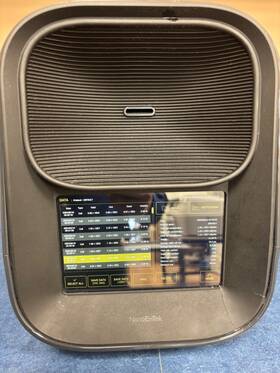
( Brand: Nanaentek ), ( Manufacturer Part Number: EVE-MV2 ), ( Model: EVE-MC2 ), ( Part Type: Cell Counter ), ( Unit Type: Unit ), ( Country Of Origin: Korea ), ( Intended Use/discipline: Biological Laboratory )
Review NANAENTEK Nano Entek Eve Plus Cell Counter
The **NanaEntek EVE-MV2 Nano Entek EVE Cell Counter** and its companion device, the **EVE-MC2**, represent a cutting-edge leap in portable hematology and blood analysis technology, designed to deliver precise, rapid, and user-friendly diagnostics in both clinical and point-of-care settings. The **EVE-MV2** is a compact, battery-powered, fully automated cell counter that leverages advanced optical and microfluidic engineering to perform a comprehensive five-part differential blood count, including red blood cells (RBCs), white blood cells (WBCs), hemoglobin (Hb), hematocrit (Hct), mean corpuscular volume (MCV), mean corpuscular hemoglobin (MCH), mean corpuscular hemoglobin concentration (MCHC), red cell distribution width (RDW), and a detailed white blood cell differential (neutrophils, lymphocytes, monocytes, eosinophils, and basophils). Its sleek, handheld design measuring approximately 15 cm in length and weighing just under 500 grams makes it ideal for mobile clinics, emergency rooms, remote medical facilities, and even home healthcare applications where traditional benchtop analyzers are impractical. The device integrates a high-resolution imaging system and proprietary algorithms to analyze blood samples with remarkable accuracy, comparable to laboratory-grade instruments, while minimizing user intervention. A single-use, disposable cartridge system ensures sterility, reduces cross-contamination risks, and simplifies operation, requiring only a small capillary blood sample (as little as 10 L) for analysis, completed in under two minutes. The **EVE-MC2**, serving as an optional companion module, enhances the system s functionality by enabling automated sample preparation, including dilution and lysis, further streamlining workflows and improving consistency in results.
Both devices are equipped with a vibrant, intuitive touchscreen interface that displays results in real-time, complete with graphical trends, historical data storage, and connectivity options via Bluetooth or USB for seamless integration with electronic health records (EHR) systems. The EVE-MV2 s robust software platform supports multiple languages, customizable alerts for abnormal values, and compliance with international regulatory standards, including CE marking and FDA clearance, ensuring reliability for diverse clinical applications. Powered by a rechargeable lithium-ion battery or an AC adapter, the system offers up to 10 hours of continuous operation on a single charge, making it exceptionally versatile for off-grid or mobile use. Additionally, the EVE-MV2 and EVE-MC2 are engineered with a modular design, allowing for future upgrades and compatibility with additional diagnostic tests, such as platelet counts, coagulation assays, or even glucose monitoring, expanding their utility in comprehensive patient diagnostics. Whether deployed in a bustling hospital lab or a rural health clinic, this advanced cell counting system exemplifies the fusion of innovation and accessibility, empowering healthcare providers to deliver faster, more informed decisions with unparalleled convenience.
### **Pros and Cons of buying a NanoEntek EVE-MV2 Nano EVE-MC2 Cell Counter**
#### **Pros**
1. **Portability and Compact Design**
The EVE-MV2 and EVE-MC2 are designed for easy transport, making them ideal for fieldwork, clinical visits, or mobile diagnostics. Their lightweight and handheld nature eliminate the need for bulky laboratory equipment, allowing for on-site testing.
2. **Automated Cell Counting**
Both models automate the process of counting white blood cells (WBC), red blood cells (RBC), and platelets, reducing human error and improving accuracy compared to manual methods. This is particularly useful in resource-limited settings where trained personnel may be scarce.
3. **Quick Results**
The devices provide rapid results, often within minutes, which is critical in emergency or point-of-care scenarios where timely diagnosis can significantly impact patient outcomes.
4. **Low Maintenance and Cost-Effective**
Unlike traditional hematology analyzers, these devices require minimal maintenance. They do not need frequent calibration or expensive consumables, making them more affordable in the long run for small clinics or remote areas.
5. **User-Friendly Interface**
The EVE-MV2 and EVE-MC2 are designed with intuitive controls, making them accessible to users with limited technical training. This is beneficial in settings where healthcare workers may not have extensive laboratory experience.
6. **Battery-Powered Operation**
The ability to run on batteries (in addition to AC power) enhances their utility in off-grid or mobile settings, such as field hospitals, disaster response, or rural health clinics.
7. **Versatility in Applications**
These devices can be used for general hematology, infectious disease monitoring, and even some basic parasitology assessments, expanding their utility beyond standard blood counts.
8. **Durability for Field Use**
The rugged design of these devices makes them suitable for harsh environments, including dusty, humid, or uneven terrain, which is common in field medicine or developing countries.
---
#### **Cons**
1. **Limited Parameter Range**
While the EVE-MV2 and EVE-MC2 perform basic hematology functions well, they lack advanced features found in full-fledged hematology analyzers. They cannot measure hemoglobin levels, hematocrit, or perform differential white blood cell counts (identifying specific types of WBCs), which are essential for comprehensive diagnostics.
2. **Sample Volume Requirements**
These devices may require precise sample volumes, and improper handling (e.g., clotting, contamination, or improper dilution) can lead to inaccurate results. This can be challenging in field settings where sample collection may not be ideal.
3. **Dependence on External Power Sources**
Although battery-powered, the devices may still require charging, and prolonged use without access to power could disrupt operations. This limitation can be problematic in areas with unreliable electricity.
4. **Limited Data Storage and Connectivity**
The EVE-MV2 and EVE-MC2 may have limited internal storage or basic connectivity options (e.g., USB or Bluetooth). This can make it difficult to archive results or integrate with larger hospital information systems, potentially leading to data management challenges.
5. **Calibration and Quality Control Needs**
While these devices are low-maintenance, they still require periodic calibration and quality control checks to ensure accuracy. In settings where technical support is unavailable, this could pose a challenge.
6. **Not Suitable for Complex Diagnostics**
For patients with complex hematological conditions (e.g., leukemia, severe anemia, or coagulation disorders), these devices may not provide sufficient data. Clinicians would still need to rely on more advanced laboratory tests for accurate diagnosis.
7. **Potential for User Error**
Despite their user-friendly design, improper handling (e.g., incorrect sample loading, misinterpretation of results) can lead to false readings. Training is essential to maximize their effectiveness.
8. **Limited Availability of Spare Parts and Support**
Depending on the region, accessing spare parts, repairs, or technical support for these devices may be difficult, especially if they are not widely distributed. This could lead to downtime if issues arise.
---
### **Conclusion**
The NanoEntek EVE-MV2 and EVE-MC2 are valuable tools for basic hematology in portable, resource-limited, or point-of-care settings. Their strengths lie in their portability, speed, and ease of use, making them ideal for fieldwork, mobile clinics, or areas with limited laboratory infrastructure. However, their limitations such as the inability to perform comprehensive blood tests, reliance on proper sample handling, and lack of advanced features mean they are not suitable for all diagnostic needs.
For settings where only basic blood counts (WBC, RBC, platelet estimates) are required, these devices are an excellent choice. However, for more complex or detailed hematological assessments, they should be used in conjunction with full-fledged hematology analyzers in a laboratory setting.
---
### **Recommendation**
**Buy the NanoEntek EVE-MV2 or EVE-MC2 if:**- You operate in a **mobile or field setting** where portability and quick results are critical.
- Your primary need is for **basic hematology screening** (e.g., monitoring infections, anemia, or general health in remote areas).
- You have **limited access to traditional laboratories** but still require reliable blood counts.
- You are working in a **low-resource environment** where cost and maintenance are concerns.
**Avoid purchasing if:**- You require **advanced hematology parameters** (e.g., hemoglobin, differential WBC counts, coagulation tests).
- Your workflow demands **high-volume or complex diagnostics** that full hematology analyzers can provide.
- You lack **proper training or quality control measures** to ensure accurate results.
- You need **long-term data storage or integration with electronic health records**, as these devices may not support such functionalities.
**Alternative Considerations:**If basic hematology is insufficient, consider investing in a **full hematology analyzer** (e.g., Sysmex XN series, Abbott Cell-Dyn) for comprehensive testing. For very basic needs, a **manual hemocytometer** (with training) could be a lower-cost alternative, though it is far less convenient.
Ultimately, the EVE-MV2 and EVE-MC2 are best suited as **supplemental tools** rather than replacements for full laboratory diagnostics. Their value lies in their ability to bring essential testing to underserved or mobile populations where traditional labs are unavailable.
Details:
The clack does not have any impact on the work of instrument. There is a crack on the right bottom frame of instrument please see picture. Dims: 12x13x18. Nano Entek EVE Plus Cell Counter, Year: 2022, SN: EP22051-022, Electrical: 12V, 3 Amps, Est.
specifications plasticwarelabsuppy:
- brand: Nanaentek
- mpn: Eve-mv2
- model: Eve-mc2
- part type: Cell Counter
- unit type: Unit
- country of origin: Korea
- intended use/discipline: Biological Laboratory
returns plasticwarelabsuppy:
- policy: No Returns
seller plasticwarelabsuppy:
- # reviews: 213
- city: Middletown, New York
- rating: 0.0%
offer plasticwarelabsuppy:
- best offers: True
- availability: In Stock
- quantity: 1
- sold: 0
- options: Ship-to-home
- started: March 27, 2026
general plasticwarelabsuppy:
- Medical, Lab Dental Supplies > Glassware Plasticware > Other Medical Lab Glassware
- condition: Used
payments plasticwarelabsuppy:
- wallet: Apple-pay
- credit card: Discover
- other
shipping plasticwarelabsuppy:
- class: Expedited
- carrier: USPS
- type: Calculated
- service: USPS Priority Mail
- cost: $137.65
- transit: 7-13 Days