NALGENE 6370-0015 Waste Container Biohazardous Gallon
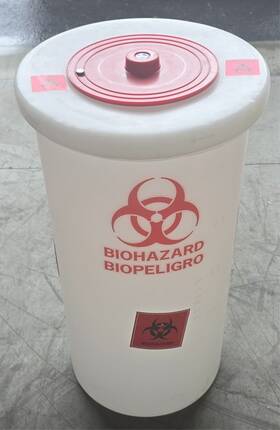
( Brand: Nalgene ), ( Manufacturer Part Number: 6370-0015 ), ( Inventory Location: Fp 4-4 ), ( Color: White ), ( Country Of Origin: United States )
Review NALGENE Waste Container Biohazardous Gallon
The **Nalgene 6370-0015 Waste Container (Biohazardous, 15 Gallon)** is a robust, high-capacity solution designed for laboratories, medical facilities, and industrial settings where the safe and compliant disposal of biohazardous waste is critical. Constructed from durable **polypropylene (PP)**, this container offers exceptional chemical resistance, ensuring it can withstand exposure to a wide range of disinfectants, solvents, and biological agents without degradation or contamination. The **15-gallon capacity** provides ample space for accumulating hazardous waste, including sharps, cultures, and other regulated materials, while its **sealed lid system** with a secure gasket minimizes the risk of spills, leaks, or airborne contamination during storage or transport. The container s **reinforced walls** and **sturdy base** offer stability, reducing the likelihood of tipping or damage during handling, while the **clear labeling area** allows for easy identification with biohazard symbols, compliance markings, and customizable warnings essential for maintaining OSHA, CDC, and other regulatory standards. Additionally, the container features **ergonomic handles** on opposing sides, simplifying manual transport when full, and its **stackable design** optimizes space in storage areas, making it an efficient choice for facilities with high waste volumes. Whether used in clinical research, pharmaceutical manufacturing, or environmental testing, this Nalgene biohazardous waste container combines reliability, safety, and ease of use to ensure proper waste management while adhering to stringent biohazard protocols.
### **Pros and Cons of buying a Nalgene 6370-0015 Waste Container (15-Gallon, Biohazardous)**
#### **Pros:**1. **Durability and Material Quality** The Nalgene brand is known for high-quality, BPA-free polycarbonate containers, which are resistant to chemicals, impact, and corrosion. This makes it suitable for handling biohazardous waste without degradation over time.
2. **Biohazard Compliance** The container is specifically designed for biohazardous waste, meaning it meets regulatory standards for containment, labeling, and safety. This reduces legal and compliance risks for laboratories, medical facilities, or research institutions.
3. **Capacity and Versatility** At 15 gallons, it provides ample space for liquid or semi-liquid biohazardous waste, making it practical for medium to large-scale operations. It can also be used for general hazardous waste if properly labeled.
4. **Easy to Clean and Sterilize** Polycarbonate is easy to disinfect with common sterilization methods (e.g., bleach, autoclaving, or UV treatment), ensuring it remains sanitary for repeated use.
5. **Secure Sealing** The lid is designed to prevent leaks and spills, which is critical when handling infectious or hazardous materials. Some models include tamper-evident features for added security.
6. **Compatibility with Waste Management Systems** Many waste disposal companies accept Nalgene biohazard containers, simplifying the process of off-site disposal or incineration.
7. **Long-Term Cost Efficiency** While the upfront cost is higher than disposable alternatives, its durability and reusability can reduce long-term waste management expenses.
8. **Brand Reputation** Nalgene is a trusted name in laboratory and medical-grade containers, ensuring reliability and support if issues arise.
---
#### **Cons:**1. **High Initial Cost** A 15-gallon biohazard container is significantly more expensive than disposable alternatives (e.g., plastic bags or drums). The cost may be prohibitive for small businesses or one-time use scenarios.
2. **Weight and Portability Issues** Filled with liquid waste, the container becomes heavy (potentially over 150 lbs when full), making manual transport difficult. Proper lifting equipment (e.g., dollies, forklifts) is often required.
3. **Space Requirements** Storing empty or full containers requires dedicated space, which may not be available in all facilities. Proper ventilation and containment areas are necessary to prevent leaks or contamination.
4. **Maintenance and Cleaning Effort** Unlike disposable containers, reusable ones require regular cleaning, inspection for damage, and sterilization, which adds time and labor costs.
5. **Limited Flexibility in Waste Types** While suitable for liquids and semi-liquids, it may not accommodate solid waste or gases without additional containers or modifications.
6. **Potential for Contamination Risks** If not properly sealed or handled, there is a risk of leaks, spills, or cross-contamination, especially in high-traffic or poorly maintained environments.
7. **Regulatory and Labeling Complexity** Biohazardous waste must be labeled correctly per local, state, and federal regulations (e.g., OSHA, EPA, or CDC guidelines). Mislabeling can lead to fines or disposal complications.
8. **Depreciation Over Time** While durable, polycarbonate containers may degrade with prolonged exposure to certain chemicals or UV light, reducing their lifespan.
---
### **Conclusion and Recommendation**
The **Nalgene 6370-0015 15-gallon biohazardous waste container** is an excellent choice for **laboratories, medical facilities, research institutions, or any organization handling large volumes of biohazardous liquids on a regular basis**. Its **durability, compliance with safety standards, and reusability** make it a cost-effective solution in the long run, particularly for operations with **high waste volume or strict regulatory requirements**.
However, it is **not ideal for small-scale or infrequent users** due to its **high upfront cost, weight, and maintenance demands**. In such cases, **disposable biohazard bags or smaller reusable containers** may be more practical.
#### **Final Recommendation:** - **Buy the Nalgene container if:**- You handle **large quantities of biohazardous liquids** regularly.
- Your facility requires **compliance with strict waste disposal regulations**.
- You can **justify the cost** through long-term savings and reduced disposal expenses.
- You have **proper storage and handling infrastructure** (e.g., secure storage, lifting equipment).
- **Avoid or consider alternatives if:**- Your waste volume is **low or intermittent**.
- Budget constraints make the **initial cost prohibitive**.
- You lack **space or personnel** for proper cleaning and maintenance.
- You primarily deal with **solid waste or gases**, which may require different containment methods.
For most **medium to large-scale biohazardous waste generators**, the Nalgene container is a **reliable, high-quality investment** that outweighs its drawbacks. For smaller operations, evaluating **cost-per-use** against disposable options may be more prudent. Always ensure compliance with **local waste management laws** before purchasing.
Details:
Specifications: Capacity: 15 gallons / 57 L Outer diameter: 13-1/4 34 cm height : 29 74 Material: Polypropylene Retails for $379 new The containers hold standard-sized autoclave bags. A port opening in the cover allows for one-handed disposal of materials, limiting exposure to infectious waste.
part #: 63700015 prices
- $39.99-$150.00
specifications plasticwarelabsuppy:
- brand: Nalgene
- mpn: 6370-0015
- inventory location: Fp 4-4
- color: White
- country of origin: United States
seller plasticwarelabsuppy:
- city: San Jose, California
- # reviews: 21
- rating: 100.0%
general plasticwarelabsuppy:
- Medical, Lab Dental Supplies > Glassware Plasticware > Other Medical Lab Glassware
- condition: Seller refurbished
payments plasticwarelabsuppy:
- other
- wallet: Google-pay
- credit card: Diners-club
returns plasticwarelabsuppy:
- policy: No Returns
offer plasticwarelabsuppy:
- availability: In Stock
- sold: 0
- started: February 11, 2026
- quantity: 1
shipping plasticwarelabsuppy:
Nalgene 6370-0015 Is Similar To:
- 076170 Nalgene Hdpe Wide Mouth Round Container Sports Water 661195562003 (41.2% similar) 16 and 32 oz sizes are ideal for beverages. Please before opening any case. 1 oz size perfectly holds standard strike anywhere matches. Use smaller sizes for cooking oil, condiments, dry goods, etc. Features: bap free, made using the finest plastics and metals great for use in both outdoor indoor ...(January 9th, 2019)
- 1 Gallon Carboy Nalgene 1 Gallon Dispensing Carboy (29.4% similar) We combine shipping. This Nalgene 1 gallon carboy is in OK used condition from university surplus...(December 20th, 2016)
- 11100-0005 Nalgene Thermo Scientific Hdpe Gallon Cylindrical Heav New Other (29.9% similar) Please review the condition above and inspect photographs carefully. It may not accurately reflect the item as listed. If not, let us know and we'll try our hardest to reply within one working day. Any questions. Thermos scientific Nalgene Hope 5 gallon cylindrical heavy duty graduated lab tank, ...(April 22nd, 2019)
- 2120-0010 Thermo Scientific Nalgene Gallon Tm Hdpe Wide Mouth Bottle With (21.2% similar) 1 gallon Nalgene Hope wide mouth bottle with 100MM cap size: 100MM, neck id: 89MM, dimensions: 153MM diameter x 288MM high polypropylene liner less bottles are not liquid leak proof...(July 21st, 2018)
- 2203-0010 Nalgene 4 Large 1-gallon (38.7% similar) Manufacturer: Nalgene condition: used. Doug deals is an ISO and OHSA's registered company. Notes: the bottles have been pH tested and were found to be neutral. They should be thoroughly rinsed before use though. These bottles are used, but all clean and in excellent condition. Shipping buyer pays ...(May 5th, 2017)
- 2235-0050 Nalgene Gallon Tm Autoclavable Pp Wide Mouth Carboy With Handles (21.1% similar) 5 gallon Nalgene polypropylene wide mouth carboy with handles dimensions: 282MM diameter x 483MM high, nominal capacity to brim: 22. 5 liter, cap size: 100MM...(April 17th, 2018)
- 2242-0050 Thermo Scientific Nalgene Gallon Tm Level Fluorinated Jerrican (21.4% similar) 20L 5 gallon Nalgene level fluoridated jerrycan dimensions: 12 long x 9 wide high, cap size: 53B, capacity to brim: 6/2 4 liter tethered 53B polypropylene inside out molded in handle recessed grip on bottom graduated gallons liters...(June 17th, 2018)
- 2320-0050 Nalgene 5 Gallon-20 Liter Tm (33% similar) Brand new, never opened, in original packaging Nalgene 5 gallon 20 liter carboy with spigot. Photo is for demonstration purposes only...(February 22nd, 2017)
- 2630-0020 Nalgene 5 Gallon-20 Liter Tm (33% similar) Wide range of usage. With sealed screw cap and carry handles. Resistant to corrosive liquids. Nalgene heavy duty 5 gallon or 20 liter...(March 12th, 2017)
- 340604 Nalgene Hdpe Wide Mouth Round Container Oz 661195312103 (43% similar) XA0 even if you use an adapter, converter, inverter, switch, transformer, rectifier or regulator, this product will most likely not power on, and it does certainly work correctly. XA0 buyer is accountable for understanding the voltage at location where he or she will use this item before purchase...(May 30th, 2018)
- 340629 Nalgene Hdpe Narrow Mouth Round Container Oz Plasticware 661195202046 (35.6% similar) Smaller sizes transport and neatly dispense oils, sauces, spices, etc. 16 and 32 oz sizes are easy drinking beverage bottles. I sell 100 authentic products only. Jars are not recommended for liquid storage. Translucent white with covers. Please by messages. Shipping information free delivery in the ...(May 16th, 2018)