DURAN CLS-1175-50 Dwk Laboratory Media Storage Bottle Amber 50ML GL-32
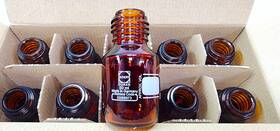
( Brand: Duran ), ( Manufacturer Part Number: CLS-1175-50 ), ( Volume: 50 Ml ), ( Unit Quantity: 10 ), ( Intended Use/discipline: Biological Laboratory )
Review DURAN Dwk 50ml Laboratory Media Storage Bottle Amber Only
The **Duran CLS-1175-50 DWK 50 mL Laboratory Media Storage Bottle (Amber, GL-32)** is a meticulously engineered, high-quality glass container designed to meet the stringent demands of modern laboratory environments. Crafted from **borosilicate glass (Type I, according to Ph. Eur. 3.1.6)**, this bottle ensures exceptional chemical resistance, thermal stability, and durability, making it ideal for storing sensitive biological media, reagents, and other critical samples that require protection from light, contamination, and degradation. The **amber tint** of the glass provides superior UV protection, safeguarding light-sensitive substances such as antibiotics, vitamins, or cell cultures from photodegradation, thereby preserving their integrity and efficacy over extended periods. With a **50 mL capacity**, this bottle strikes an optimal balance between storage volume and ease of handling, allowing for precise dispensing while minimizing waste.
The **DWK (Duran) GL-32 screw cap** is engineered for a secure, leak-proof seal, featuring a **ground glass joint** that ensures a tight, reliable closure to prevent evaporation, contamination, or spillage critical factors in maintaining sample purity and experimental accuracy. The cap s design also allows for easy access while reducing the risk of cross-contamination, making it a preferred choice for aseptic techniques in microbiology, cell culture, and pharmaceutical research. Additionally, the bottle s **smooth, rounded contours** enhance ergonomics, allowing for comfortable grip and effortless pouring, even when handling smaller volumes. The **Duran brand s reputation for precision and reliability** is further reinforced by the bottle s compliance with **Good Laboratory Practice (GLP) and Good Manufacturing Practice (GMP) standards**, ensuring it meets the rigorous quality benchmarks required in regulated industries.
Beyond its functional advantages, the **CLS-1175-50** is also designed with practicality in mind. Its **standardized dimensions** (GL-32 thread) ensure compatibility with most laboratory equipment, including autoclaves, centrifuges, and storage racks, simplifying workflow integration. The bottle s **autoclavable construction** allows for repeated sterilization cycles, extending its lifespan and reducing disposal costs a key consideration in resource-conscious laboratories. Whether used for storing culture media, buffers, or other essential reagents, this bottle exemplifies durability, precision, and versatility, making it an indispensable tool for researchers, technicians, and quality assurance professionals who demand nothing less than excellence in their laboratory operations. Its combination of **light protection, chemical resistance, and leak-proof sealing** ensures that sensitive samples remain stable and uncontaminated, ultimately contributing to the reliability and reproducibility of experimental results.
### **Pros and Cons of buying a Duran CLS-1175-50 DWK 50 mL Laboratory Media Storage Bottle (Amber, GL-32)**
#### **Pros:**1. **Light Protection (Amber Color)** The amber glass effectively blocks UV and visible light, which is crucial for preserving light-sensitive samples, reagents, or media. This prevents degradation, oxidation, or photochemical reactions that could compromise sample integrity.
2. **High-Quality Glass Construction** Duran glass is known for its excellent chemical resistance, durability, and thermal stability. It can withstand autoclaving, sterilization, and repeated use without warping or leaching contaminants.
3. **Good Seal and Leak Resistance** The screw-cap design with a reliable gasket ensures a tight seal, reducing the risk of spills or contamination, which is essential in laboratory settings where sterility is critical.
4. **Standardized Size (50 mL)** The 50 mL capacity is a common volume for laboratory media storage, making it versatile for a wide range of applications, including microbial cultures, buffers, and small-scale experiments.
5. **GL-32 Compliance** The bottle meets Good Laboratory Practice (GLP) standards, ensuring it is suitable for regulated environments like pharmaceutical, biotech, or clinical research labs where documentation and quality control are mandatory.
6. **Durability and Longevity** Duran glass is resistant to cracking and corrosion, making these bottles reusable over extended periods, which is cost-effective in the long run.
7. **Easy to Clean and Sterilize** The smooth glass surface and lack of crevices make it simple to clean thoroughly, reducing the risk of microbial contamination between uses.
---
#### **Cons:**1. **Fragility Compared to Plastic** While durable, glass is more prone to breakage than plastic alternatives, especially if dropped or mishandled. This can be a safety concern in busy labs.
2. **Weight** Glass bottles are heavier than plastic or polypropylene alternatives, which may make handling and transport more cumbersome, particularly when dealing with large quantities.
3. **Limited Temperature Resistance (Relative to Specialty Glass)** While Duran glass is heat-resistant, it may not perform as well as high-temperature borosilicate glass (e.g., Type I) in extreme conditions like repeated autoclaving at very high pressures.
4. **Cost** High-quality glass bottles are generally more expensive upfront than disposable plastic options, though they may be cost-effective in the long term due to reusability.
5. **Potential for Scratches or Contamination** Over time, glass surfaces can develop scratches or residues from repeated cleaning, which may harbor microbes or interfere with sample analysis if not properly maintained.
6. **Not Ideal for Highly Corrosive Substances** While Duran glass is resistant to many chemicals, extremely aggressive solvents (e.g., hydrofluoric acid) may still cause gradual degradation over time.
7. **Single-Use Alternatives Exist** For certain applications (e.g., one-time-use samples or hazardous materials), disposable plastic bottles may be preferred for safety and convenience, despite lacking light protection.
---
### **Conclusion:**The **Duran CLS-1175-50 amber GL-32 bottle** is an excellent choice for laboratories requiring **light protection, chemical resistance, and compliance with GLP standards**. Its durability, reusability, and suitability for sterilization make it ideal for long-term use in microbial, biochemical, or pharmaceutical research. However, its **fragility, weight, and higher cost** compared to plastic alternatives may be drawbacks depending on the specific workflow.
If **light sensitivity is a priority** (e.g., storing photosensitive reagents, cultures, or samples), the amber glass is a superior option. If **convenience, weight, or cost** are more critical (e.g., in high-throughput or disposable workflows), plastic bottles may be preferable despite their limitations.
### **Recommendation:** **Buy this bottle if:**- You work with **light-sensitive samples** (e.g., microbial media, organic solvents, or compounds that degrade under light).
- Your lab requires **GLP compliance** or **reusable, high-quality glassware**.
- You prioritize **long-term durability and chemical resistance** over convenience.
**Consider alternatives (e.g., plastic or disposable bottles) if:**- **Breakage risk is a concern** (e.g., in a high-traffic or poorly secured lab).
- **Weight and handling ease** are critical (e.g., in automated or large-scale processes).
- **Budget constraints** make disposable options more feasible for your application.
For most **standard laboratory media storage needs where light protection is essential**, this Duran bottle is a **highly recommended purchase**.
Details:
part #: cls117550 prices
- $8.22-$167.00
specifications plasticwarelabsuppy:
- brand: Duran
- mpn: Cls-1175-50
- volume: 50 Ml
- unit quantity: 10
- intended use/discipline: Biological Laboratory
returns plasticwarelabsuppy:
- policy: No Returns
shipping plasticwarelabsuppy:
- cost: $0.00
- transit: 3-9 Days
- carrier: FedEx, USPS
- service: FedEx Ground / FedEx Home Delivery, FedEx 2Day, USPS Priority Mail, USPS Ground Advantage
- class: Standard, Expedited
- type: Calculated
seller plasticwarelabsuppy:
- city: San Diego, California
- # reviews: 713
- rating: 100.0%
general plasticwarelabsuppy:
- condition: New Open box
- Medical, Lab Dental Supplies > Glassware Plasticware > Other Medical Lab Glassware
offer plasticwarelabsuppy:
- quantity: 1
- sold: 0
- options: Ship-to-home
- started: February 11, 2026
- availability: In Stock
payments plasticwarelabsuppy:
- wallet: Paypal
- credit card: Diners-club
- other
Duran CLS-1175-50 Is Similar To:
- 21-217-63 Schott Duran Super Duty Laboratory Narrow Neck Erlenmeyer Flask (40.5% similar) Please by sending a message through or calling. All pictures are taken in house. All parts, accessories, cables, etc. DOA stands for dead on arrival, meaning that the item did not function properly when it arrived. If you do receive the package, submit clear images of packaging box and damaged item ...(September 30th, 2018)
- 21801545 Schott Duran Lot Of Glass Graduated Media Storage Bottle (45.7% similar) Some fittings on caps may be missing or broken. Set of 4 with caps...(October 18th, 2018)
- 5637-s0170 Schott Duran New Bellco Glass Round Media Storage Bottle Hose (47.6% similar) ...(September 28th, 2018)
- 5526500 Unbranded Piece Schott Duran Bottle (20.3% similar) 5 liters laboratory flasks gl 45 din thread pitch with screw cap and ring graduation Duran glass other bottles on request pieces Scott ml. 5 liters laboratory flasks gl 45 din thread pitch with screw cap and ring graduation Duran glass other bottles on request pieces Scott ml...(June 16th, 2021)
- Schott 218065451 Duran Amber Bottle Flask 1000ml Gl45 Media Storage Culture Lab Pyrex Ace (41.5% similar) Analytical procedures for the flask combustion method. Plc plc CPR pct thermonuclear Thermos cycle Maj research corning Pyrex wool fiber caffeine. Each bottle includes an 140 c liner less polypropylene cap and drip-free pouring ring. Quantitative determination of elemental chlorine, nitrogen and ...(August 30th, 2024)
- Duran 953930 Hplc Bottle Pressure Plus Connection System 3 Port (34.8% similar) Part #: Duran 953930 for sale...(September 9th, 2024)
- Wheaton 223686 Duran 10ml Tubular Serum Bottle Clear Glass Top Finish 144 (43.2% similar) Part #: wheaten 223686 for sale...(October 10th, 2024)
- Dwk Life Sciences W082149a Duran 500ml Bottle Narrow Mouth With Cap Hdpe Leak Proof Case Of 120 (27.1% similar) Part #: dwk life sciences W082149A for sale...(October 16th, 2024)
- Duran Dwk Kimax 211815405 1000ml Glass Wide Mouth Microbiology Bottle With Flat Flange Rubber Stpr (38.2% similar) Size: 8x 10⁸MM OD body. Neck 57.5MM id, 76.2MM OD. Used items will show signs of wear sometimes including light scratches, discoloration, stickers/tape, or exterior markings. Thorough cleaning and sterilization are recommended before use. Lab bench supplies. GSR veers 1680 gs 9.8.3 1680 very good ...(October 21st, 2024)
- Duran 15013131 Pack Of 8 Gl32 Bottle Caps With Funnel (40.6% similar) Fast shipping. Expedited shipping can be arranged upon request for a nominal charge. Used units may have signs of wear, blemishes, scratches, discoloration, dents, etc...(October 29th, 2024)
- Kimble Wpbgc2000sb Duran Wheaton 2000ml Pn Square Media Bottle St Petg (38.6% similar) Corning ref 430282 500ML storage bottle...(December 11th, 2024)